Josué 19
NET Bible · Toca un versículo para ver sus referencias cruzadas.
1The second lot belonged to the tribe of Simeon by its clans. 2Their assigned land included Beer Sheba, Moladah, 3Hazar Shual, Balah, Ezem, 4Eltolad, Bethul, Hormah, 5Ziklag, Beth Marcaboth, Hazar Susah, 6Beth Lebaoth, and Sharuhen – a total of thirteen cities and their towns, 7Ain, Rimmon, Ether, and Ashan – a total of four cities and their towns, 8as well as all the towns around these cities as far as Baalath Beer (Ramah of the Negev). This was the land assigned to the tribe of Simeon by its clans. 9Simeon’s assigned land was taken from Judah’s allotted portion, for Judah’s territory was too large for them; so Simeon was assigned land within Judah.
Zebulun’s Tribal Lands
10The third lot belonged to the tribe of Zebulun by its clans. The border of their territory extended to Sarid. 11Their border went up westward to Maralah and touched Dabbesheth and the valley near Jokneam. 12From Sarid it turned eastward to the territory of Kisloth Tabor, extended to Daberath, and went up to Japhia. 13From there it crossed eastward to Gath Hepher and Eth Kazin and extended to Rimmon, turning toward Neah. 14It then turned on the north to Hannathon and ended at the Valley of Iphtah El. 15Their territory included Kattah, Nahalal, Shimron, Idalah, and Bethlehem; in all they had twelve cities and their towns. 16This was the land assigned to the tribe of Zebulun by its clans, including these cities and their towns.
Issachar’s Tribal Lands
17The fourth lot belonged to the tribe of Issachar by its clans. 18Their assigned land included Jezreel, Kesulloth, Shunem, 19Hapharaim, Shion, Anaharath, 20Rabbith, Kishion, Ebez, 21Remeth, En Gannim, En Haddah and Beth Pazzez. 22Their border touched Tabor, Shahazumah, and Beth Shemesh, and ended at the Jordan. They had sixteen cities and their towns. 23This was the land assigned to the tribe of Issachar by its clans, including the cities and their towns.
Asher’s Tribal Lands
24The fifth lot belonged to the tribe of Asher by its clans. 25Their territory included Helkath, Hali, Beten, Acshaph, 26Alammelech, Amad, and Mishal. Their border touched Carmel to the west and Shihor Libnath. 27It turned eastward toward Beth Dagon, touched Zebulun and the Valley of Iphtah El to the north, as well as the Valley of Emek and Neiel, and extended to Cabul on the north 28and on to Ebron, Rehob, Hammon, and Kanah, as far as Greater Sidon. 29It then turned toward Ramah as far as the fortified city of Tyre, turned to Hosah, and ended at the sea near Hebel, Aczib, 30Umah, Aphek, and Rehob. In all they had twenty-two cities and their towns. 31This was the land assigned to the tribe of Asher by its clans, including these cities and their towns.
Naphtali’s Tribal Lands
32The sixth lot belonged to the tribe of Naphtali by its clans. 33Their border started at Heleph and the oak of Zaanannim, went to Adami Nekeb, Jabneel and on to Lakkum, and ended at the Jordan River. 34It turned westward to Aznoth Tabor, extended from there to Hukok, touched Zebulun on the south, Asher on the west, and the Jordan on the east. 35The fortified cities included Ziddim, Zer, Hammath, Rakkath, Kinnereth, 36Adamah, Ramah, Hazor, 37Kedesh, Edrei, En Hazor, 38Yiron, Migdal El, Horem, Beth Anath, and Beth Shemesh. In all they had nineteen cities and their towns. 39This was the land assigned to the tribe of Naphtali by its clans, including the cities and their towns.
Dan’s Tribal Lands
40The seventh lot belonged to the tribe of Dan by its clans. 41Their assigned land included Zorah, Eshtaol, Ir Shemesh, 42Shaalabbin, Aijalon, Ithlah, 43Elon, Timnah, Ekron, 44Eltekeh, Gibbethon, Baalath, 45Jehud, Bene Berak, Gath Rimmon, 46the waters of Jarkon, and Rakkon, including the territory in front of Joppa. 47(The Danites failed to conquer their territory, so they went up and fought with Leshem and captured it. They put the sword to it, took possession of it, and lived in it. They renamed it Dan after their ancestor. ) 48This was the land assigned to the tribe of Dan by its clans, including these cities and their towns.
Joshua Receives Land
49When they finished dividing the land into its regions, the Israelites gave Joshua son of Nun some land. 50As the Lord had instructed, they gave him the city he requested – Timnath Serah in the Ephraimite hill country. He built up the city and lived in it.
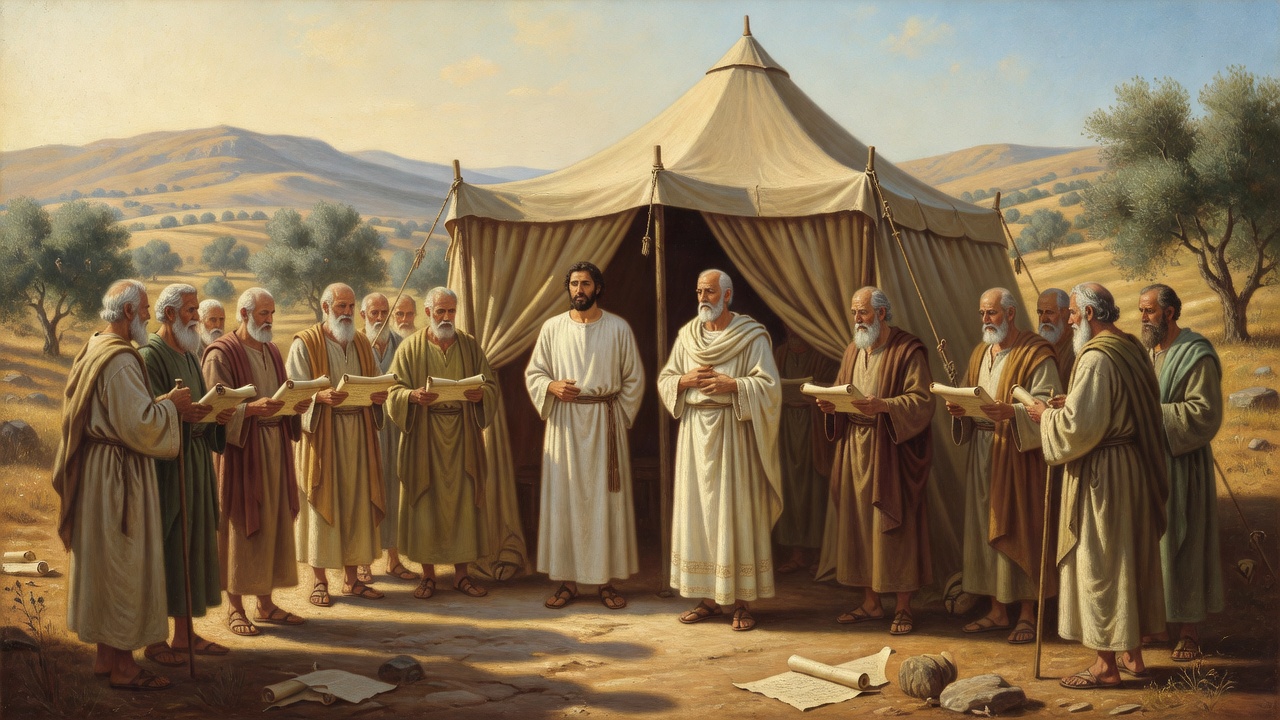
51These are the land assignments which Eleazar the priest, Joshua son of Nun, and the Israelite tribal leaders made by drawing lots in Shiloh before the Lord at the entrance of the tent of meeting. So they finished dividing up the land.
¿Sabías que…?
La repartición final de la tierra
- Simeón recibió una herencia ubicada por completo dentro del territorio mayor de Judá, debido a que la porción de Judá se consideraba demasiado extensa para ellos. Esto incluía asentamientos del sur como Berseba y Molada.Fuentes: el propio texto bíblico · Simeon · Beersheba · Moladah
- Dan fue la última tribu en recibir su asignación de tierra, situada en la frontera occidental hacia el mar. Cuando los danitas tuvieron dificultades para retener su territorio original, marcharon al norte, conquistaron la ciudad de Lesem y la rebautizaron Dan en honor a su antepasado.Fuentes: el propio texto bíblico · Dan
- Solo después de completarse la división de las tierras tribales, los líderes otorgaron a Josué hijo de Nun su herencia personal. Él solicitó y recibió la ciudad de Timnat-seraj en la región montañosa de Efraín, la cual reconstruyó y donde se estableció.Fuentes: el propio texto bíblico · Joshua
Notas escritas con ayuda de IA a partir de fuentes abiertas (Theographic Bible Metadata, CC BY-SA 4.0; Easton’s Bible Dictionary, dominio público) y revisadas antes de publicarse.
Lugares de este capítulo
- Negeb · 31.245, 34.841 · versículo 8
- Jokneam · Hoy: Tel Yokneam · 32.664, 35.108 · versículo 11
- Bethlehem · Hoy: Beit Lahm · 32.735, 35.186 · versículo 15
- Shunem · Hoy: Sulam · 32.606, 35.334 · versículo 18
- Jordan · Hoy: Jordan River · 31.761, 35.558 · versículos 22, 33, 34
- Mount Tabor · Hoy: Jebel et Tur · 32.686, 35.393 · versículo 22
- Mount Carmel · 32.672, 35.023 · versículo 26
- Sidon · Hoy: Sandikli archaeological site in Sidon · 33.561, 35.372 · versículo 28
- Great Sea · Hoy: Mediterranean Sea · 31.805, 34.170 · versículo 29
- Tyre · 33.271, 35.196 · versículo 29
- Allon · Hoy: in Hanot Taggarim · 32.721, 35.411 · versículo 33
- Hazor · Hoy: Tel Hazor · 33.018, 35.569 · versículo 36
- Kedesh · Hoy: Tel Kedesh · 33.112, 35.530 · versículo 37
- Ir-shemesh · Hoy: Tel Bet Shemesh · 31.751, 34.975 · versículo 41
- Ekron · Hoy: Tel Miqne · 31.777, 34.852 · versículo 43
- Joppa · Hoy: Jaffa · 32.054, 34.753 · versículo 46
- Dan · Hoy: Tel Dan · 33.249, 35.652 · versículo 47
- Shiloh · Hoy: Khirbet Seilun · 32.056, 35.290 · versículo 51
Solo aparecen lugares identificados con alta confianza (90 % o más según las fuentes académicas reunidas por OpenBible). Mapa de la época: DARE (Digital Atlas of the Roman Empire), CC BY 4.0; mapa actual: © colaboradores de OpenStreetMap; lugares: OpenBible.info (CC BY 4.0).
Créditos y licencia de esta traducción
NET Bible
NET Bible®, New English Translation (NET)
copyright © 1996-2016 Biblical Studies Press, L. L. C.
Please see https://netbible.com/copyright/ for full NET Bible copyright and permissions information. You can also read the NET Bible at http://NETBible.org .
Language: English
Dialect (if applicable): American
Language in English: English
Translation by:
Please see https://netbible.com/copyright/ for full NET Bible copyright and permissions information. You can also read the NET Bible at http://NETBible.org .
The NET Bible (New English Translation) is a completely new translation of the Bible with 58,506 translators’ notes ! It was completed by more than 25 scholars – experts in the original biblical languages – who worked directly from the best currently available Hebrew, Aramaic, and Greek texts. Turn the pages and see the breadth of the translators’ notes, documenting their decisions and choices as they worked.
The translators’ notes make the original languages far more accessible, allowing you to look over the translator’s shoulder at the very process of translation. This level of documentation is a first for a Bible translation, making transparent the textual basis and the rationale for key renderings (including major interpretive options and alternative translations).
This unparalleled level of detail helps connect people to the Bible in the original languages in a way never before possible without years of study of Hebrew, Aramaic, and Greek. It unlocks the riches of the Bible’s truth from entirely new perspectives.
A donation is appreciated. Donate at Bible.org/donations_form so we can continue to provide our material for free for our 16,000+ articles on Bible.org and our world class Bible Study tool at lumina.bible.org .
2026-10-02
Fuente: http://ebible.org/engnet/ · eBible.org