Josué 17
NET Bible · Toca un versículo para ver sus referencias cruzadas.
Manasseh’s Western Inheritance
1The tribe of Manasseh, Joseph’s firstborn son, was also allotted land. The descendants of Makir, Manasseh’s firstborn and the father of Gilead, received land, for they were warriors. They were assigned Gilead and Bashan. 2The rest of Manasseh’s descendants were also assigned land by their clans, including the descendants of Abiezer, Helek, Asriel, Shechem, Hepher, and Shemida. These are the male descendants of Manasseh son of Joseph by their clans.
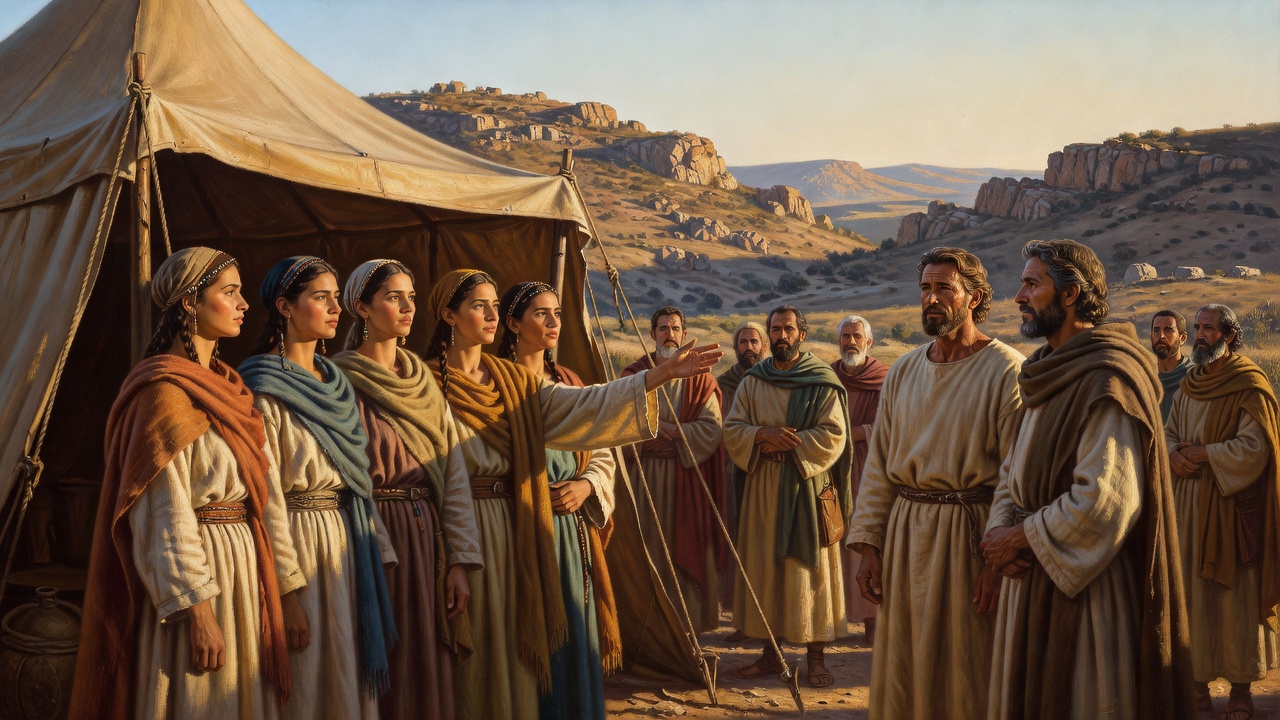
3Now Zelophehad son of Hepher, son of Gilead, son of Makir, son of Manasseh, had no sons, only daughters. These are the names of his daughters: Mahlah, Noah, Hoglah, Milcah, and Tirzah. 4They went before Eleazar the priest, Joshua son of Nun, and the leaders and said, “The Lord told Moses to assign us land among our relatives.” So Joshua assigned them land among their uncles, as the Lord had commanded. 5Manasseh was allotted ten shares of land, in addition to the land of Gilead and Bashan east of the Jordan, 6for the daughters of Manasseh were assigned land among his sons. The land of Gilead belonged to the rest of the descendants of Manasseh.
7The border of Manasseh went from Asher to Micmethath which is near Shechem. It then went south toward those who live in Tappuah. 8(The land of Tappuah belonged to Manasseh, but Tappuah, located on the border of Manasseh, belonged to the tribe of Ephraim.) 9The border then descended southward to the Valley of Kanah. Ephraim was assigned cities there among the cities of Manasseh, but the border of Manasseh was north of the valley and ended at the sea. 10Ephraim’s territory was to the south, and Manasseh’s to the north. The sea was Manasseh’s western border and their territory touched Asher on the north and Issachar on the east. 11Within Issachar’s and Asher’s territory Manasseh was assigned Beth Shean, Ibleam, the residents of Dor, En Dor, the residents of Taanach, the residents of Megiddo, the three of Napheth, and the towns surrounding all these cities. 12But the men of Manasseh were unable to conquer these cities; the Canaanites managed to remain in those areas. 13Whenever the Israelites were strong militarily, they forced the Canaanites to do hard labor, but they never totally conquered them.
14The descendants of Joseph said to Joshua, “Why have you assigned us only one tribal allotment? After all, we have many people, for until now the Lord has enabled us to increase in number.” 15Joshua replied to them, “Since you have so many people, go up into the forest and clear out a place to live in the land of the Perizzites and Rephaites, for the hill country of Ephraim is too small for you.” 16The descendants of Joseph said, “The whole hill country is inadequate for us, and the Canaanites living down in the valley in Beth Shean and its surrounding towns and in the Valley of Jezreel have chariots with iron-rimmed wheels.” 17Joshua said to the family of Joseph – to both Ephraim and Manasseh: “You have many people and great military strength. You will not have just one tribal allotment. 18The whole hill country will be yours; though it is a forest, you can clear it and it will be entirely yours. You can conquer the Canaanites, though they have chariots with iron-rimmed wheels and are strong.”
¿Sabías que…?
La heredad de Manasés y la casa de José
- La tribu de Manasés quedó dividida geográficamente a ambos lados del río Jordán. Debido a que el clan de Maquir era reconocido en la guerra, ya había recibido los territorios orientales de Galaad y Basán, mientras que el resto de los clanes recibió diez porciones al oeste del Jordán.Fuentes: el propio texto bíblico · Machir · Gilead · Bashan
- Las hijas de Zelofejad —Maala, Noa, Hogla, Milca y Tirsa— se presentaron ante Josué y el sacerdote Eleazar para reclamar el derecho de propiedad ordenado por el Señor a través de Moisés. Así, recibieron una herencia de tierras junto con los hermanos de su padre.Fuentes: el propio texto bíblico · Hepher · Machir
- Cuando las tribus de la casa de José se quejaron de que su territorio era insuficiente, Josué les ordenó desmontar y ocupar la zona boscosa de las colinas en lugar de temer a los cananeos de los valles, quienes contaban con carros de hierro en ciudades como Bet-sán.Fuentes: el propio texto bíblico · Joshua · Beth-shean
Notas escritas con ayuda de IA a partir de fuentes abiertas (Theographic Bible Metadata, CC BY-SA 4.0; Easton’s Bible Dictionary, dominio público) y revisadas antes de publicarse.
Lugares de este capítulo
- Bashan · 32.781, 35.935 · versículos 1, 5
- Gilead · Hoy: Gilead 1 · 32.187, 35.692 · versículos 1, 5, 6
- Jordan · Hoy: Jordan River · 31.761, 35.558 · versículos 1, 2, 5
- Shechem · Hoy: Tell Balatah · 32.214, 35.282 · versículo 7
- Great Sea · Hoy: Mediterranean Sea · 31.805, 34.170 · versículos 9, 10
- Megiddo · Hoy: Tel Megiddo · 32.585, 35.184 · versículo 11
- Taanach · Hoy: Tell Ta’anakh · 32.522, 35.219 · versículo 11
- Valley of Jezreel · Hoy: Jezreel Valley · 32.596, 35.242 · versículo 16
Solo aparecen lugares identificados con alta confianza (90 % o más según las fuentes académicas reunidas por OpenBible). Mapa de la época: DARE (Digital Atlas of the Roman Empire), CC BY 4.0; mapa actual: © colaboradores de OpenStreetMap; lugares: OpenBible.info (CC BY 4.0).
Créditos y licencia de esta traducción
NET Bible
NET Bible®, New English Translation (NET)
copyright © 1996-2016 Biblical Studies Press, L. L. C.
Please see https://netbible.com/copyright/ for full NET Bible copyright and permissions information. You can also read the NET Bible at http://NETBible.org .
Language: English
Dialect (if applicable): American
Language in English: English
Translation by:
Please see https://netbible.com/copyright/ for full NET Bible copyright and permissions information. You can also read the NET Bible at http://NETBible.org .
The NET Bible (New English Translation) is a completely new translation of the Bible with 58,506 translators’ notes ! It was completed by more than 25 scholars – experts in the original biblical languages – who worked directly from the best currently available Hebrew, Aramaic, and Greek texts. Turn the pages and see the breadth of the translators’ notes, documenting their decisions and choices as they worked.
The translators’ notes make the original languages far more accessible, allowing you to look over the translator’s shoulder at the very process of translation. This level of documentation is a first for a Bible translation, making transparent the textual basis and the rationale for key renderings (including major interpretive options and alternative translations).
This unparalleled level of detail helps connect people to the Bible in the original languages in a way never before possible without years of study of Hebrew, Aramaic, and Greek. It unlocks the riches of the Bible’s truth from entirely new perspectives.
A donation is appreciated. Donate at Bible.org/donations_form so we can continue to provide our material for free for our 16,000+ articles on Bible.org and our world class Bible Study tool at lumina.bible.org .
2026-10-02
Títulos de sección adaptados de la Berean Standard Bible (dominio público); no forman parte del texto bíblico de esta traducción.
Fuente: http://ebible.org/engnet/ · eBible.org