1 Crónicas 2
NET Bible · Toca un versículo para ver sus referencias cruzadas.
1These were the sons of Israel:
Reuben, Simeon, Levi, and Judah;
Issachar and Zebulun;
2Dan, Joseph, and Benjamin;
Naphtali, Gad, and Asher.
Judah’s Descendants
3The sons of Judah:
Er, Onan, and Shelah. These three were born to him by Bathshua, a Canaanite woman. Er, Judah’s firstborn, displeased the Lord, so the Lord killed him.
4Tamar, Judah’s daughter-in-law, bore to him Perez and Zerah. Judah had five sons in all.
5The sons of Perez:
Hezron and Hamul.
6The sons of Zerah:
Zimri, Ethan, Heman, Kalkol, Dara – five in all.
7The son of Carmi:
Achan, who brought the disaster on Israel when he stole what was devoted to God.
8The son of Ethan:
Azariah.
9The sons born to Hezron:
Jerahmeel, Ram, and Caleb.
Ram’s Descendants
10Ram was the father of Amminadab, and Amminadab was the father of Nahshon, the tribal chief of Judah. 11Nahshon was the father of Salma, and Salma was the father of Boaz. 12Boaz was the father of Obed, and Obed was the father of Jesse.
13Jesse was the father of Eliab, his firstborn; Abinadab was born second, Shimea third, 14Nethanel fourth, Raddai fifth, 15Ozem sixth, David seventh. 16Their sisters were Zeruiah and Abigail. Zeruiah’s three sons were Abshai, Joab, and Asahel. 17Abigail bore Amasa, whose father was Jether the Ishmaelite.
Caleb’s Descendants
18Caleb son of Hezron fathered sons by his wife Azubah (also known as Jerioth). Her sons were Jesher, Shobab, and Ardon. 19When Azubah died, Caleb married Ephrath, who bore him Hur. 20Hur was the father of Uri, and Uri was the father of Bezalel.
21Later Hezron had sexual relations with the daughter of Makir, the father of Gilead. (He had married her when he was sixty years old.) She bore him Segub. 22Segub was the father of Jair, who owned twenty-three cities in the land of Gilead. 23(Geshur and Aram captured the towns of Jair, along with Kenath and its sixty surrounding towns.) All these were descendants of Makir, the father of Gilead.
24After Hezron’s death, Caleb had sexual relations with Ephrath, his father Hezron’s widow, and she bore to him Ashhur the father of Tekoa.
Jerahmeel’s Descendants
25The sons of Jerahmeel, Hezron’s firstborn, were Ram, the firstborn, Bunah, Oren, Ozem, and Ahijah. 26Jerahmeel had another wife named Atarah; she was Onam’s mother.
27The sons of Ram, Jerahmeel’s firstborn, were Maaz, Jamin, and Eker.
28The sons of Onam were Shammai and Jada.
The sons of Shammai:
Nadab and Abishur.
29Abishur’s wife was Abihail, who bore him Ahban and Molid.
30The sons of Nadab:
Seled and Appaim. (Seled died without having sons.)
31The son of Appaim:
Ishi.
The son of Ishi:
Sheshan.
The son of Sheshan:
Ahlai.
32The sons of Jada, Shammai’s brother:
Jether and Jonathan. (Jether died without having sons.)
33The sons of Jonathan:
Peleth and Zaza.
These were the descendants of Jerahmeel.
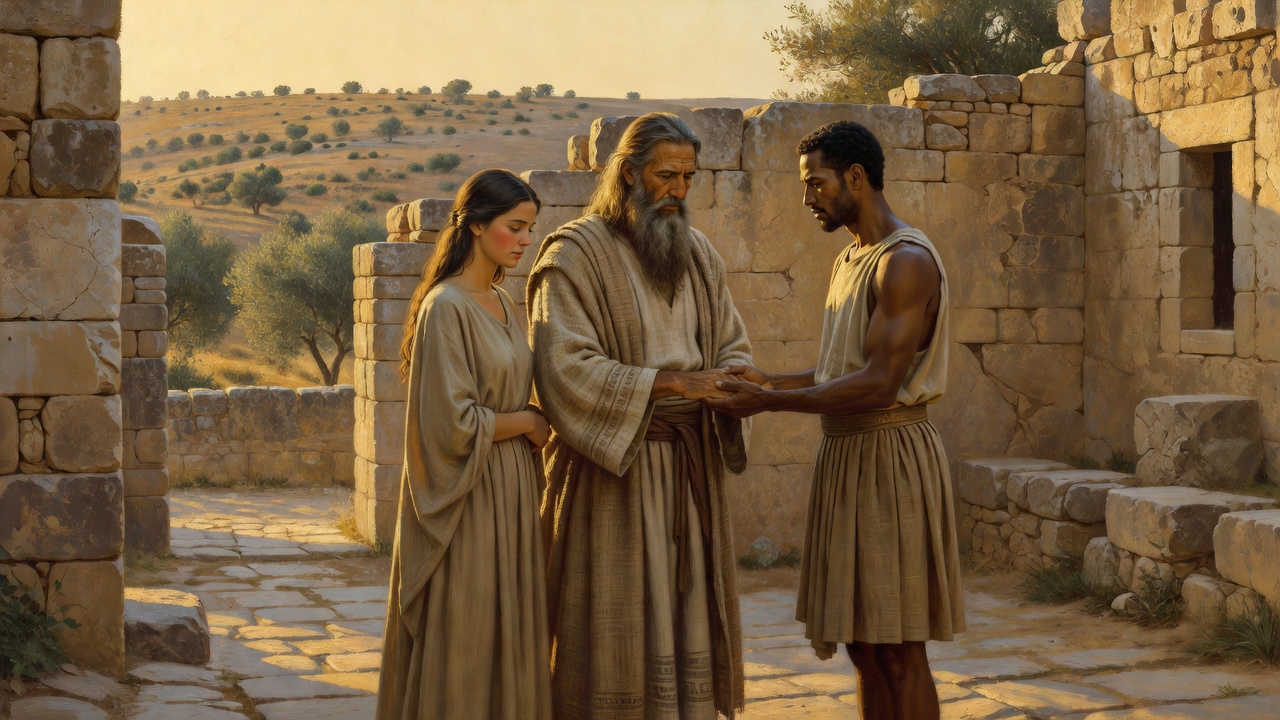
34Sheshan had no sons, only daughters. Sheshan had an Egyptian servant named Jarha. 35Sheshan gave his daughter to his servant Jarha as a wife; she bore him Attai.
36Attai was the father of Nathan, and Nathan was the father of Zabad. 37Zabad was the father of Ephlal, and Ephlal was the father of Obed. 38Obed was the father of Jehu, and Jehu was the father of Azariah. 39Azariah was the father of Helez, and Helez was the father of Eleasah. 40Eleasah was the father of Sismai, and Sismai was the father of Shallum. 41Shallum was the father of Jekamiah, and Jekamiah was the father of Elishama.
More of Caleb’s Descendants
42The sons of Caleb, Jerahmeel’s brother:
His firstborn Mesha, the father of Ziph, and his second son Mareshah, the father of Hebron.
43The sons of Hebron:
Korah, Tappuah, Rekem, and Shema.
44Shema was the father of Raham, the father of Jorkeam. Rekem was the father of Shammai. 45Shammai’s son was Maon, who was the father of Beth-Zur.
46Caleb’s concubine Ephah bore Haran, Moza, and Gazez. Haran was the father of Gazez.
47The sons of Jahdai:
Regem, Jotham, Geshan, Pelet, Ephah, and Shaaph.
48Caleb’s concubine Maacah bore Sheber and Tirhanah. 49She also bore Shaaph the father of Madmannah and Sheva the father of Machbenah and Gibea. Caleb’s daughter was Achsah.
50These were the descendants of Caleb.
The sons of Hur, the firstborn of Ephrath:
Shobal, the father of Kiriath Jearim, 51Salma, the father of Bethlehem, Hareph, the father of Beth-Gader.
52The sons of Shobal, the father of Kiriath Jearim, were Haroeh, half of the Manahathites, 53the clans of Kiriath Jearim – the Ithrites, Puthites, Shumathites, and Mishraites. (The Zorathites and Eshtaolites descended from these groups.)
54The sons of Salma:
Bethlehem, the Netophathites, Atroth Beth-Joab, half the Manahathites, the Zorites, 55and the clans of the scribes who lived in Jabez: the Tirathites, Shimeathites, and Sucathites. These are the Kenites who descended from Hammath, the father of Beth-Rechab.
¿Sabías que…?
La genealogía de Judá y la línea real
- El linaje en este capítulo traza la descendencia de Judá a través de Fares y Hezrón hasta Ram, culminando en David, el séptimo hijo de Isaí. Esta línea destaca antepasados notables, incluidos Naasón, un líder de la tribu durante la travesía por el desierto, y Booz de Belén.Fuentes: el propio texto bíblico · Nahshon · Boaz · Ram
- Las genealogías en 1 Crónicas a menudo vinculan familias directamente con los asentamientos que establecieron. Los descendientes de Caleb, hijo de Hezrón, y de su nieto Hur son identificados como padres o fundadores de ciudades destacadas de Judá como Belén, Quiriat-jearim y Madmana.Fuentes: el propio texto bíblico · Caleb · Madmannah
- Cuando Sesán, de la rama de Jerameel, no tuvo hijos varones, preservó su linaje casando a su hija con su siervo egipcio Jarha, cuyos descendientes se registran a lo largo de trece generaciones.Fuentes: el propio texto bíblico
Notas escritas con ayuda de IA a partir de fuentes abiertas (Theographic Bible Metadata, CC BY-SA 4.0; Easton’s Bible Dictionary, dominio público) y revisadas antes de publicarse.
Lugares de este capítulo
- Gilead · Hoy: Gilead 1 · 32.187, 35.692 · versículo 22
- Aram · 33.511, 36.306 · versículo 23
- Geshur · 32.767, 35.700 · versículo 23
- Havvoth-jair · 32.588, 35.726 · versículo 23
- Tekoa · Hoy: Khirbet Teku’a · 31.632, 35.210 · versículo 24
- Kiriath-jearim · Hoy: Deir el Azar · 31.809, 35.104 · versículos 50, 52, 53
- Bethlehem · 31.704, 35.208 · versículos 51, 54
Solo aparecen lugares identificados con alta confianza (90 % o más según las fuentes académicas reunidas por OpenBible). Mapa de la época: DARE (Digital Atlas of the Roman Empire), CC BY 4.0; mapa actual: © colaboradores de OpenStreetMap; lugares: OpenBible.info (CC BY 4.0).
Créditos y licencia de esta traducción
NET Bible
NET Bible®, New English Translation (NET)
copyright © 1996-2016 Biblical Studies Press, L. L. C.
Please see https://netbible.com/copyright/ for full NET Bible copyright and permissions information. You can also read the NET Bible at http://NETBible.org .
Language: English
Dialect (if applicable): American
Language in English: English
Translation by:
Please see https://netbible.com/copyright/ for full NET Bible copyright and permissions information. You can also read the NET Bible at http://NETBible.org .
The NET Bible (New English Translation) is a completely new translation of the Bible with 58,506 translators’ notes ! It was completed by more than 25 scholars – experts in the original biblical languages – who worked directly from the best currently available Hebrew, Aramaic, and Greek texts. Turn the pages and see the breadth of the translators’ notes, documenting their decisions and choices as they worked.
The translators’ notes make the original languages far more accessible, allowing you to look over the translator’s shoulder at the very process of translation. This level of documentation is a first for a Bible translation, making transparent the textual basis and the rationale for key renderings (including major interpretive options and alternative translations).
This unparalleled level of detail helps connect people to the Bible in the original languages in a way never before possible without years of study of Hebrew, Aramaic, and Greek. It unlocks the riches of the Bible’s truth from entirely new perspectives.
A donation is appreciated. Donate at Bible.org/donations_form so we can continue to provide our material for free for our 16,000+ articles on Bible.org and our world class Bible Study tool at lumina.bible.org .
2026-10-02
Fuente: http://ebible.org/engnet/ · eBible.org