Job 39
Updated Brenton English Septuagint · Toca un versículo para ver sus referencias cruzadas.
The LORD Speaks of His Creation
1Say if thou knowest the time of the bringing forth of the wild goats of the rock,
And if thou hast marked the calving of the hinds:
2And if thou hast numbered the full months of their being with young,
And if thou hast relieved their pangs:
3And hast reared their young without fear;
And wilt thou loosen their pangs?
4Their young will break forth; they will be multiplied with offspring:
Their young will go forth, and will not return to them.
5And who is he that sent forth the wild ass free?
And who loosed his bands?
6Whereas I made his habitation the wilderness,
And the salt land his coverts.
7He laughs to scorn the multitude of the city,
And hears not the chiding of the tax gatherer.
8He will survey the mountains as his pasture,
And he seeks after every green thing.
9And will the unicorn be willing to serve thee,
Or to lie down at thy manger?
10And wilt thou bind his yoke with thongs,
Or will he plow furrows for thee in the plain?
11And dost thou trust him, because his strength is great?
And wilt thou commit thy works to him?
12And wilt thou believe that he will return to thee thy seed,
And bring it in to thy threshing floor?
13The peacock has a beautiful wing:
If the stork and the ostrich conceive, it is worthy of notice,
14For the ostrich will leave her eggs in the ground,
And warm them on the dust,
15And has forgotten that the foot will scatter them,
And the wild beasts of the field trample them.
16She has hardened herself against her young ones, as though she bereaved not herself:
She labors in vain without fear.
17For God has withholden wisdom from her,
And not given her a portion in understanding.
18In her season she will lift herself on high;
She will scorn the horse and his rider.
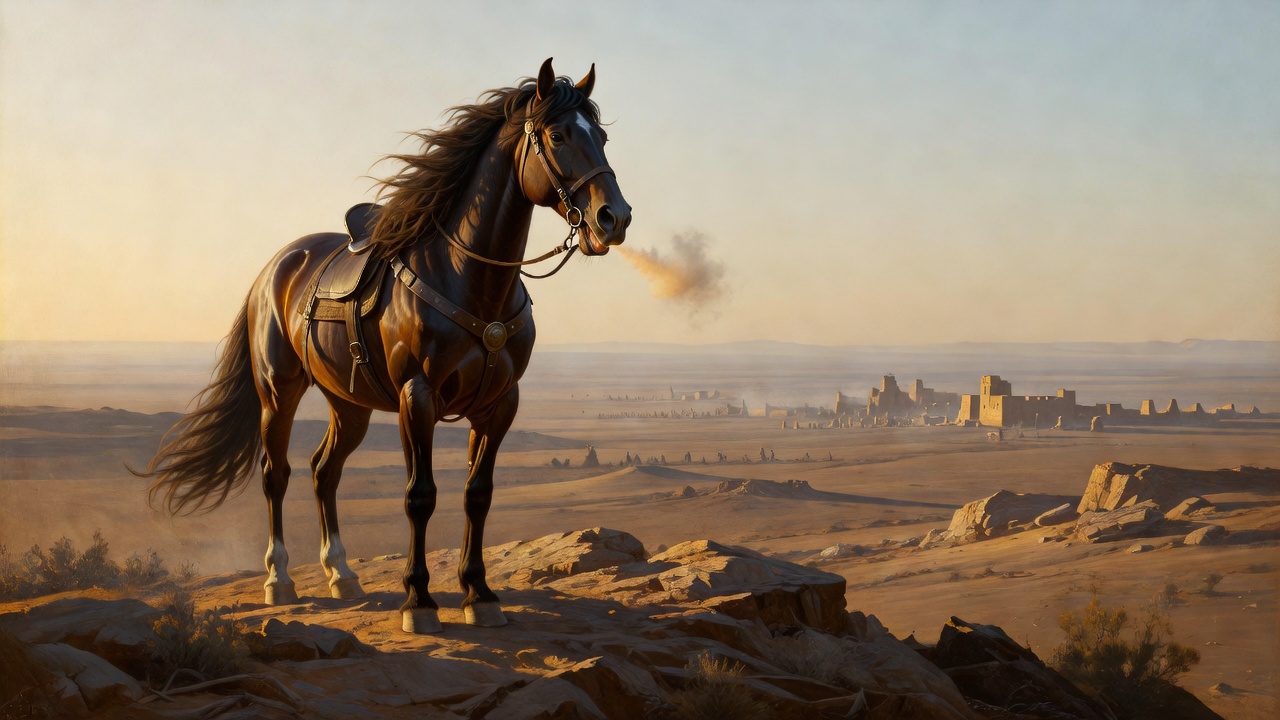
19Hast thou invested the horse with strength,
And clothed his neck with terror?
20And hast thou clad him in perfect armor,
And made his breast glorious with courage?
21He paws exulting in the plain,
And goes forth in strength into the plain.
22He laughs to scorn a king as he meets him,
And will by no means turn back from the sword.
23The bow and sword resound against him;
And his rage will swallow up the ground:
24And he will not believe until the trumpet sounds.
25And when the trumpet sounds, he says, Aha!
And afar off he smells the war with prancing and neighing.
26And does the hawk remain steady by thy wisdom,
Having spread out her wings unmoved, looking toward the region of the south?
27And does the eagle rise at thy command,
And the vulture remain sitting over his nest,
28On a crag of a rock, and in a secret place?
29Thence he seeks food,
His eyes observe from far.
30And his young ones roll themselves in blood,
And wherever the carcasses may be, immediately they are found.
¿Sabías que…?
El cuidado y el diseño de Dios en el reino animal
- El discurso divino interpela a Job acerca de la naturaleza indómita de animales como el asno salvaje y el buey salvaje. A diferencia de las bestias domesticadas usadas para arar y trillar, estas criaturas habitan libres en el desierto y las llanuras salinas, al margen del dominio humano.Fuentes: el propio texto bíblico
- El texto resalta los hábitos particulares del avestruz al anidar, describiendo cómo deja sus huevos en la arena sin el cuidado protector típico de otras aves, aunque supera en velocidad al caballo y a su jinete en campo abierto.Fuentes: el propio texto bíblico
- La descripción del caballo de batalla resalta su intrepidez, fuerza y entusiasmo ante las armas y el toque del cuerno de guerra, subrayando que su valentía y naturaleza provienen de Dios y no del entrenamiento humano.Fuentes: el propio texto bíblico
Notas escritas con ayuda de IA a partir de fuentes abiertas (Theographic Bible Metadata, CC BY-SA 4.0; Easton’s Bible Dictionary, dominio público) y revisadas antes de publicarse.
Créditos y licencia de esta traducción
Updated Brenton English Septuagint
Spelling and formatting update of the Brenton English Septuagint with Apocrypha
Public Domain
Language: English
Dialect: Mixed
Translation by: Sir Lancelot C. L. Brenton
Contributor: Adam Boyd
Original work was by Sir Lancelot C. L. Brenton in 1851.
CC0 Public Domain dedication on language updates by Adam Boyd in 2020.
2026-02-18
Títulos de sección adaptados de la Berean Standard Bible (dominio público); no forman parte del texto bíblico de esta traducción.
Fuente: http://ebible.org/englxxup/ · eBible.org