Deuteronomio 16
Updated Brenton English Septuagint · Toca un versículo para ver sus referencias cruzadas.
Passover and the Feast of Unleavened Bread
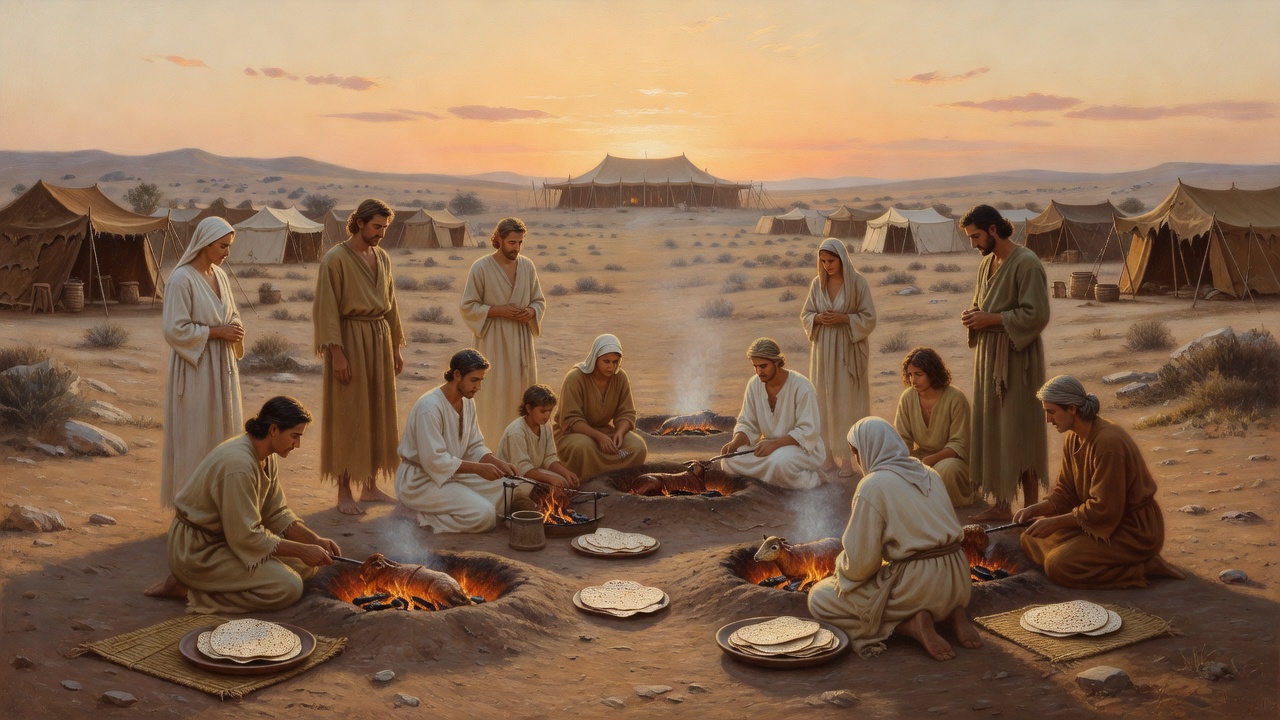
1Observe the month of new corn, and thou shalt sacrifice the Passover to the Lord thy God; because in the month of new corn thou camest out of Egypt by night. 2And thou shalt sacrifice the Passover to the Lord thy God, sheep and oxen in the place which the Lord thy God shall choose to have his name called upon it. 3Thou shalt not eat leaven with it; seven days shalt thou eat unleavened bread with it, bread of affliction, because ye came forth out of Egypt in haste; that ye may remember the day of your coming forth out of the land of Egypt all the days of your life. 4Leaven shall not be seen with thee in all thy borders for seven days, and there shall not be left of the flesh which thou shalt sacrifice at even on the first day until the morning. 5Thou shalt not have power to sacrifice the Passover in any of the cities, which the Lord thy God gives thee. 6But in the place which the Lord thy God shall choose, to have his name called there, thou shalt sacrifice the Passover at even at the setting of the sun, at the time when thou camest out of Egypt. 7And thou shalt boil and roast and eat it in the place, which the Lord thy God shall choose; and thou shalt return in the morning, and go to thy house. 8Six days shalt thou eat unleavened bread, and on the seventh day is a holiday, a feast to the Lord thy God: thou shalt not do in it any work, save what must be done by anyone.
The Feast of Weeks
9Seven weeks shalt thou number to thyself; when thou hast begun to put the sickle to the corn, thou shalt begin to number seven weeks. 10And thou shalt keep the feast of weeks to the Lord thy God, accordingly as thy hand has power in as many things as the Lord thy God shall give thee.
11And thou shalt rejoice before the Lord thy God, thou and thy son, and thy daughter, thy manservant and thy maidservant, and the Levite, and the stranger, and the orphan, and the widow which dwells among you, in whatsoever place the Lord thy God shall choose, that his name should be called there.
12And thou shalt remember that thou wast a servant in the land of Egypt, and thou shalt observe and do these commands.
The Feast of Tabernacles
13Thou shalt keep for thyself the feast of tabernacles seven days, when thou gatherest in thy produce from thy corn floor and thy winepress. 14And thou shalt rejoice in thy feast, thou, and thy son, and thy daughter, thy manservant, and thy maidservant, and the Levite, and the stranger, and the orphan, and the widow that is in thy cities. 15Seven days shalt thou keep a feast to the Lord thy God in the place which the Lord thy God shall choose for himself; and if the Lord thy God shall bless thee in all thy fruits, and in every work of thy hands, then thou shalt rejoice.
16Three times in the year shall all thy males appear before the Lord thy God in the place which the Lord shall choose in the feast of unleavened bread, and in the feast of weeks, and in the feast of tabernacles: thou shalt not appear before the Lord thy God empty. 17Each one according to his ability, according to the blessing of the Lord thy God which he has given thee.
Judges and Justice
18Thou shalt make for thyself judges and officers in thy cities, which the Lord thy God gives thee in thy tribes, and they shall judge the people with righteous judgment: 19they shall not wrest judgment, nor favor persons, nor receive a gift; for gifts blind the eyes of the wise, and pervert the words of the righteous. 20Thou shalt justly pursue justice, that ye may live, and go in and inherit the land which the Lord thy God gives thee.
Forbidden Forms of Worship
21Thou shalt not plant for thyself a grove; thou shalt not plant for thyself any tree near the altar of thy God. 22Thou shalt not set up for thyself a pillar, which the Lord thy God hates.
¿Sabías que…?
Fiestas Señaladas y Recta Justicia
- Deuteronomio establece tres fiestas anuales de peregrinación: la Fiesta de los Panes sin Levadura (Pascua), la Fiesta de las Semanas y la Fiesta de los Tabernáculos. En estas ocasiones, los varones de Israel debían presentarse ante Dios no en sus ciudades locales, sino en el lugar central elegido como morada para Su Nombre.Fuentes: el propio texto bíblico
- Las celebraciones de la Fiesta de las Semanas y de los Tabernáculos incluían de forma explícita a los sectores vulnerables de la sociedad, como siervos, levitas, extranjeros, huérfanos y viudas. Este regocijo comunitario recordaba la liberación de la esclavitud en Egipto.Fuentes: el propio texto bíblico
- Junto con las asambleas religiosas, el texto ordena nombrar jueces y oficiales en cada ciudad. Se les prohibía aceptar sobornos o mostrar favoritismo, fijando el mandato de buscar únicamente la justicia en toda la tierra.Fuentes: el propio texto bíblico
Notas escritas con ayuda de IA a partir de fuentes abiertas (Theographic Bible Metadata, CC BY-SA 4.0; Easton’s Bible Dictionary, dominio público) y revisadas antes de publicarse.
Lugares de este capítulo
Solo aparecen lugares identificados con alta confianza (90 % o más según las fuentes académicas reunidas por OpenBible). Mapa de la época: DARE (Digital Atlas of the Roman Empire), CC BY 4.0; mapa actual: © colaboradores de OpenStreetMap; lugares: OpenBible.info (CC BY 4.0).
Créditos y licencia de esta traducción
Updated Brenton English Septuagint
Spelling and formatting update of the Brenton English Septuagint with Apocrypha
Public Domain
Language: English
Dialect: Mixed
Translation by: Sir Lancelot C. L. Brenton
Contributor: Adam Boyd
Original work was by Sir Lancelot C. L. Brenton in 1851.
CC0 Public Domain dedication on language updates by Adam Boyd in 2020.
2026-02-18
Títulos de sección adaptados de la Berean Standard Bible (dominio público); no forman parte del texto bíblico de esta traducción.
Fuente: http://ebible.org/englxxup/ · eBible.org