Hechos 15
Literal Standard Version · Toca un versículo para ver sus referencias cruzadas.
The Dispute over Circumcision
1And certain having come down from Judea, were teaching the brothers, “If you are not circumcised after the custom of Moses, you are not able to be saved”; 2there having been, therefore, not a little dissension and debate to Paul and Barnabas with them, they arranged for Paul and Barnabas, and certain others of them, to go up to the apostles and elders to Jerusalem about this question; 3they indeed, then, having been sent forward by the assembly, were passing through Phoenicia and Samaria, declaring the conversion of the nations, and they were causing great joy to all the brothers. 4And having come to Jerusalem, they were received by the assembly, and the apostles, and the elders; they also declared as many things as God did with them;
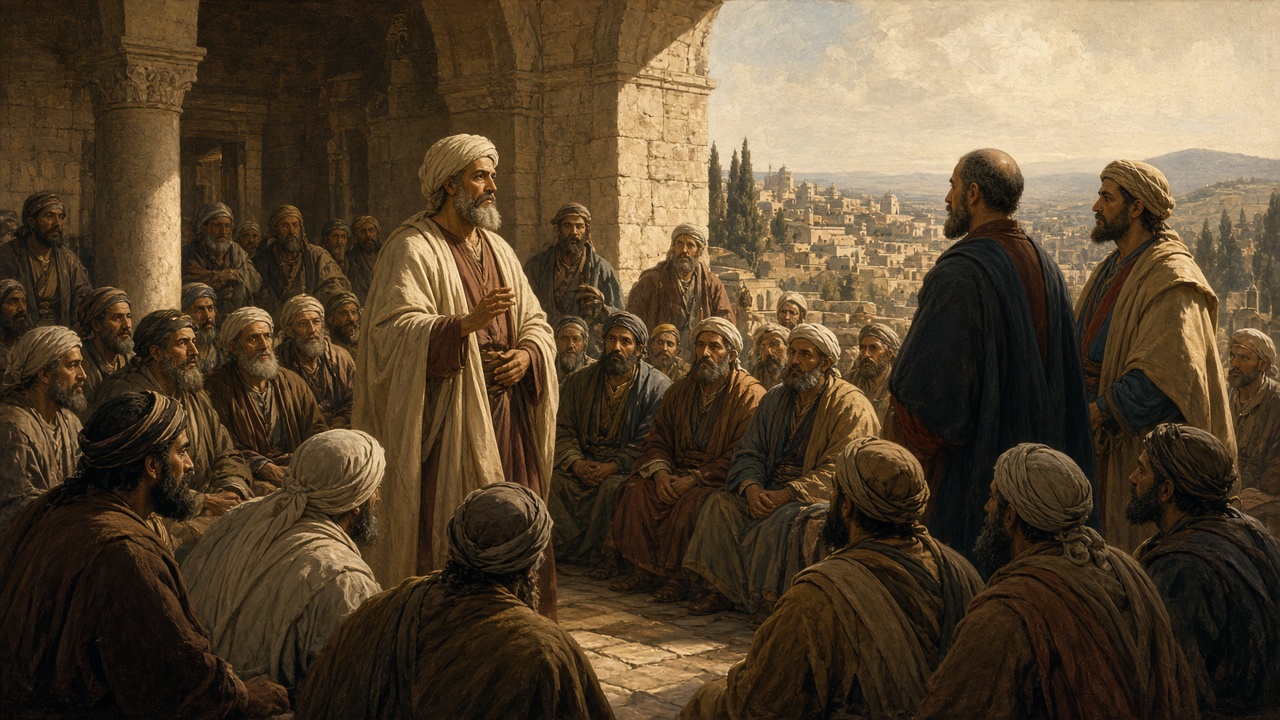
The Council at Jerusalem
5and there rose up certain of those of the sect of the Pharisees who believed, saying, “It is required to circumcise them, to command them also to keep the Law of Moses.” 6And there were gathered together the apostles and the elders, to see about this matter, 7and there having been much disputing, Peter having risen up said to them, “Men, brothers, you know that from former days God made choice among us, through my mouth, for the nations to hear the word of the good news, and to believe; 8and the heart-knowing God bore them testimony, having given to them the Holy Spirit, even as also to us, 9and also put no difference between us and them, having purified their hearts by faith; 10now, therefore, why do you tempt God, to put a yoke on the neck of the disciples, which neither our fathers nor we were able to bear? 11But through the grace of the Lord Jesus Christ, we believe to be saved, even as also they.” 12And all the multitude kept silence and were listening to Barnabas and Paul expounding as many signs and wonders as God did among the nations through them; 13and after they were silent, James answered, saying, “Men, brothers, listen to me: 14Simeon expounded how at first God looked on [us] to take a people out of [the] nations for His Name, 15and to this the words of the Prophets agree, as it has been written: 16After these things I will return, || And I will rebuild the dwelling place of David that has fallen down, || And I will rebuild its ruins, || And will set it upright— 17That the remnant of men may seek after the LORD, || And all the nations on whom My Name has been called, || Says the LORD, who is doing all these things. 18Known from the ages to God are all His works. 19For this reason I judge: not to trouble those who turn back to God from the nations, 20but to write to them to abstain from the defilements of the idols, and the whoredom, and the strangled thing, and the blood; 21for Moses has those preaching him from former generations in every city—being read every Sabbath in the synagogues.”
The Letter to the Gentile Believers
22Then it seemed good to the apostles and the elders, with the whole assembly, to send to Antioch with Paul and Barnabas chosen men out of themselves—Judas surnamed Barsabas, and Silas, leading men among the brothers— 23having written through their hand thus: “The apostles, and the elders, and the brothers, to those in Antioch, and Syria, and Cilicia, brothers, who [are] of the nations, greeting; 24seeing we have heard that some having gone forth from us troubled you with words, subverting your souls, saying to be circumcised and to keep the Law, to whom we gave no charge, 25it seemed good to us, having come together with one accord, to send to you chosen men, with our beloved Barnabas and Paul— 26men who have given up their lives for the Name of our Lord Jesus Christ— 27we have sent, therefore, Judas and Silas, and they are telling the same things by word. 28For it seemed good to the Holy Spirit, and to us, to lay no more burden on you, except these necessary things: 29to abstain from things offered to idols, and blood, and a strangled thing, and whoredom; keeping yourselves from which, you will do well; be strong!”
The Believers at Antioch Rejoice
30They then, indeed, having been let go, went to Antioch, and having brought the multitude together, delivered the letter, 31and having read [it] they rejoiced for the consolation; 32Judas also and Silas, also being prophets themselves, through much discourse exhorted the brothers, and confirmed, 33and having passed some time, they were let go with peace from the brothers to the apostles; 34[[and it seemed good to Silas to remain there still. ]] 35And Paul and Barnabas continued in Antioch, teaching and proclaiming good news—with many others also—the word of the LORD;
Paul’s Second Missionary Journey Begins
36and after certain days, Paul said to Barnabas, “Having turned back again, we may look after our brothers, in every city in which we have preached the word of the LORD—how they are.” 37And Barnabas resolved to take with [them] John called Mark, 38and Paul was not thinking it good to take him with them who withdrew from them from Pamphylia, and did not go with them to the work; 39there came, therefore, a sharp contention, so that they were parted from one another, and Barnabas having taken Mark, sailed to Cyprus, 40and Paul having chosen Silas, went forth, having been given up to the grace of God by the brothers; 41and he went through Syria and Cilicia, confirming the assemblies.
¿Sabías que…?
El concilio sobre los creyentes gentiles
- La controversia comenzó en Antioquía, a orillas del Orontes, unas trescientas millas al norte de Jerusalén, ciudad que entonces ocupaba el tercer lugar entre las ciudades del Imperio romano, después de Roma y Alejandría. De camino al concilio, Pablo y Bernabé pasaron por Fenicia, una franja costera de unas ciento veinte millas, y por Samaria. Una nota cronológica fecha el Concilio de Jerusalén en el año 46 d. C.Fuentes: Antioch (Syria) · Phenicia · el propio texto bíblico · Jerusalem Council
- El Easton's Bible Dictionary (1897) afirma que Santiago, a quien llama hermano o pariente cercano de Jesús, dirigía la iglesia en Jerusalén y presidió el concilio sobre los gentiles. La carta que siguió iba dirigida a los creyentes gentiles de Antioquía, Siria y Cilicia. Cilicia, provincia de origen de Pablo y provincia marítima romana en el sureste de Asia Menor desde el 67 a. C., incluía su ciudad natal, Tarso.Fuentes: James (Brother of Jesus) · el propio texto bíblico · Cilicia · Paul
- Judas, llamado Barsabás, y Silas, también conocido como Silvano, eran profetas y hombres destacados de la iglesia de Jerusalén, enviados para confirmar en persona la decisión del concilio. Un desacuerdo posterior y agudo por Juan Marcos, primo de Bernabé, separó a los dos misioneros: Bernabé se llevó a Marcos y zarpó hacia Chipre, mientras Pablo eligió a Silas. Una nota cronológica fecha esa separación en el año 47 d. C.Fuentes: el propio texto bíblico · Silas · John Mark · Paul and Barnabas part ways
Notas escritas con ayuda de IA a partir de fuentes abiertas (Theographic Bible Metadata, CC BY-SA 4.0; Easton’s Bible Dictionary, dominio público) y revisadas antes de publicarse.
Lugares de este capítulo
- Antioch · Hoy: Antioch on the Orontes · 36.227, 36.172 · versículos 1, 22, 23, 30, 35
- Judea · Hoy: Judea 1 · 31.777, 35.234 · versículo 1
- Jerusalem · 31.777, 35.234 · versículos 2, 3, 4, 22, 23, 33
- Phoenicia · 33.271, 35.196 · versículo 3
- Samaria · Hoy: Samaria 2 · 32.276, 35.195 · versículo 3
- Cilicia · 36.913, 34.892 · versículos 23, 41
- Syria · Hoy: Syria 2 · 33.511, 36.306 · versículos 23, 41
- Pamphylia · 37.000, 31.000 · versículo 38
- Cyprus · 35.000, 33.000 · versículo 39
Solo aparecen lugares identificados con alta confianza (90 % o más según las fuentes académicas reunidas por OpenBible). Mapa de la época: DARE (Digital Atlas of the Roman Empire), CC BY 4.0; mapa actual: © colaboradores de OpenStreetMap; lugares: OpenBible.info (CC BY 4.0).
Créditos y licencia de esta traducción
Literal Standard Version
The Holy Bible in English, Literal Standard Version
copyright © 2020 Covenant Press
Language: English
Dialect: American
Contributor: Covenant Press
The Literal Standard Version of the Holy Bible is a registered copyright of Covanet Press and the Covenant Christian Coalition (© 2020). Covenant Press is soliciting partnerships with Bible publishers that are interested in the LSV project. For queries about partnering with us, please email the translation team at [email protected]. To learn more, visit lsvbible.com. The purpose behind the LSV is to provide readers with a modern, easy-to-read, literal, and accurate translation of the Bible that is free to read, distribute, and translate from. We pray that God will use the LSV to illuminate the hearts and minds of multitudes with the good news that His Son Jesus Christ came in the flesh, died for our sins as a substitutionary sacrifice, rose bodily from the dead, and is coming back again.
This translation is made available to you under the terms of the
Creative Commons Attribution Share-Alike license 4.0.
You have permission to share and redistribute this Bible translation in any format and to make reasonable revisions and adaptations of this translation, provided that:
You include the above copyright and source information.
If you make any changes to the text, you must indicate that you did so in a way that makes it clear that the original licensor is not necessarily endorsing your changes.
If you redistribute this text, you must distribute your contributions under the same license as the original.
Pictures included with Scriptures and other documents on this site are licensed just for use with those Scriptures and documents.
For other uses, please contact the respective copyright owners.
Note that in addition to the rules above, revising and adapting God's Word involves a great responsibility to be true to God's Word. See Revelation 22:18-19.
2026-10-02
Títulos de sección adaptados de la Berean Standard Bible (dominio público); no forman parte del texto bíblico de esta traducción.
Fuente: http://eBible.org/englsv/ · eBible.org