Levítico 1
Isaac Leeser Tanakh · Toca un versículo para ver sus referencias cruzadas.
Acerca de este libro
Sobre Levítico
- El Diccionario Bíblico de Easton (1897) presenta Levítico como el tercer libro del Pentateuco y como el tercer libro de Moisés. El nombre, usado en la Vulgata siguiendo la LXX, refleja el tema principal del libro: el servicio levítico.Fuentes: Easton: Leviticus
- Easton afirma que todas las ordenanzas del libro fueron entregadas en el espacio de un mes, el primer mes del segundo año después del Éxodo. En la entrada sobre el Sinaí, llamado también Horeb, dice que los hebreos llegaron a esa región montañosa en el tercer mes después del Éxodo y permanecieron acampados cerca de un año entero, y que todo Levítico registra lo que ocurrió allí.Fuentes: Easton: Leviticus · Mount Sinai
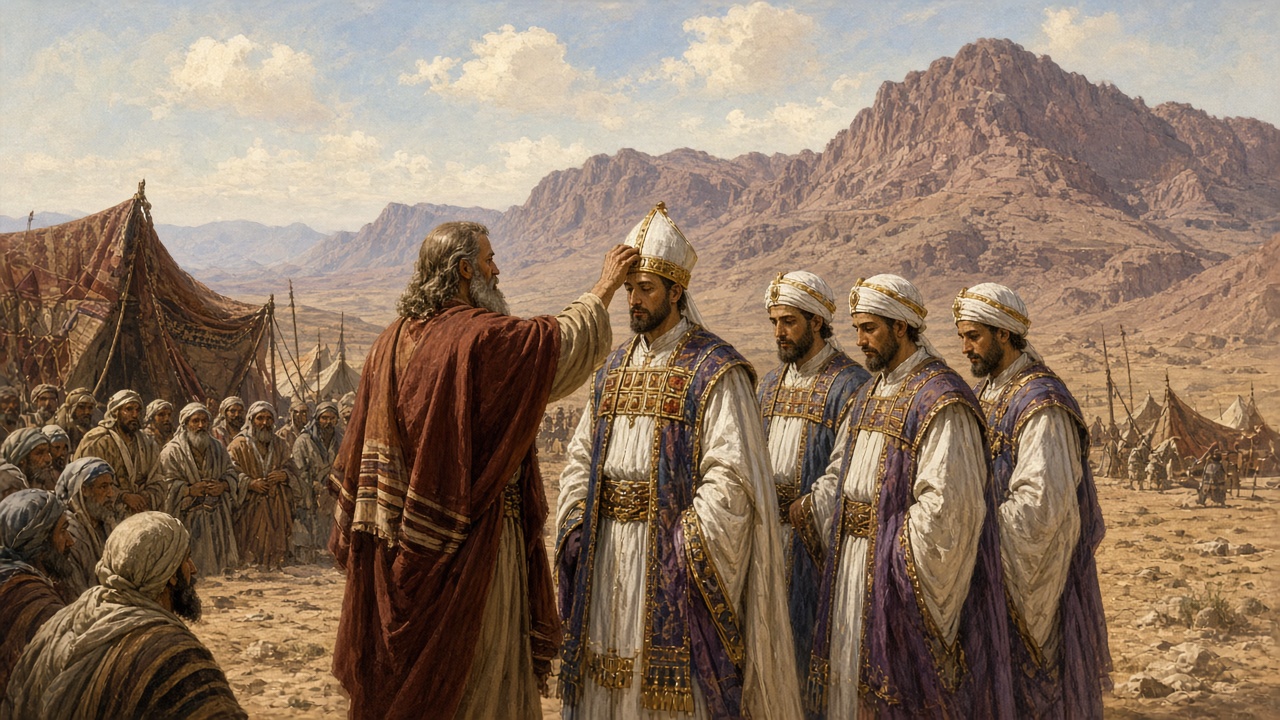
- Los capítulos 1 a 7 dan leyes sobre holocaustos, ofrendas de cereales y ofrendas de acción de gracias, luego sobre ofrendas por el pecado y ofrendas por la culpa, y sobre los deberes de los sacerdotes al ofrecer sacrificios. Los capítulos 8 a 10 relatan la consagración de Aarón y de sus hijos, la primera ofrenda de Aarón por sí mismo y por el pueblo, y la muerte de Nadab y Abiú, que fueron heridos de muerte y enterrados fuera del campamento tras ofrecer fuego extraño, es decir, fuego común no tomado del gran altar de bronce. Los capítulos 11 a 16 tratan de la pureza y de los sacrificios y ordenanzas para apartar la impureza.Fuentes: Easton: Leviticus · Nadab · Abihu
- Easton describe los capítulos 17 a 20 como leyes que marcan la separación entre Israel y los demás pueblos. Otras leyes tratan de la pureza personal de los sacerdotes y de su consumo de las cosas santas, de las ofrendas sin defecto y de la debida celebración de las grandes fiestas en los capítulos 23 y 25. Siguen promesas y advertencias acerca de la obediencia, el libro cierra con una sección sobre votos, y Easton observa que Dios es quien habla de manera directa en casi todo el libro.Fuentes: Easton: Leviticus
- En los ritos del capítulo 16, un macho cabrío queda asociado con Azazel, término que la Authorized Version traduce como scapegoat y que la Revised Version deja como Azazel. Easton informa que algunos intérpretes judíos lo toman como un lugar en el desierto, a unas doce millas al este de Jerusalén, mientras otros lo toman como un espíritu maligno o incluso Satanás, y también señala un significado de raíz: separación.Fuentes: Azazel
Notas escritas con ayuda de IA a partir de fuentes abiertas (Theographic Bible Metadata, CC BY-SA 4.0; Easton’s Bible Dictionary, dominio público) y revisadas antes de publicarse.
Laws for Burnt Offerings
1And the Lord called unto Moses, and spoke unto him out of the tabernacle of the congregation, saying, 2Speak unto the children of Israel, and say unto them, If any one of you wish to bring an offering unto the Lord: of the cattle, either of the herds, or of the flocks, shall ye bring your offering. 3If his offering be a burnt-sacrifice of the herds, then shall he offer a male without blemish: unto the door of the tabernacle of the congregation shall he bring it, that it may be favorably received for him before the Lord. 4And he shall lay his hand upon the head of the burnt-offering; and it shall be accepted for him to make atonement for him. 5And he shall kill the young steer before the Lord: and the sons of Aaron the priests shall bring near the blood, and they shall sprinkle the blood round about upon the altar that is by the door of the tabernacle of the congregation. 6And he shall flay the burnt-offering, and cut it into its pieces. 7And the sons of Aaron the priest shall put fire upon the altar, and lay the wood in order upon the fire; 8And the sons of Aaron the priests shall lay in order the parts, the head, and the fat, upon the wood that is on the fire which is upon the altar; 9But its inwards and its legs shall he wash in water; and the priest shall burn the whole on the altar, as a burnt-sacrifice, an offering made by fire, of a sweet savor unto the Lord. 10And if his offering be of the flocks, of the sheep, or of the goats, for a burnt-sacrifice: then shall he offer a male without blemish as the same. 11And he shall kill it on the side of the altar, northward, before the Lord; and the sons of Aaron the priests shall sprinkle its blood upon the altar round about. 12And he shall cut it into its pieces, with its head and its fat; and the priest shall lay them in order on the wood that is on the fire which is upon the altar; 13But the inwards and the legs shall he wash with water; and the priest shall bring near the whole, and burn it upon the altar; it is a burnt-sacrifice, an offering made by fire, of a sweet savor unto the Lord. 14And if of fowls be the burnt-sacrifice for his offering to the Lord: then shall he bring his offering of turtle-doves, or of young pigeons. 15And the priest shall bring it near unto the altar, and pinch off its head, and burn it on the altar; and the blood thereof shall be wrung out on the wall of the altar. 16And he shall remove its crop with its feathers, and cast it beside the altar on the east part, at the place of the ashes. 17And he shall cleave it by its wings, but shall not divide it asunder; and the priest shall burn it upon the altar, upon the wood that is on the fire: it is a burnt-sacrifice, an offering made by fire, of a sweet savor unto the Lord.
¿Sabías que…?
El Holocausto
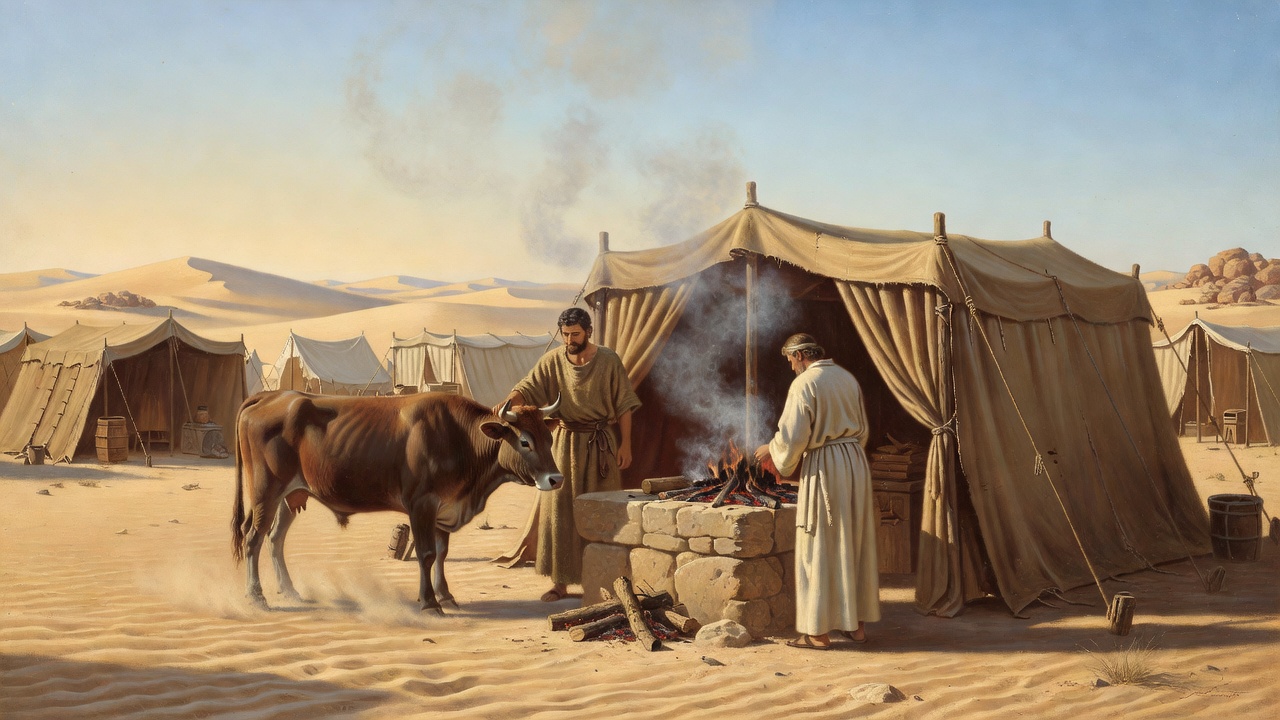
- Las instrucciones para el holocausto se adaptaban a distintas capacidades materiales, permitiendo ofrendas del ganado vacuno, del rebaño (ovejas o cabras) o de aves (tórtolas o pichones). En el caso del ganado y del rebaño, se requería un macho sin defecto.Fuentes: el propio texto bíblico
- El ritual establecía una clara división de funciones entre el oferente y los sacerdotes. El adorador presentaba el animal, ponía su mano sobre la cabeza de este para expiación, lo degollaba, lo desollaba y lavaba sus partes internas, mientras que los hijos de Aarón rociaban la sangre y quemaban toda la ofrenda sobre el altar.Fuentes: el propio texto bíblico · Aaron
Notas escritas con ayuda de IA a partir de fuentes abiertas (Theographic Bible Metadata, CC BY-SA 4.0; Easton’s Bible Dictionary, dominio público) y revisadas antes de publicarse.
Créditos y licencia de esta traducción
Isaac Leeser Tanakh
The Isaac Leeser Tanakh (Jewish Bible)
Public Domain
Language: English
Dialect: archaic British
Translation by: Isaac Leeser
2020-10-14
Títulos de sección adaptados de la Berean Standard Bible (dominio público); no forman parte del texto bíblico de esta traducción.
Fuente: http://ebible.org/englee/ · eBible.org