Job 3
Isaac Leeser Tanakh · Toca un versículo para ver sus referencias cruzadas.
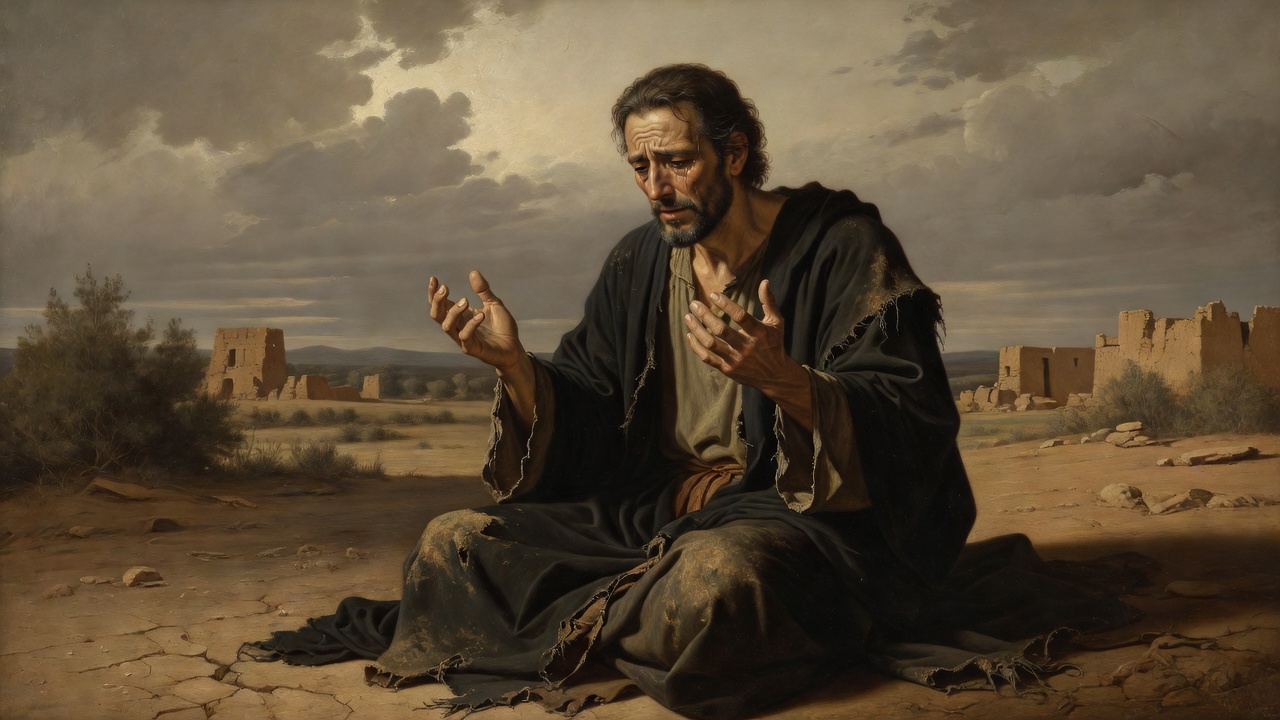
Job Laments His Birth
1After this time Job opened his mouth, and cursed his day. 2And Job commenced, and said, 3Oh that the day whereon I was born might perish, and the night when it was said, There hath been a male child conceived. 4May that day be [covered with] darkness; may not God from above inquire for it, and may no light beam upon it. 5Oh that darkness and the shadow of death might defile it; may a cloud rest upon it; may the blackness of the day terrify it. 6Yon night — let darkness seize upon it; let it not be united to the days of the year; let it not come into the number of the [periods lighted by the] moon. 7Lo, may that night be solitary, let no song of joy occur thereon. 8Let those denounce it that curse the day, who are ready to raise up their mourning cry. 9Let the stars of its twilight be darkened; let it hope for light, and there be none; and let it not behold the eyelids of the morning-dawn; 10Because God closed not against me the doors of the womb, and thus concealed trouble from my eyes. 11Why did I not die [the moment I issued] from the womb, and [why] was I not born merely to perish at once? 12Wherefore were knees ready to receive me? and for what purpose were breasts there that I might suck? 13For now should I be lying still and be quiet; I should sleep: then would I be at rest, 14With kings and counsellors of the earth, who build up ruined places for themselves; 15Or with princes possessing gold, who fill their houses with silver; 16Or as an untimely birth, hidden [from view] I should not exist; as infants that never have seen the light; 17There [where] the wicked cease from troubling; and where the exhausted weary are at rest; 18[Where] the prisoners repose together, [and] they hear no more the taskmaster's voice. 19The small with the great is there, and the servant free from his master. 20Wherefore giveth He now light to the labor-laden, and life unto the bitter in soul? 21Who wait for death, which [cometh] not; and who dig for it sooner than for hidden treasures; 22Who would rejoice even to exulting, who would be glad could they but find a grave? 23[Why is light given] to a man whose way is hidden, and around whom God hath placed a fence? 24For before my food cometh my groaning, and like the water are poured forth my loud complaints. 25Because what I greatly dreaded is come upon me, and what I apprehended is come unto me. 26I have had no safety, and no quiet, and no rest; and [now] harrowing trouble is come.
¿Sabías que…?
Job Maldice el Día de su Nacimiento
- Tras soportar un intenso sufrimiento, Job rompe su silencio no para maldecir a Dios, sino para maldecir el día de su nacimiento y la noche en que fue concebido, deseando que ese día hubiera sido consumido por la oscuridad absoluta.Fuentes: el propio texto bíblico · Job
- En su lamento poético, Job invoca a los que maldicen el día y están listos para despertar a Leviatán, usando imágenes poéticas de caos cósmico para enfatizar su anhelo de borrar su propia existencia.Fuentes: el propio texto bíblico
- Job describe la tumba como un lugar de descanso e igualdad donde reyes, consejeros, esclavos y cautivos reposan juntos, libres del agotamiento, la opresión y la angustia que afligen a los vivos.Fuentes: el propio texto bíblico
Notas escritas con ayuda de IA a partir de fuentes abiertas (Theographic Bible Metadata, CC BY-SA 4.0; Easton’s Bible Dictionary, dominio público) y revisadas antes de publicarse.
Créditos y licencia de esta traducción
Isaac Leeser Tanakh
The Isaac Leeser Tanakh (Jewish Bible)
Public Domain
Language: English
Dialect: archaic British
Translation by: Isaac Leeser
2020-10-14
Títulos de sección adaptados de la Berean Standard Bible (dominio público); no forman parte del texto bíblico de esta traducción.
Fuente: http://ebible.org/englee/ · eBible.org