Éxodo 5
Isaac Leeser Tanakh · Toca un versículo para ver sus referencias cruzadas.
Pharaoh’s First Refusal
1And after that Moses and Aaron went in, and said unto Pharaoh, Thus hath said the Everlasting One, the God of Israel, Let my people go, that they may hold a feast unto me in the wilderness. 2And Pharaoh said, Who is the Everlasting, whose voice I am to obey, to let Israel go? I know not the Everlasting, nor will I let Israel go. 3And they said, The God of the Hebrews hath met with us: let us go, we pray thee, a three days' journey into the desert, and sacrifice unto the Lord our God; lest he fall upon us with the pestilence, or with the sword. 4And the king of Egypt said unto them, Wherefore do ye, Moses and Aaron, hinder the people from their works? get you unto your own affairs. 5And Pharaoh said, Behold, the people of the land now are many, and ye disturb them in the pursuit of their labors.
Bricks and Straw
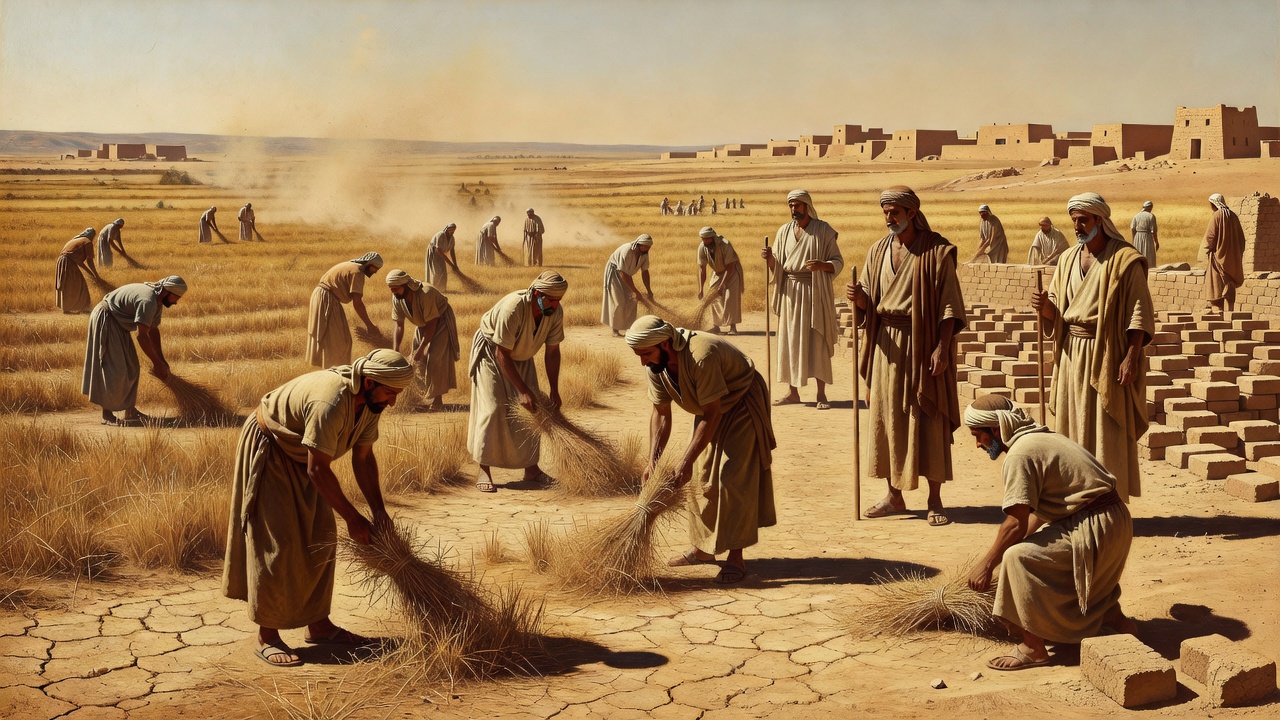
6And Pharaoh commanded on the same day the taskmasters of the people, and its officers, saying, 7Ye shall no more give the people straw to make the bricks, as yesterday and the day before; they themselves shall go and gather themselves straw. 8And the number of the bricks, which they did make heretofore, ye shall impose upon them, ye shall not diminish aught thereof; for they are idle: therefore they cry, saying, Let us go and sacrifice to our God. 9Let the work be made to lie heavily upon the men, that they may have enough to do therein; and that they may not pay attention to false words. 10And the taskmasters of the people and its officers went out, and they said to the people, saying, Thus saith Pharaoh, I will not give you any straw. 11Go ye, get yourselves straw from wherever ye can find it; yet not the least shall be taken off from your work. 12And the people scattered themselves abroad throughout all the land of Egypt to gather stubble instead of straw. 13And the taskmasters were urgent, saying, Fulfill your works, every day its due portion, just as when there was straw. 14And the officers of the children of Israel, whom the taskmasters of Pharaoh had set over them, were beaten, as these said, Wherefore have ye not fulfilled your task in making brick as heretofore, both yesterday and today?
The Cry of the Israelites
15And the officers of the children of Israel came and cried unto Pharaoh, saying, Wherefore dealest thou thus with thy servants? 16Straw is not given unto thy servants, and, Make bricks, say they to us: and, behold, thy servants are beaten, and thy people are treated as sinners. 17But he said, Idle are ye, idle; therefore say ye, Let us go and sacrifice to the Lord. 18And now go, work, and straw shall not be given you; yet the required number of bricks shall ye deliver. 19And the officers of the children of Israel saw themselves in the evil necessity to say, Ye shall not diminish aught from your bricks, every day of its task. 20And they met Moses and Aaron, standing in their way, as they came forth from Pharaoh. 21And they said unto them, May the Lord look upon you, and judge; because ye have made our savor to be abhorred in the eyes of Pharaoh, and the eyes of his servants, to put a sword in their hand to slay us. 22And Moses returned unto the Lord, and said, Lord, wherefore hast thou let so much evil come upon this people? why is it that thou hast sent me? 23For, since I came unto Pharaoh to speak in thy name, he hath done more evil to this people; but thou hast in nowise delivered thy people.
¿Sabías que…?
Trabajo más duro tras la negativa del faraón
- El Easton's Bible Dictionary (1897) dice que el faraón del Éxodo fue probablemente Menephtah I, el decimocuarto y mayor hijo sobreviviente de Ramsés II, pero trata la identificación como una cuestión aún abierta: algunos eruditos, señala la obra, se inclinan por Seti II, cuyo reinado describe como iniciado en paz y terminado en un desastre repentino. La entrada dice que residía en Zoán, donde recibió a Moisés y a Aarón en las audiencias registradas en Éxodo.Fuentes: Pharaoh (of the Exodus) · el propio texto bíblico
- El Easton's Bible Dictionary (1897) sitúa la llegada de Jacob a Egipto probablemente unos 350 años antes del nacimiento de Moisés. Dice que un rey hicso, de un pueblo semita pastoril de Asia y llamado rey pastor, recibió a la familia con favor y les asignó Gosén, la mejor tierra; en este capítulo el faraón trata al pueblo de Israel, ya numeroso, como trabajadores a los que no dejará ir.Fuentes: Moses · el propio texto bíblico
- El faraón responde a la petición de celebrar una fiesta en el desierto dejando de suministrar la paja para los ladrillos, pero exigiendo todavía la misma cuota diaria. El pueblo se dispersa por toda la tierra de Egipto para recoger rastrojo, y los oficiales israelitas que los capataces del faraón habían puesto sobre ellos son golpeados cuando esa cuota no se cumple.Fuentes: el propio texto bíblico
Notas escritas con ayuda de IA a partir de fuentes abiertas (Theographic Bible Metadata, CC BY-SA 4.0; Easton’s Bible Dictionary, dominio público) y revisadas antes de publicarse.
Lugares de este capítulo
Solo aparecen lugares identificados con alta confianza (90 % o más según las fuentes académicas reunidas por OpenBible). Mapa de la época: DARE (Digital Atlas of the Roman Empire), CC BY 4.0; mapa actual: © colaboradores de OpenStreetMap; lugares: OpenBible.info (CC BY 4.0).
Créditos y licencia de esta traducción
Isaac Leeser Tanakh
The Isaac Leeser Tanakh (Jewish Bible)
Public Domain
Language: English
Dialect: archaic British
Translation by: Isaac Leeser
2020-10-14
Títulos de sección adaptados de la Berean Standard Bible (dominio público); no forman parte del texto bíblico de esta traducción.
Fuente: http://ebible.org/englee/ · eBible.org