Job 3
JPS TaNaKH 1917 · Toca un versículo para ver sus referencias cruzadas.
Job Laments His Birth
1After this opened Job his mouth, and cursed his day. 2And Job spoke, and said: 3Let the day perish wherein I was born, and the night wherein it was said: 'A man-child is brought forth.' 4Let that day be darkness; let not God inquire after it from above, neither let the light shine upon it. 5Let darkness and the shadow of death claim it for their own; let a cloud dwell upon it; let all that maketh black the day terrify it. 6As for that night, let thick darkness seize upon it; let it not rejoice among the days of the year; let it not come into the number of the months. 7Lo, let that night be desolate; let no joyful voice come therein. 8Let them curse it that curse the day, who are ready to rouse up leviathan. 9Let the stars of the twilight thereof be dark; let it look for light, but have none; neither let it behold the eyelids of the morning; 10Because it shut not up the doors of my mother's womb, nor hid trouble from mine eyes. 11Why died I not from the womb? Why did I not perish at birth? 12Why did the knees receive me? And wherefore the breasts, that I should suck? 13For now should I have lain still and been quiet; I should have slept; then had I been at rest — 14With kings and counsellors of the earth, who built up waste places for themselves; 15Or with princes that had gold, who filled their houses with silver; 16Or as a hidden untimely birth I had not been; as infants that never saw light. 17There the wicked cease from troubling; and there the weary are at rest. 18There the prisoners are at ease together; they hear not the voice of the taskmaster. 19The small and great are there alike; and the servant is free from his master. 20Wherewith is light given to him that is in misery, and life unto the bitter in soul — 21Who long for death, but it cometh not; and dig for it more than for hid treasures; 22Who rejoice unto exultation, and are glad, when they can find the grave? — 23To a man whose way is hid, and whom God hath hedged in? 24For my sighing cometh instead of my food, and my roarings are poured out like water. 25For the thing which I did fear is come upon me, and that which I was afraid of hath overtaken me. 26I was not at ease, neither was I quiet, neither had I rest; but trouble came.
¿Sabías que…?
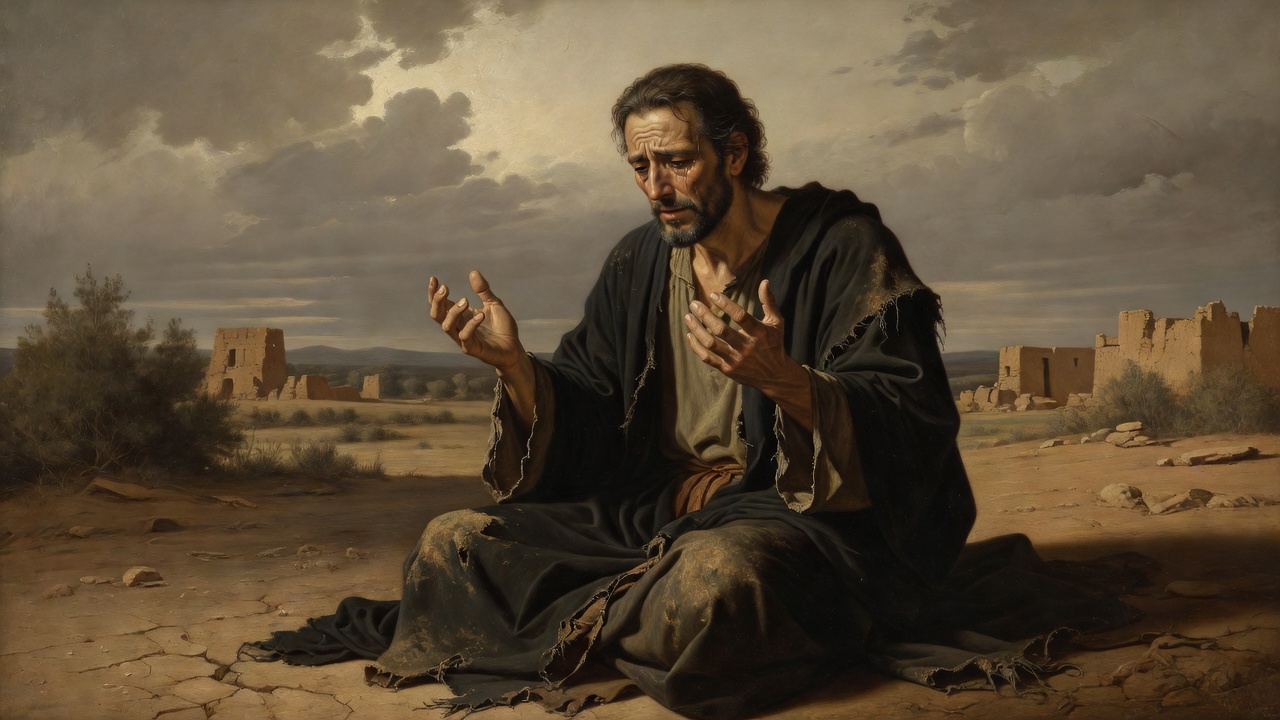
Job Maldice el Día de su Nacimiento
- Tras soportar un intenso sufrimiento, Job rompe su silencio no para maldecir a Dios, sino para maldecir el día de su nacimiento y la noche en que fue concebido, deseando que ese día hubiera sido consumido por la oscuridad absoluta.Fuentes: el propio texto bíblico · Job
- En su lamento poético, Job invoca a los que maldicen el día y están listos para despertar a Leviatán, usando imágenes poéticas de caos cósmico para enfatizar su anhelo de borrar su propia existencia.Fuentes: el propio texto bíblico
- Job describe la tumba como un lugar de descanso e igualdad donde reyes, consejeros, esclavos y cautivos reposan juntos, libres del agotamiento, la opresión y la angustia que afligen a los vivos.Fuentes: el propio texto bíblico
Notas escritas con ayuda de IA a partir de fuentes abiertas (Theographic Bible Metadata, CC BY-SA 4.0; Easton’s Bible Dictionary, dominio público) y revisadas antes de publicarse.
Créditos y licencia de esta traducción
JPS TaNaKH 1917
The Jewish Bible (Old Testament) in English, published by the Jewish Publication Society in 1917
Public Domain
Language: English
Dialect: American
Translation by: Jewish Publication Society
This copy of the Old JPS TaNaKH by the Jewish Publication Society is brought to you courtesy of eBible.org . For the new JPS TaNaKH (1972, 1978, 1980), please see jps.org .
2023-09-19
Títulos de sección adaptados de la Berean Standard Bible (dominio público); no forman parte del texto bíblico de esta traducción.
Fuente: http://ebible.org/engjps/ · eBible.org