Proverbios 11
Geneva Bible 1599 · Toca un versículo para ver sus referencias cruzadas.
Dishonest Scales
1False balances are an abomination vnto the Lord: but a perfite weight pleaseth him. 2When pride commeth, then commeth shame: but with the lowly is wisdome. 3The vprightnes of the iust shall guide them: but the frowardnes of the transgressers shall destroy them. 4Riches auaile not in the day of wrath: but righteousnes deliuereth from death. 5The righteousnes of the vpright shall direct his way: but the wicked shall fall in his owne wickednes. 6The righteousnesse of the iust shall deliuer them: but the transgressers shall be taken in their owne wickednes. 7When a wicked man dieth, his hope perisheth, and the hope of the vniust shall perish. 8The righteous escapeth out of trouble, and the wicked shall come in his steade. 9An hypocrite with his mouth hurteth his neighbour: but the righteous shall be deliuered by knowledge. 10In the prosperitie of the righteous the citie reioyceth, and when the wicked perish, there is ioye. 11By the blessing of the righteous, the citie is exalted: but it is subuerted by the mouth of the wicked. 12He that despiseth his neighbour, is destitute of wisedome: but a man of vnderstanding will keepe silence. 13Hee that goeth about as a slanderer, discouereth a secret: but hee that is of a faithfull heart concealeth a matter. 14Where no counsell is, the people fall: but where many counsellers are, there is health. 15Hee shall be sore vexed, that is suretie for a stranger, and he that hateth suretiship, is sure. 16A gracious woman atteineth honour, and the strong men atteine riches. 17Hee that is mercifull, rewardeth his owne soule: but he that troubleth his own flesh, is cruel. 18The wicked worketh a deceitful worke: but hee that soweth righteousnes, shall receiue a sure rewarde. 19As righteousnes leadeth to life: so hee that followeth euill, seeketh his owne death. 20They that are of a froward heart, are abomination to the Lord: but they that are vpright in their way, are his delite. 21Though hande ioyne in hande, the wicked shall not be vnpunished: but the seede of the righteous shall escape. 22As a iewell of golde in a swines snoute: so is a faire woman, which lacketh discretion. 23The desire of the righteous is onely good: but the hope of the wicked is indignation. 24There is that scattereth, and is more increased: but hee that spareth more then is right, surely commeth to pouertie. 25The liberall person shall haue plentie: and he that watereth, shall also haue raine. 26He that withdraweth the corne, the people will curse him: but blessing shalbe vpon the head of him that selleth corne. 27He that seeketh good things, getteth fauour: but he that seeketh euill, it shall come to him. 28He that trusteth in his riches, shall fall: but the righteous shall florish as a leafe. 29He that troubleth his owne house, shall inherite the winde, and the foole shalbe seruant to the wise in heart. 30The fruite of the righteous is as a tree of life, and he that winneth soules, is wise. 31Beholde, the righteous shalbe recompensed in the earth: howe much more the wicked and the sinner?
¿Sabías que…?
Integridad, riqueza y la comunidad
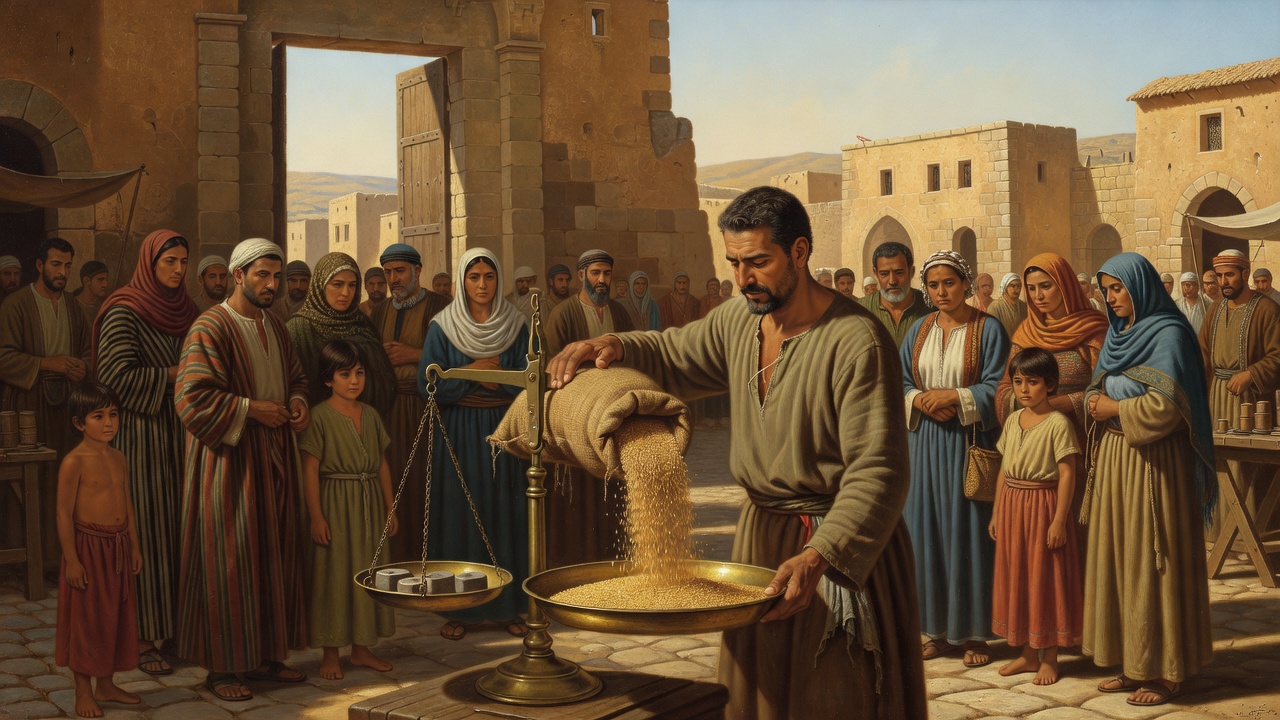
- El comercio antiguo dependía de balanzas con pesas de piedra para medir metales preciosos y mercancías. El capítulo comienza condenando las balanzas deshonestas y elogiando el peso exacto, subrayando que la honradez en las transacciones cotidianas refleja la conducta ante Dios.Fuentes: el propio texto bíblico
- Proverbios 11 resalta el impacto cívico del comportamiento individual, señalando que la estabilidad y la alegría de una ciudad dependen de la integridad de los justos, de sabios consejeros y de líderes rectos, en contraste con las acciones destructivas de los impíos.Fuentes: el propio texto bíblico
- En las sociedades agrícolas, acaparar grano durante la escasez para encarecer los precios provocaba un gran sufrimiento. El capítulo contrasta al acaparador de grano, que recibe la maldición del pueblo, con el comerciante que vende su alimento para sustentar a sus vecinos.Fuentes: el propio texto bíblico
Notas escritas con ayuda de IA a partir de fuentes abiertas (Theographic Bible Metadata, CC BY-SA 4.0; Easton’s Bible Dictionary, dominio público) y revisadas antes de publicarse.
Créditos y licencia de esta traducción
Geneva Bible 1599
The Geneva Bible in Old English of 1599
Public Domain
Language: English
Dialect: Old
This digital copy is freely available world-wide, with no copyright restrictions, courtesy of eBible.org and many others. Note that the spelling used is the original spelling, which is not modern English.
2024-03-16
Títulos de sección adaptados de la Berean Standard Bible (dominio público); no forman parte del texto bíblico de esta traducción.
Fuente: http://ebible.org/enggnv/ · eBible.org