Josué 1
Geneva Bible 1599 · Toca un versículo para ver sus referencias cruzadas.
Acerca de este libro
Acerca de Josué
- El Diccionario Bíblico de Easton (1897) explica el nombre de Josué como "Jehová es su ayuda" o "Jehová el Salvador". Era hijo de Nun, de la tribu de Efraín, nacido en Egipto, y sucesor de Moisés como líder de Israel; las guerras de conquista que dirigió quedan registradas en el libro que lleva su nombre. Ese artículo no nombra al autor del libro ni da una fecha para su composición.Fuentes: Easton: Joshua · Joshua
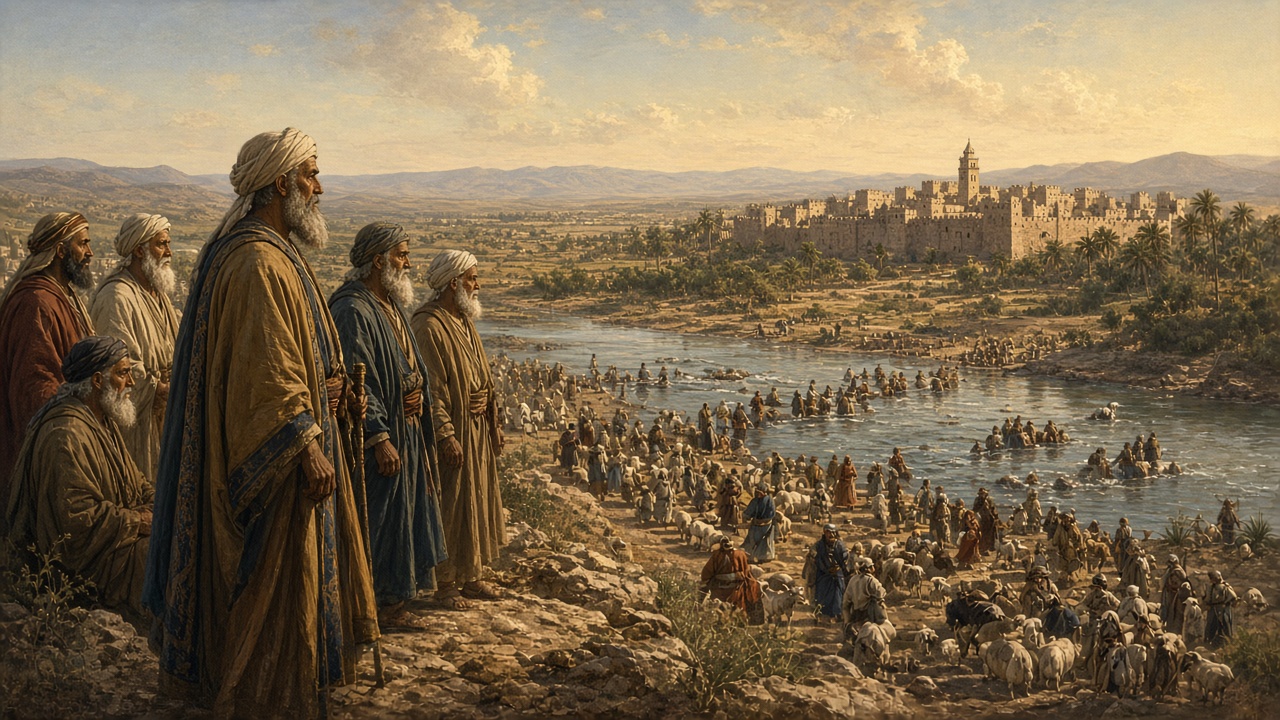
- Cuando Josué asumió el mando, el pueblo estaba acampado en Sitim. Cruzaron el Jordán y acamparon en Gilgal, donde, según Easton, circuncidó al pueblo y celebró la Pascua. Jericó, ciudad fortificada entre palmeras, a unas cinco millas al oeste del Jordán, se describe como la fortaleza más fuerte de Canaán y la llave de la Palestina occidental; Hai, al este de Betel, fue la segunda ciudad cananea tomada, después de una derrota inicial.Fuentes: Easton: Joshua · Jericho · Ai
- El Diccionario Bíblico de Easton (1897) dice que Josué conquistó seis naciones y treinta y un reyes, y luego repartió la tierra entre las tribus, quedándose Timnat-sera, en el monte Efraín, como herencia propia. Al este del Jordán, Galaad se describe como una región montañosa ocupada por las tribus de Gad y Rubén y por la parte sur de Manasés.Fuentes: Easton: Joshua · Gilead
- Citando a Edersheim, el diccionario dice que el nombre de Josué fue cambiado de Oshea, "ayuda", a Jehoshua, "Jehová es ayuda", y señala que se le llama Jesús en Hechos 7:45 y Hebreos 4:8. Afirma que murió a los ciento diez años, veinticinco años después de cruzar el Jordán, y que fue sepultado en su propia ciudad, Timnat-sera; de su padre, Nun, no se registra nada más que el hecho de que era el padre de Josué.Fuentes: Easton: Joshua · Joshua · Nun
- Antes de dirigir la conquista, Josué comandó el ejército de Israel contra los amalecitas en Refidim, sirvió como ministro de Moisés y fue uno de los doce enviados a explorar Canaán; solo él y Caleb trajeron un informe alentador. Tal como Easton describe el libro, este va desde el cruce del Jordán y la toma de Jericó, a través de años de guerra, hasta el reparto de la tierra y el último discurso de Josué.Fuentes: Easton: Joshua
Notas escritas con ayuda de IA a partir de fuentes abiertas (Theographic Bible Metadata, CC BY-SA 4.0; Easton’s Bible Dictionary, dominio público) y revisadas antes de publicarse.
God Instructs Joshua
1Nowe after the death of Moses the seruant of the Lord, the Lord spake vnto Ioshua the sonne of Nun, Moses minister, saying, 2Moses my seruant is dead: nowe therefore arise, go ouer this Iorden, thou, and all this people, vnto the lande which I giue them, that is, to ye children of Israel. 3Euery place that the sole of your foote shall treade vpon, haue I giuen you, as I said vnto Moses. 4From the wildernesse and this Lebanon euen vnto the great riuer, the riuer Perath: all the land of the Hittites, euen vnto the great Sea towarde the going downe of the sunne, shalbe your coast. 5There shall not a man be able to withstande thee all the dayes of thy life: as I was with Moses, so will I be with thee: I will not leaue thee, nor forsake thee. 6Be strong and of a good courage: for vnto this people shalt thou deuide the lande for an inheritance, which I sware vnto their fathers to giue them. 7Onely be thou strong, and of a most valiant courage, that thou mayest obserue and doe according to all the Lawe which Moses my seruant hath commanded thee: thou shalt not turne away from it to the right hande, nor to the left, that thou mayest prosper whithersoeuer thou goest. 8Let not this booke of the Law depart out of thy mouth, but meditate therin day and night, that thou mayest obserue and doe according to all that is written therein: for then shalt thou make thy way prosperous, and then shalt thou haue good successe. 9Haue not I commanded thee, saying, Be strong and of a good courage, feare not, nor be discouraged? for I the Lord thy God will be with thee, whithersoeuer thou goest.
Joshua Takes Charge
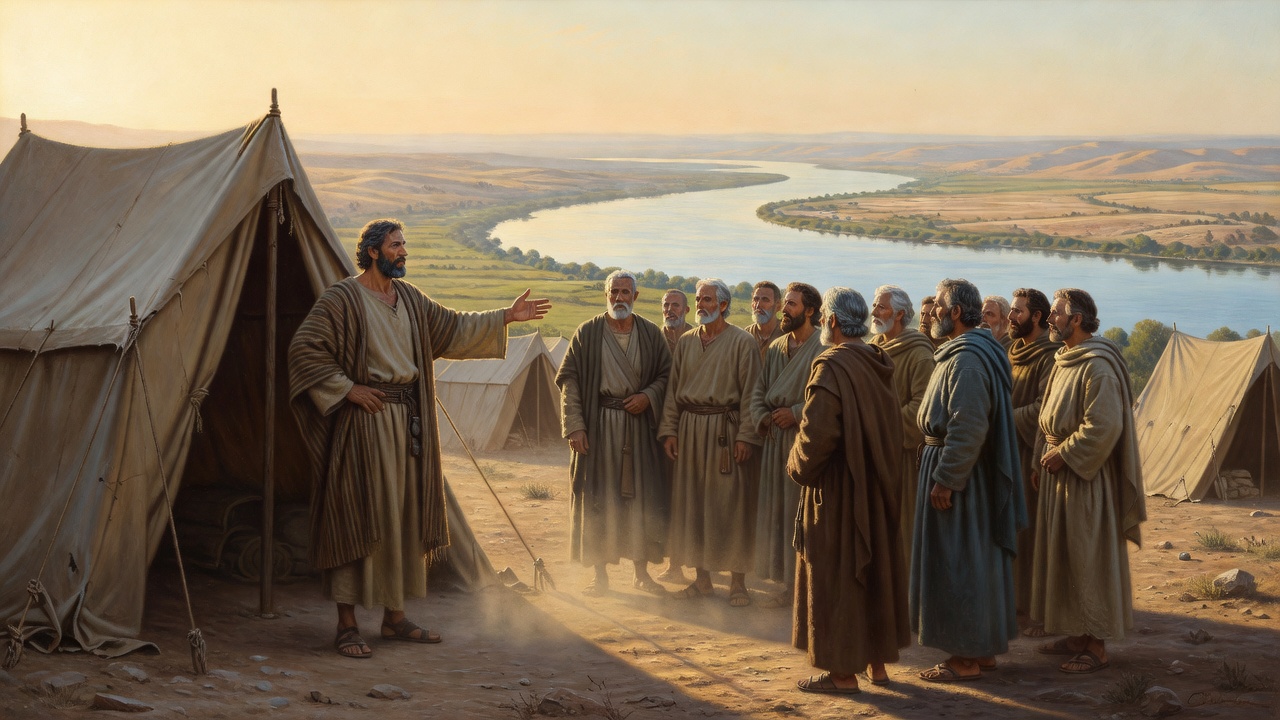
10Then Ioshua commanded the officers of the people, saying, 11Passe through the hoste, and commande the people, saying, Prepare you vitailes: for after three dayes ye shall passe ouer this Iorden, to goe in to possesse the lande, which the Lord your God giueth you to possesse it. 12And vnto the Reubenites, and to the Gadites, and to halfe the tribe of Manasseh spake Ioshua, saying, 13Remember the worde, which Moses the seruant of the Lord commanded you, saying, The Lord your God hath giuen you rest, and hath giuen you this land. 14Your wiues, your children, and your cattell shall remaine in the land which Moses gaue you on this side Iorden: but ye shall goe ouer before your brethren armed, all that be men of warre, and shall helpe them, 15Vntill the Lord haue giuen your brethren rest, as well as to you, and vntill they also shall possesse the land, which the Lord your God giueth them: then shall ye returne vnto the lande of your possession and shall possesse it, which land Moses the Lordes seruant gaue you on this side Iorden toward the sunne rising. 16Then they answered Ioshua, saying, Al that thou hast commanded vs, we will doe, and whithersoeuer thou sendest vs, we will goe. 17As we obeyed Moses in all things, so will we obey thee: onely the Lord thy God be with thee, as he was with Moses. 18Whosoeuer shall rebell against thy commandement, and will not obey thy wordes in all that thou commaundest him, let him bee put to death: onely be strong and of good courage.
¿Sabías que…?
Josué asume el liderazgo
- Josué, hijo de Nun y de la tribu de Efraín, sirvió como asistente y comandante militar de Moisés antes de ser designado para sucederlo como líder de Israel. Su nombre significa "el Señor es su ayuda" o "el Señor el Salvador".Fuentes: Joshua · el propio texto bíblico
- El territorio descrito en el encargo a Josué abarcaba desde el desierto y la cordillera del Líbano, al norte, hasta el río Éufrates ("el gran río"), al este, y el mar Mediterráneo ("el gran mar"), al oeste.Fuentes: el propio texto bíblico · Lebanon · Euphrates · Great Sea
- Las tribos de Rubén, Gad y la media tribu de Manasés ya habían recibido tierras al este del río Jordán bajo el mando de Moisés. Aun así, sus hombres de guerra debían cruzar armados delante de las demás tribus para ayudarlas hasta asegurar toda la tierra.Fuentes: el propio texto bíblico · Manasseh (son of Joseph)
Notas escritas con ayuda de IA a partir de fuentes abiertas (Theographic Bible Metadata, CC BY-SA 4.0; Easton’s Bible Dictionary, dominio público) y revisadas antes de publicarse.
Lugares de este capítulo
- Jordan · Hoy: Jordan River · 31.761, 35.558 · versículos 2, 11, 14, 15
- Euphrates · Hoy: Euphrates River · 31.004, 47.442 · versículo 4
- Great Sea · Hoy: Mediterranean Sea · 31.805, 34.170 · versículo 4
- Lebanon · 33.540, 35.584 · versículo 4
- Negeb · 31.245, 34.841 · versículo 4
- Syria · Hoy: Aram · 33.511, 36.306 · versículo 4
Solo aparecen lugares identificados con alta confianza (90 % o más según las fuentes académicas reunidas por OpenBible). Mapa de la época: DARE (Digital Atlas of the Roman Empire), CC BY 4.0; mapa actual: © colaboradores de OpenStreetMap; lugares: OpenBible.info (CC BY 4.0).
Créditos y licencia de esta traducción
Geneva Bible 1599
The Geneva Bible in Old English of 1599
Public Domain
Language: English
Dialect: Old
This digital copy is freely available world-wide, with no copyright restrictions, courtesy of eBible.org and many others. Note that the spelling used is the original spelling, which is not modern English.
2024-03-16
Títulos de sección adaptados de la Berean Standard Bible (dominio público); no forman parte del texto bíblico de esta traducción.
Fuente: http://ebible.org/enggnv/ · eBible.org