Isaías 64
Geneva Bible 1599 · Toca un versículo para ver sus referencias cruzadas.
A Prayer for God’s Power
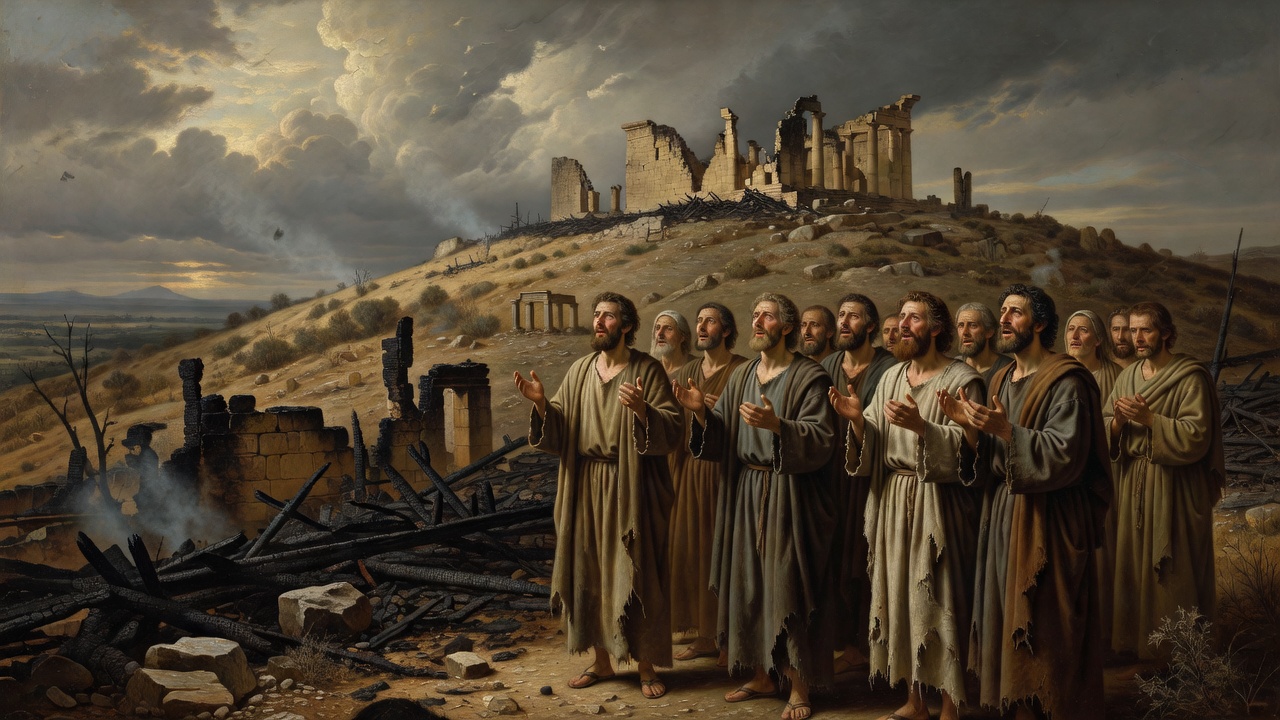
1Oh, that thou wouldest breake the heauens, and come downe, and that the mountaines might melt at thy presence! 2As the melting fire burned, as the fire caused the waters to boyle, (that thou mightest declare thy Name to thy aduersaries) the people did tremble at thy presence. 3When thou diddest terrible things, which we looked not for, thou camest downe, and the mountaines melted at thy presence. 4For since the beginning of the world they haue not heard nor vnderstande with the eare, neither hath ye eye seene another God beside thee, which doeth so to him that waiteth for him. 5Thou diddest meete him, that reioyced in thee, and did iustly: they remembred thee in thy wayes: beholde, thou art angrie, for we haue sinned: yet in them is continuance, and we shall be saued. 6But we haue all bene as an vncleane thing, and all our righteousnes is as filthie cloutes, and we all doe fade like a leafe, and our iniquities like the winde haue taken vs away. 7And there is none that calleth vpon thy Name, neither that stirreth vp himselfe to take holde of thee: for thou hast hid thy face from vs, and hast consumed vs because of our iniquities. 8But now, O Lord, thou art our Father: we are the clay, and thou art our potter, and we all are the worke of thine hands. 9Be not angry, O Lord, aboue measure, neither remember iniquitie for euer: lo, we beseech thee beholde, we are all thy people. 10Thine holy cities lye waste: Zion is a wildernes, and Ierusalem a desart. 11The House of our Sanctuarie and of our glorie, where our fathers praysed thee, is burnt vp with fire and all our pleasant things are wasted. 12Wilt thou holde thy selfe still at these things, O Lord? wilt thou holde thy peace and afflict vs aboue measure?
¿Sabías que…?
Una Oración por Misericordia en Medio de la Ruina
- El pasaje comienza con una súplica para que Dios rasgue los cielos y descienda con poder sobrecogedor, como fuego que enciende la leña. Sin embargo, contrasta este deseo de la presencia divina con una confesión de la indignidad humana, comparando a las personas con hojas secas arrastradas por sus propias iniquidades.Fuentes: el propio texto bíblico
- En Isaías 64, la comunidad apela a Dios como Padre y artesano, declarando: "nosotros somos el barro, y tú nuestro alfarero". Esta metáfora subraya la fragilidad humana y la total dependencia de Dios, suplicando misericordia divina a pesar del reconocimiento de sus culpas.Fuentes: el propio texto bíblico
- El capítulo lamenta la destrucción de los lugares sagrados, describiendo a Sion y Jerusalén como desolaciones y desiertos. El texto lamenta específicamente el incendio y la ruina del templo sagrado donde las generaciones pasadas habían ofrecido alabanzas.Fuentes: el propio texto bíblico · Zion · Jerusalem
Notas escritas con ayuda de IA a partir de fuentes abiertas (Theographic Bible Metadata, CC BY-SA 4.0; Easton’s Bible Dictionary, dominio público) y revisadas antes de publicarse.
Lugares de este capítulo
Solo aparecen lugares identificados con alta confianza (90 % o más según las fuentes académicas reunidas por OpenBible). Mapa de la época: DARE (Digital Atlas of the Roman Empire), CC BY 4.0; mapa actual: © colaboradores de OpenStreetMap; lugares: OpenBible.info (CC BY 4.0).
Créditos y licencia de esta traducción
Geneva Bible 1599
The Geneva Bible in Old English of 1599
Public Domain
Language: English
Dialect: Old
This digital copy is freely available world-wide, with no copyright restrictions, courtesy of eBible.org and many others. Note that the spelling used is the original spelling, which is not modern English.
2024-03-16
Títulos de sección adaptados de la Berean Standard Bible (dominio público); no forman parte del texto bíblico de esta traducción.
Fuente: http://ebible.org/enggnv/ · eBible.org