Romanos 5
Free Bible Version · Toca un versículo para ver sus referencias cruzadas.
The Triumph of Faith
1Now that we have been made right by God by trusting in him, we have peace with him through our Lord Jesus Christ. 2It's through Jesus, trusting in him, that we've gained access to this position of grace where we now stand, looking forward with happiness and confidence to sharing in God's glory. 3Not only this—we also remain confident when problems come, because we know that experiencing problems develops spiritual stamina. 4Spiritual stamina in turn develops a mature character, and this mature character results in confident hope. 5Since we have this hope we're never disappointed, for God's love has been poured into us through the Holy Spirit he's given us.
Christ’s Sacrifice for the Ungodly
6When we were completely helpless, at just the right time Christ died for us ungodly people. 7Who would die for anybody else, even someone who does what's right? (Though perhaps somebody would be brave enough to die for someone really good.) 8But God demonstrates his love for us in that Christ died for us while we were still sinners.
9Now that we are made right by his death, we can be absolutely sure we'll be saved by him from the coming judgment. 10While we were his enemies, God made us his friends through the death of his Son, and so we can be absolutely sure that he will save us through the life of his Son. 11In addition to this we now celebrate what God has done through our Lord Jesus Christ to reconcile us and make us his friends.
Death in Adam, Life in Christ
12For through one man sin entered the world, and sin led to death. In this way death came to everyone, for everyone sinned. 13Even before the law was given, sin was in the world, however it wasn't counted as sin because there was no law. 14But death still ruled from Adam until Moses, even over those who didn't sin in the same way as Adam did.
Now Adam prefigured the one to come. 15But the gift of Jesus is not like the sin of Adam. Though many people died because of one man's sin, God's grace is so much greater and has been shared with so many through his gracious gift in the person of Jesus Christ. 16The result of the gift is not like that of the sin. The result of Adam's sin was judgment and condemnation, but the gift sets us right with God, despite our many sins. 17As a result of one man's sin, death ruled because of him. But God's grace is so much greater and his gift sets us right, for everyone who receives it will rule in life through the person of Jesus Christ! 18Just as one sin brought condemnation on everyone, in the same way one right act gave everyone the opportunity to live right. 19Just as through one man's disobedience many became sinners, in the same way through one man's obedience many are made right with God. 20When the law was introduced, sin became even more obvious. But while sin became much more obvious, grace became even more obvious! 21Just as sin ruled us and brought us death, now grace rules by making us right with God, bringing us eternal life through Jesus Christ our Lord.
¿Sabías que…?
Adán, Cristo y el reinado de la gracia
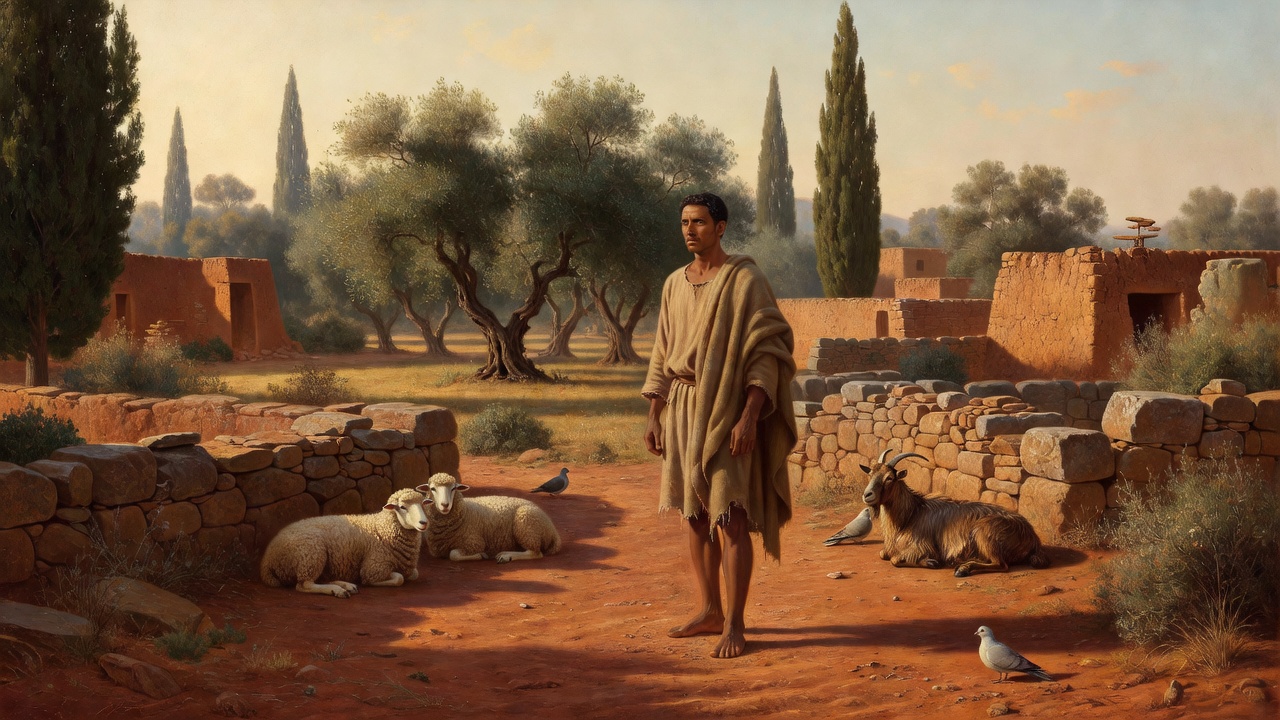
- El hombre por medio del cual Romanos 5 dice que el pecado entró en el mundo, y la muerte por medio del pecado, es Adán. Una nota de referencia presenta Adán como una palabra babilónica que significa rojo, el nombre genérico del ser humano en hebreo y en asirio, y vincula ese nombre con el hecho de que fue formado del polvo de la tierra. El relato de su creación y de su caída está en el primer libro de Moisés.Fuentes: Adam · el propio texto bíblico
- Romanos 5 afirma que la muerte reinó desde Adán hasta Moisés, incluso sobre quienes no pecaron de la manera en que Adán transgredió. Dice también que el pecado ya estaba en el mundo antes de que se diera la ley, pero que el pecado no se toma en cuenta cuando no hay ley. Adán es llamado figura de aquel que había de venir.Fuentes: el propio texto bíblico
- El capítulo pone esa única transgresión junto al don que vino por la gracia de Jesucristo. El juicio tras un solo pecado trajo condenación, mientras que el don tras muchas transgresiones trajo justificación. La ley, dice el texto, entró para que la transgresión aumentara; sin embargo, donde el pecado aumentó, la gracia aumentó mucho más.Fuentes: el propio texto bíblico
Notas escritas con ayuda de IA a partir de fuentes abiertas (Theographic Bible Metadata, CC BY-SA 4.0; Easton’s Bible Dictionary, dominio público) y revisadas antes de publicarse.
Créditos y licencia de esta traducción
Free Bible Version
The New Testament and Psalms in the Free Bible Version translation in American English
Copyright © 2018 Dr. Jonathan Gallagher
Language: English
Dialect: American
Translation by: Dr. Jonathan Gallagher
This translation is made available to you under the terms of the
Creative Commons Attribution Share-Alike license 4.0.
You have permission to share and redistribute this Bible translation in any format and to make reasonable revisions and adaptations of this translation, provided that:
You include the above copyright and source information.
If you make any changes to the text, you must indicate that you did so in a way that makes it clear that the original licensor is not necessarily endorsing your changes.
If you redistribute this text, you must distribute your contributions under the same license as the original.
Pictures included with Scriptures and other documents on this site are licensed just for use with those Scriptures and documents.
For other uses, please contact the respective copyright owners.
Note that in addition to the rules above, revising and adapting God's Word involves a great responsibility to be true to God's Word. See Revelation 22:18-19.
2026-10-02
Títulos de sección adaptados de la Berean Standard Bible (dominio público); no forman parte del texto bíblico de esta traducción.
Fuente: http://ebible.org/engfbv/ · eBible.org