Josué 15
Free Bible Version · Toca un versículo para ver sus referencias cruzadas.
Judah’s Inheritance
1This was the land allotted to the tribe of Judah, by families: it stretched south to the border of Edom, to the wilderness of Zin in the far south. 2Their boundary began at the end of the Salt Sea—the bay that faces south— 3and then went south of Scorpion Pass through the wilderness of Zin, then heading south from Kadesh-barnea to Hezron. From there it went up to Addar and then turned towards Karka, 4passing through Azmon and out to the Wadi of Egypt, ending at the sea. This was their southern border.
5The eastern border of Judah was the Salt Sea, up to where the Jordan River ends.
The northern boundary ran from the northern bay of the sea where the Jordan ends 6up to the border of Beth-hoglath, and then north of Beth-arabah to the Stone of Bohan (Reuben's son). 7From there it went to the border of Debir through the valley of Achor, and turned north towards Gilgal, opposite the heights of Adummim to the south of the valley. Then the boundary continued to the waters of En-shemesh and out to En-rogel. 8The boundary then went through the valley of Ben-hinnom, along the southern slopes of the Jebusites (that is Jerusalem), then on up to the top of the mountain overlooking the valley of Hinnom right up to the northern end of the valley of Rephaim. 9From there the boundary ran from the top of the mountain to the water spring at Nephtoah and on to the towns on Mount Ephron. Then it bent towards Ballah (Kiriath-jearim). 10Then the boundary moved around to the west of Baalah to Mount Seir and passed along the northern slope of Mount Jearim to the town of Kesalon, down to Beth Shemesh and on to Timnah. 11The boundary then ran to the north slope of Ekron, and bent towards Shikkeron, passing Mount Baalah, out to Jabneel, and ending at the sea.
12The western boundary was the coastline of the Great Sea.
These were the boundaries around the tribe of Judah, by families.
Caleb’s Portion and Conquest
13The Lord had instructed Joshua to allocate some land in Judah's territory to Caleb, son of Jephunneh, and so he was given the town of Kiriath-arba, or Hebron. (Arba was the father of Anak.) 14Caleb drove out three family groups—Sheshai, Ahiman, and Talmai, descendants of Anak. 15From there he went to attack the inhabitants of Debir (previously known as Kiriath-sepher). 16Caleb announced, “Whoever attacks Kiriath-sepher and captures it, I will give him my daughter Acsah to marry.” 17Othniel, son of Kenaz, brother of Caleb, captured the town so Caleb gave him his daughter Acsah to marry.
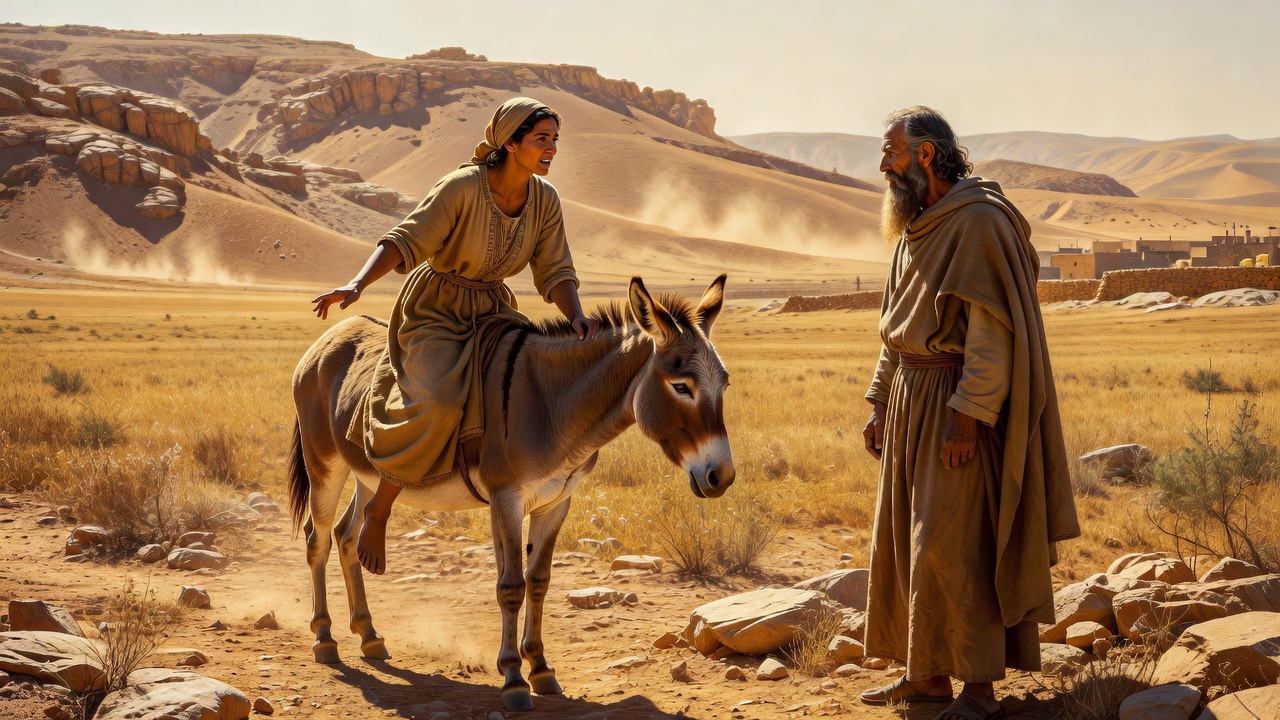
18When she came to him, she encouraged him to ask her father for a field. When she got off her donkey, Caleb asked her, “What do you want?” 19She replied, “Please give me a blessing. Since you have already given me land that's like the desert, please give me springs of water as well.” So he gave her both the upper and the lower springs.
The Cities of Judah
20This was the land allotted to the tribe of Judah, by families.
21The towns for the tribe of Judah in the far south on the border with Edom: Kabzeel, Eder, Jagur, 22Kinah, Dimonah, Adadah, 23Kedesh, Hazor, Ithnan, 24Ziph, Telem, Bealoth, 25Hazor-hadattah, Kerioth-hezron (or Hazor), 26Amam, Shema, Moladah, 27Hazar-gaddah, Heshmon, Beth-pelet, 28Hazar-shual, Beersheba, Biziothiah, 29Baalah, Iim, Ezem, 30Eltolad, Kesil, Hormah, 31Ziklag, Madmannah, Sansannah, 32Lebaoth, Shilhim, Ain, and Rimmon—twenty-nine towns with their associated villages.
33The towns in the western foothills: Eshtaol, Zorah, Ashnah, 34Zanoah, En-gannim, Tappuah, Enam, 35Jarmuth, Adullam, Socoh, Azekah, 36Shaaraim, Adithaim, Gederah, and Gederothaim—fourteen towns with their associated villages.
37Also: Zenan, Hadashah, Migdal-gad, 38Dilean, Mizpeh, Joktheel, 39Lachish, Bozkath, Eglon, 40Cabbon, Lahmam, Kitlish, 41Gederoth, Beth-dagon, Naamah, and Makkedah—sixteen towns with their associated villages.
42In addition: Libnah, Ether, Ashan, 43Iphtah, Ashnah, Nezib, 44Keilah, Aczib, and Mareshah—nine towns with their associated villages.
45Ekron and its towns and villages, 46from Ekron to the sea those towns near Ashdod and their associated villages, 47Ashdod and its towns with its associated villages, and Gaza with its towns and associated villages, as far as the Wadi of Egypt, and along the coastline of the sea.
48In the hill country: Shamir, Jattir, Socoh, 49Dannah, Kiriath-sannah (or Debir), 50Anab, Eshtemoh, Anim, 51Goshen, Holon, and Giloh—eleven towns with their associated villages.
52Also: Arab, Dumah, Eshan, 53Janim, Beth-tappuah, Aphekah, 54Humtah, Kiriath-arba (or Hebron), and Zior—nine towns with their associated villages.
55In addition: Maon, Carmel, Ziph, Juttah, 56Jezreel, Jokdeam, Zanoah, 57Kain, Gibeah, and Timnah—ten towns with their ssociated villages.
58Also: Halhul, Beth-zur, Gedor, 59Maarath, Beth-anoth, and Eltekon—six towns with their associated villages.
60In addition: Kiriath-baal (or Kiriath-jearim) and Rabbah—two towns with their associated villages.
61In the wilderness: Beth-arabah, Middin, Secacah, 62Nibshan, the City of Salt, and En-gedi—six towns with their associated villages.
63However, the tribe of Judah could not drive out the Jebusites, the inhabitants of Jerusalem, so the Jebusites live among the tribe of Judah in Jerusalem to this very day.
¿Sabías que…?
La heredad de Judá y la posesión de Caleb
- Conforme a la orden dada a Josué, Caleb recibió Quiriat-arba (Hebrón), llamada así por Arba, padre de Anac. Desde allí, Caleb expulsó a los tres descendientes de Anac: Sesai, Ahimán y Talmai.Fuentes: el propio texto bíblico · Caleb · Anak
- Al conquistar Quiriat-sefer (Debir), Otoniel recibió por esposa a Acsa, hija de Caleb. Al notar la aridez del territorio que se le había asignado en el Neguev, Acsa le pidió fuentes de agua a su padre y recibió tanto las fuentes de arriba como las de abajo.Fuentes: el propio texto bíblico · Achsah · Caleb
- El territorio asignado a la tribu de Judá se extendía desde el mar Salado hasta la costa del mar Mediterráneo, llegando al sur hasta Edom y el torrente de Egipto. A pesar de incluir numerosas ciudades y aldeas, los descendientes de Judá no pudieron expulsar a los jebuseos que habitaban en Jerusalén.Fuentes: el propio texto bíblico · Jerusalem · Edom · Salt Sea
Notas escritas con ayuda de IA a partir de fuentes abiertas (Theographic Bible Metadata, CC BY-SA 4.0; Easton’s Bible Dictionary, dominio público) y revisadas antes de publicarse.
Lugares de este capítulo
- Edom · 30.746, 35.604 · versículos 1, 21
- Negeb · 31.245, 34.841 · versículos 1, 19, 21
- Zin · Hoy: Zin Desert · 30.971, 35.325 · versículo 1
- Salt Sea · Hoy: Dead Sea · 31.500, 35.500 · versículos 2, 5
- Great Sea · Hoy: Mediterranean Sea · 31.805, 34.170 · versículos 4, 11, 12, 47
- Jordan · Hoy: Jordan River · 31.761, 35.558 · versículo 5
- Adummim · 31.817, 35.362 · versículo 7
- Jerusalem · 31.777, 35.234 · versículos 8, 63
- Valley of Hinnom · Hoy: Hinnom Valley · 31.769, 35.228 · versículo 8
- Valley of Rephaim · 31.763, 35.219 · versículo 8
- Baalah · Hoy: Deir el Azar · 31.809, 35.104 · versículos 9, 10
- Kiriath-jearim · Hoy: Deir el Azar · 31.809, 35.104 · versículos 9, 60
- Mount Jearim · Hoy: within 1 km of Kesla · 31.781, 35.051 · versículo 10
- Ekron · Hoy: Tel Miqne · 31.777, 34.852 · versículos 11, 45, 46
- Hebron · Hoy: Tel Rumeida · 31.525, 35.102 · versículos 13, 14, 54
- Gulloth-mayim · Hoy: within 5 km of Khirbet Rabud · 31.432, 35.015 · versículo 19
- Lower Gulloth · Hoy: within 5 km of Khirbet Rabud · 31.432, 35.015 · versículo 19
- Upper Gulloth · Hoy: within 5 km of Khirbet Rabud · 31.432, 35.015 · versículo 19
- Shephelah · 31.692, 34.875 · versículo 33
- Jarmuth · Hoy: Tel Yarmuth · 31.708, 34.975 · versículo 35
- Socoh · Hoy: Tel Socho · 31.682, 34.975 · versículo 35
- Lachish · Hoy: Tell ed Duweir · 31.565, 34.849 · versículo 39
- Mareshah · Hoy: Tel Maresha · 31.593, 34.898 · versículo 44
- Ashdod · Hoy: Tel Ashdod · 31.757, 34.658 · versículos 46, 47
- Gaza · Hoy: Tell Harube · 31.504, 34.464 · versículo 47
- Jattir · Hoy: Khirbet Attir · 31.352, 35.016 · versículo 48
- Maon · Hoy: Tel Main · 31.409, 35.134 · versículo 55
- Engedi · Hoy: Ein Gedi · 31.450, 35.383 · versículo 62
Solo aparecen lugares identificados con alta confianza (90 % o más según las fuentes académicas reunidas por OpenBible). Mapa de la época: DARE (Digital Atlas of the Roman Empire), CC BY 4.0; mapa actual: © colaboradores de OpenStreetMap; lugares: OpenBible.info (CC BY 4.0).
Créditos y licencia de esta traducción
Free Bible Version
The New Testament and Psalms in the Free Bible Version translation in American English
Copyright © 2018 Dr. Jonathan Gallagher
Language: English
Dialect: American
Translation by: Dr. Jonathan Gallagher
This translation is made available to you under the terms of the
Creative Commons Attribution Share-Alike license 4.0.
You have permission to share and redistribute this Bible translation in any format and to make reasonable revisions and adaptations of this translation, provided that:
You include the above copyright and source information.
If you make any changes to the text, you must indicate that you did so in a way that makes it clear that the original licensor is not necessarily endorsing your changes.
If you redistribute this text, you must distribute your contributions under the same license as the original.
Pictures included with Scriptures and other documents on this site are licensed just for use with those Scriptures and documents.
For other uses, please contact the respective copyright owners.
Note that in addition to the rules above, revising and adapting God's Word involves a great responsibility to be true to God's Word. See Revelation 22:18-19.
2026-10-02
Títulos de sección adaptados de la Berean Standard Bible (dominio público); no forman parte del texto bíblico de esta traducción.
Fuente: http://ebible.org/engfbv/ · eBible.org