Eclesiastés 7
Free Bible Version · Toca un versículo para ver sus referencias cruzadas.
The Value of Wisdom
1A good reputation is better than expensive perfume, and the day you die is better than the day you were born. 2It's better to go to a funeral than to a party. In the end, everyone dies, and those who are still alive should think about it. 3Sorrow is better than laughter, for tragedy helps us by making us think. 4Wise people think about the impact of death, while those who are fools only think about having a good time. 5It's better to listen to criticism from a wise person than to hear the song of fools. 6The laughter of fools is like the crackling of thorn twigs burning under a pot—without sense and quickly over.
7Extorting money from others makes wise people into fools, and accepting bribes corrupts the mind.
8Completing something is better than starting it. Being patient is better than being proud. 9Don't be quick to get angry, for anger controls the minds of fools. 10Don't ask, “Why were the good old days better than now?” Asking such questions shows you are not wise. 11Wisdom is good—it's like receiving an inheritance. It benefits everyone in life. 12For wisdom provides security, as does money, but the advantage for those who have wisdom is that they are kept safe and sound!
13Think about what God does. If he makes something bent, you can't straighten it! 14On a good day, be happy. When a bad day comes, stop and think. God made each day, so you don't know what will happen to you next.
The Limits of Human Wisdom
15Throughout my life I've seen so much that is hard to understand. Good people who die young despite doing what is right, and wicked people who live long evil lives. 16Don't think you can make yourself right by a lot of religious observance, and don't pretend to be so wise. Do you want to destroy yourself? 17On the other hand, don't decide to live an evil life—don't be a fool! Why die before your time? 18You ought to keep in mind these warnings. Those who follow God will be sure to avoid both.
19Wisdom gives a wise person greater power than ten town councilors.
20There's not one good person in all the world who always does what is right and never sins.
21Don't take to heart everything that people say, otherwise you may hear your servant talking badly about you, 22for you know how many times you yourself have talked badly about others!
23I have examined all this using the principles of wisdom. I told myself, “I will think wisely.” But wisdom eluded me. 24Everything that exists is beyond our grasp—too deep for our understanding. Who can comprehend it? 25I turned my thoughts to discover, investigate, and to find out more about wisdom and what makes sense. I wanted to know more about how stupid evil really is, and how ridiculous it is to be a fool. 26I discovered something more horrible than death: foolishness like a woman who tries to entrap you, who wants to use her mind and hands to catch you and tie you up. Those who follow God will not be caught, but sinners will fall into her trap.
27This is what I discovered after putting two and two together to try and find out what it all meant, says the Teacher. 28Although I really searched, I didn't find what I was looking for. People say, “I found one man among a thousand, but not one woman.” 29But I did find this one thing: God made people to do what's right, but they have followed their own ideas.
¿Sabías que…?
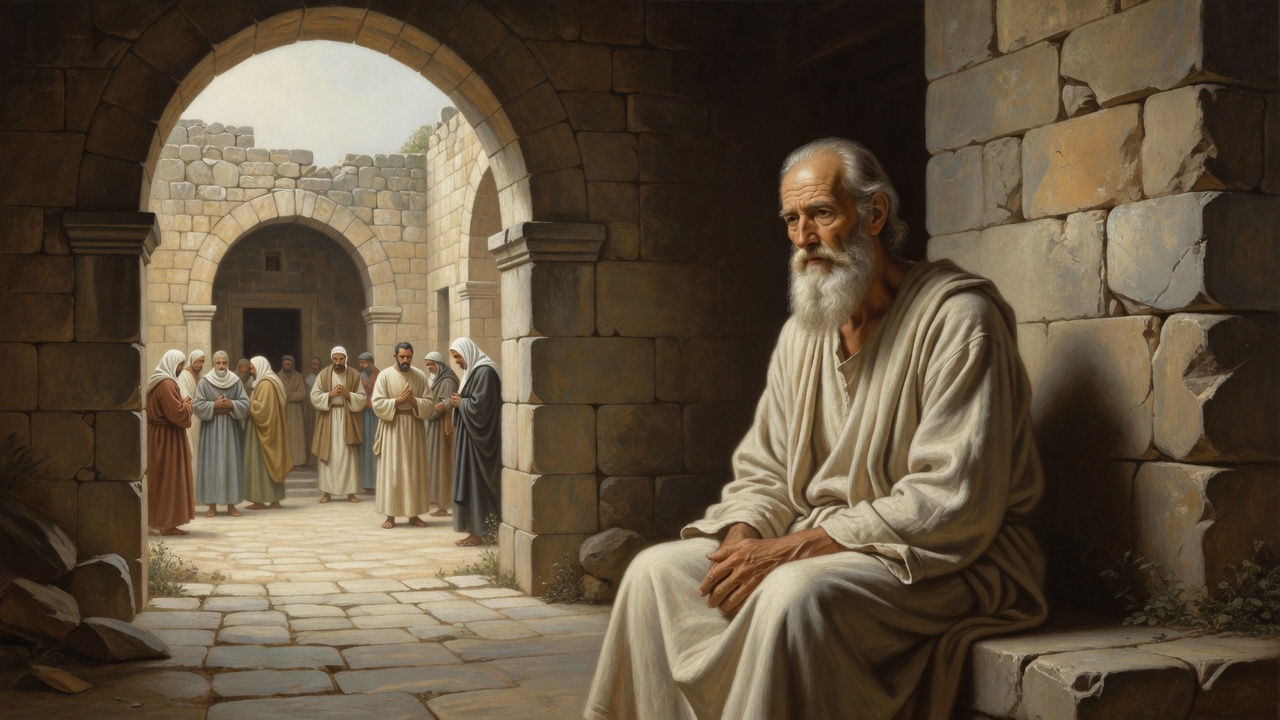
Sabiduría, mortalidad y los límites del entendimiento
- Eclesiastés 7 comienza con una serie de proverbios comparativos que sostienen que los momentos de reflexión sobria, como acudir a una casa de duelo o afrontar la tristeza, brindan una comprensión más profunda de la vida que la risa superficial y las fiestas.Fuentes: el propio texto bíblico
- El Maestro reflexiona sobre la realidad de la experiencia humana, señalando que Dios dispuso tanto los días prósperos como los adversos para que nadie pueda prever su futuro, y que a veces el justo perece mientras que el malvado prolonga sus días.Fuentes: el propio texto bíblico
- El capítulo resalta el límite universal de la bondad humana al observar que no hay nadie en la tierra que haga el bien y nunca peque, y concluye que, aunque Dios hizo íntegro al ser humano, las personas han buscado muchas maquinaciones.Fuentes: el propio texto bíblico
Notas escritas con ayuda de IA a partir de fuentes abiertas (Theographic Bible Metadata, CC BY-SA 4.0; Easton’s Bible Dictionary, dominio público) y revisadas antes de publicarse.
Créditos y licencia de esta traducción
Free Bible Version
The New Testament and Psalms in the Free Bible Version translation in American English
Copyright © 2018 Dr. Jonathan Gallagher
Language: English
Dialect: American
Translation by: Dr. Jonathan Gallagher
This translation is made available to you under the terms of the
Creative Commons Attribution Share-Alike license 4.0.
You have permission to share and redistribute this Bible translation in any format and to make reasonable revisions and adaptations of this translation, provided that:
You include the above copyright and source information.
If you make any changes to the text, you must indicate that you did so in a way that makes it clear that the original licensor is not necessarily endorsing your changes.
If you redistribute this text, you must distribute your contributions under the same license as the original.
Pictures included with Scriptures and other documents on this site are licensed just for use with those Scriptures and documents.
For other uses, please contact the respective copyright owners.
Note that in addition to the rules above, revising and adapting God's Word involves a great responsibility to be true to God's Word. See Revelation 22:18-19.
2026-10-02
Títulos de sección adaptados de la Berean Standard Bible (dominio público); no forman parte del texto bíblico de esta traducción.
Fuente: http://ebible.org/engfbv/ · eBible.org