Deuteronomio 14
Free Bible Version · Toca un versículo para ver sus referencias cruzadas.
Clean and Unclean Animals
1You are the children of the Lord your God. Don't mutilate yourselves or shave your forehead like pagans do when they mourn the dead, 2because you are a holy people who belong to the Lord your God. The Lord chose you as his special people out of all the nations on earth.
3You must not eat anything repulsive. 4These are the animals that you are allowed to eat: cattle, sheep, goats, 5deer, gazelles, wild goats, antelopes, and mountain sheep. 6You can eat any animal that both has a divided hoof and also chews the cud. 7But you are not allowed to eat those that either chew the cud or have a divided hoof. This includes: camels, rabbits, and rock hyraxes. Even though they chew the cud, they don't have a divided hoof. You must treat them as unclean. 8The same applies to the pig. Even though it has a divided hoof, it does not chew the cud. So you must treat it as unclean. You must not eat its meat or touch its dead body.
9When it comes to creatures that live in the water, you are allowed to eat anything that has fins and scales. 10But you must not eat anything that does not have fins and scales. You must treat them as unclean. 11You are allowed to eat any clean bird. 12But you must not eat the following: eagle, griffon vulture, bearded vulture, 13buzzard, kites, any kind of falcon, 14any member of the crow family, 15tawny owl, long-eared owl, gulls, any kind of hawk, 16little owl, eagle owl, barn owl, 17desert owl, Egyptian vulture, fish owl, 18storks, any kind of heron, hoopoe, or bats. 19All insects that fly are unclean to you; you must not eat them. 20But you are allowed to eat any clean animal that has wings. 21You must not eat any animal that dies. You can give it to a foreigner in your town, and they can eat it, or you can sell it to a foreigner. You, however, are a holy people who belong to the Lord your God. Don't cook a young goat in its mother's milk.
Giving Tithes
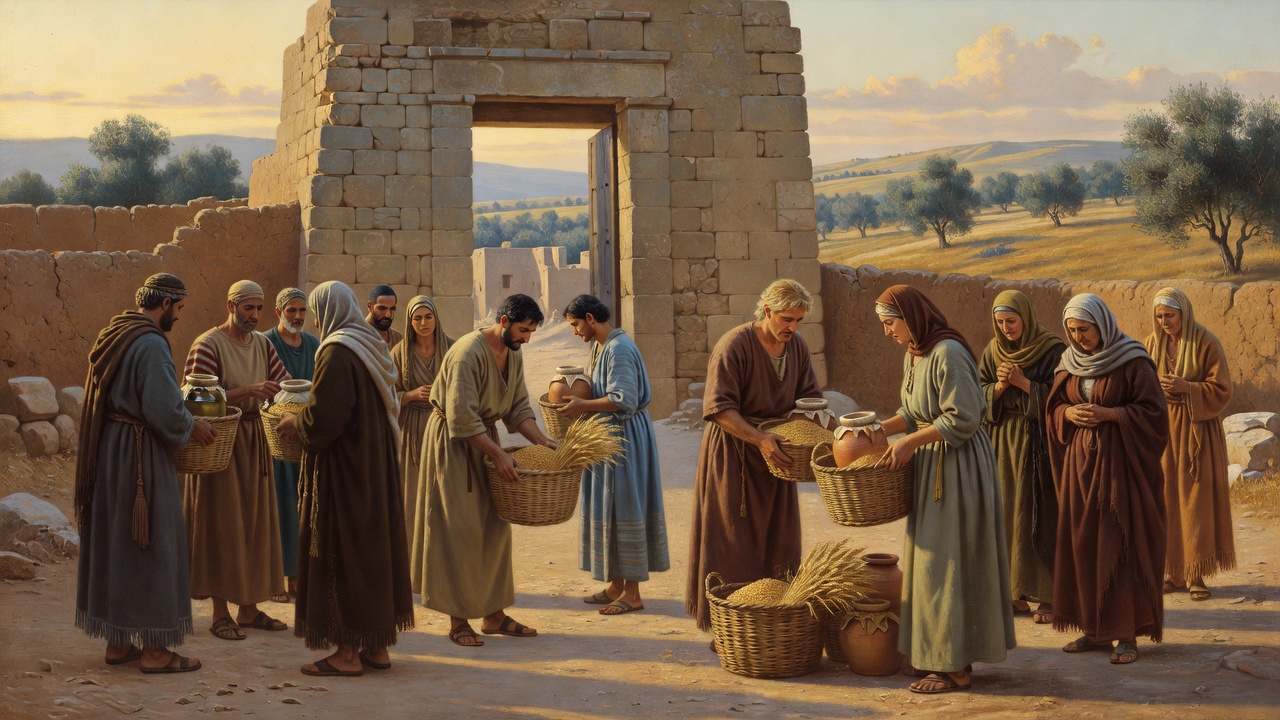
22Make sure you pay a tithe of every crop grown each year in your fields. 23You are to eat a tenth of your grain, new wine, and olive oil, and the firstborn of your herds and flocks, in the presence of the Lord your God at the place he will choose to live with you, so that you will learn to always respect the Lord your God. 24However, if it's too far to carry all the tithe that the Lord your God has blessed you with, because the place where the Lord your God will choose to live with you is too distant, 25then you can exchange it for money, take the money with you and go to the place the Lord your God will choose. 26Then you can spend the money on anything you like—cattle, sheep, wine, alcoholic drink, or anything else you want. Then you can have a feast there in the presence of the Lord your God and celebrate with your family.
27Don't forget to take care of the Levites in your town, because they don't have any share in the allotment of land. 28At the end of every third year, collect a tenth of all your produce for that year and store it in your town. 29This way the Levites (who don't have any share in the allotment of land), the foreigners, the orphans, and the widows in your town will be provided with what they need. The Lord your God will bless you in everything you do.
¿Sabías que…?
Leyes Alimentarias y Normas sobre el Diezmo
- Las leyes dietéticas de Deuteronomio 14 distinguen a los animales terrestres limpios de los inmundos mediante dos criterios físicos: tener la pezuña dividida y rumiar. Los animales acuáticos solo se consideraban aptos para el consumo si tenían tanto aletas como escamas.Fuentes: el propio texto bíblico
- Para facilitar el cumplimiento a quienes vivían lejos del santuario designado, la ley permitía cambiar los diezmos agrícolas por dinero para el viaje. Al llegar al lugar central, los fieles podían utilizar ese dinero para comprar alimentos festivos y celebrar con sus familias.Fuentes: el propio texto bíblico
- Cada tres años, el diezmo anual se almacenaba dentro de las ciudades locales en lugar de llevarse al santuario central. Estos alimentos se destinaban al sustento de los miembros de la comunidad sin herencia de tierras, específicamente los levitas, los extranjeros residentes, los huérfanos y las viudas.Fuentes: el propio texto bíblico
Notas escritas con ayuda de IA a partir de fuentes abiertas (Theographic Bible Metadata, CC BY-SA 4.0; Easton’s Bible Dictionary, dominio público) y revisadas antes de publicarse.
Créditos y licencia de esta traducción
Free Bible Version
The New Testament and Psalms in the Free Bible Version translation in American English
Copyright © 2018 Dr. Jonathan Gallagher
Language: English
Dialect: American
Translation by: Dr. Jonathan Gallagher
This translation is made available to you under the terms of the
Creative Commons Attribution Share-Alike license 4.0.
You have permission to share and redistribute this Bible translation in any format and to make reasonable revisions and adaptations of this translation, provided that:
You include the above copyright and source information.
If you make any changes to the text, you must indicate that you did so in a way that makes it clear that the original licensor is not necessarily endorsing your changes.
If you redistribute this text, you must distribute your contributions under the same license as the original.
Pictures included with Scriptures and other documents on this site are licensed just for use with those Scriptures and documents.
For other uses, please contact the respective copyright owners.
Note that in addition to the rules above, revising and adapting God's Word involves a great responsibility to be true to God's Word. See Revelation 22:18-19.
2026-10-02
Títulos de sección adaptados de la Berean Standard Bible (dominio público); no forman parte del texto bíblico de esta traducción.
Fuente: http://ebible.org/engfbv/ · eBible.org