Levítico 5
Berean Standard Bible · Toca un versículo para ver sus referencias cruzadas.
Sins Requiring a Sin Offering
1“If someone sins by failing to testify when he hears a public charge about something he has witnessed, whether he has seen it or learned of it, he shall bear the iniquity.
2Or if a person touches anything unclean—whether the carcass of any unclean wild animal or livestock or crawling creature—even if he is unaware of it, he is unclean and guilty.
3Or if he touches human uncleanness—anything by which one becomes unclean—even if he is unaware of it, when he realizes it, he is guilty.
4Or if someone swears thoughtlessly with his lips to do anything good or evil—in whatever matter a man may rashly pronounce an oath—even if he is unaware of it, when he realizes it, he is guilty in the matter.
5If someone incurs guilt in one of these ways, he must confess the sin he has committed, 6and he must bring his guilt offering to the LORD for the sin he has committed: a female lamb or goat from the flock as a sin offering. And the priest will make atonement for him concerning his sin.
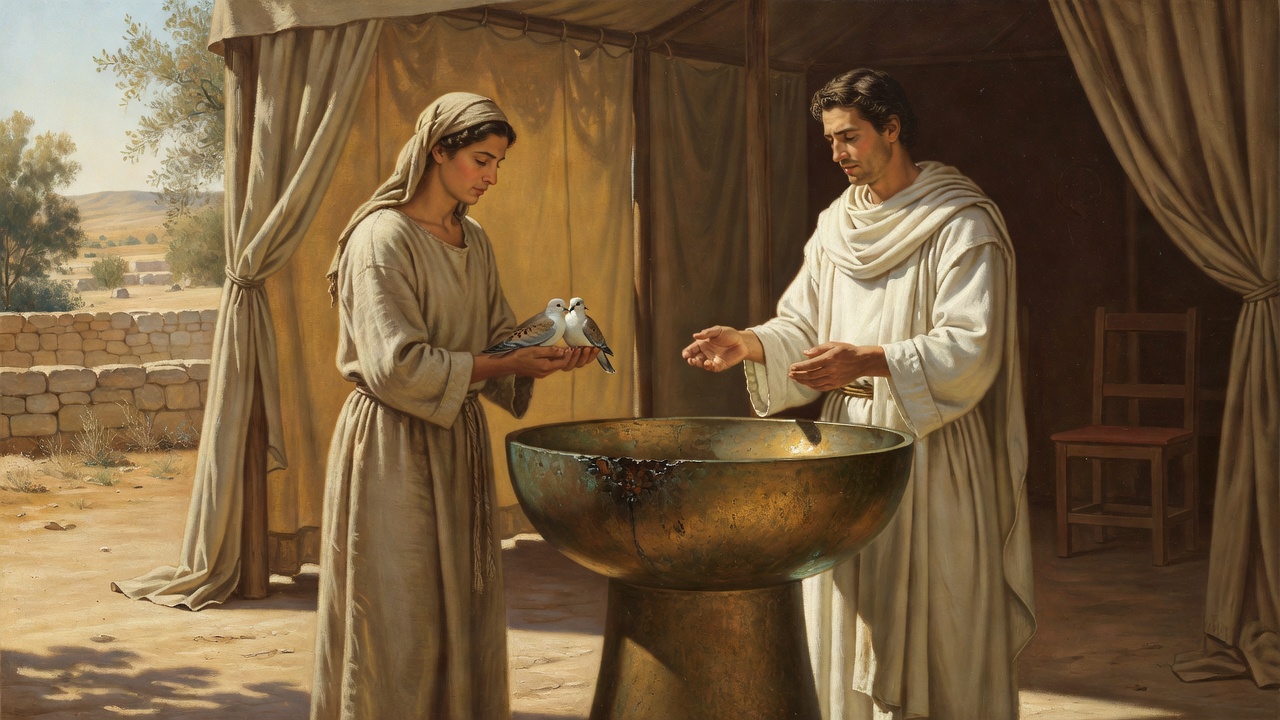
7If, however, he cannot afford a lamb, he may bring to the LORD as restitution for his sin two turtledoves or two young pigeons—one as a sin offering and the other as a burnt offering. 8He is to bring them to the priest, who shall first present the one for the sin offering. He is to twist its head at the front of its neck without severing it; 9then he is to sprinkle some of the blood of the sin offering on the side of the altar, while the rest of the blood is drained out at the base of the altar. It is a sin offering. 10And the priest must prepare the second bird as a burnt offering according to the ordinance. In this way the priest will make atonement for him for the sin he has committed, and he will be forgiven.
11But if he cannot afford two turtledoves or two young pigeons, he may bring a tenth of an ephah of fine flour as a sin offering. He must not put olive oil or frankincense on it, because it is a sin offering. 12He is to bring it to the priest, who shall take a handful from it as a memorial portion and burn it on the altar atop the offerings made by fire to the LORD; it is a sin offering. 13In this way the priest will make atonement for him for any of these sins he has committed, and he will be forgiven. The remainder will belong to the priest, like the grain offering.”
Laws for Guilt Offerings
14Then the LORD said to Moses, 15“If someone acts unfaithfully and sins unintentionally against any of the LORD’s holy things, he must bring his guilt offering to the LORD: an unblemished ram from the flock, of proper value in silver shekels according to the sanctuary shekel; it is a guilt offering. 16Regarding any holy thing he has harmed, he must make restitution by adding a fifth of its value to it and giving it to the priest, who will make atonement on his behalf with the ram as a guilt offering, and he will be forgiven.
17If someone sins and violates any of the LORD’s commandments even though he was unaware, he is guilty and shall bear his punishment. 18He is to bring to the priest an unblemished ram of proper value from the flock as a guilt offering. Then the priest will make atonement on his behalf for the wrong he has committed in ignorance, and he will be forgiven. 19It is a guilt offering; he was certainly guilty before the LORD.”
¿Sabías que…?
Ofrendas por la Culpa y Restitución
- Levítico 5 contempla a los adoradores de diversos recursos económicos al establecer una escala gradual para las ofrendas por el pecado. Quien no pudiera pagar una cordera o una cabra podía presentar dos tórtolas o dos pichones de paloma, y quien no pudiera costear las aves podía llevar una décima de efá de flor de harina sin aceite ni incienso.Fuentes: el propio texto bíblico
- En el caso de faltas involuntarias contra las cosas sagradas del Señor, el transgresor debía presentar un carnero sin defecto valorado en siclos del santuario como ofrenda por la culpa. Además, debía restituir por completo lo perjudicado y añadir una quinta parte (el veinte por ciento) entregada al sacerdote.Fuentes: el propio texto bíblico
- El capítulo resalta la responsabilidad comunitaria y el uso del habla, señalando faltas concretas como negarse a testificar tras escuchar una convocatoria pública y pronunciar juramentos apresurados o irreflexivos.Fuentes: el propio texto bíblico
Notas escritas con ayuda de IA a partir de fuentes abiertas (Theographic Bible Metadata, CC BY-SA 4.0; Easton’s Bible Dictionary, dominio público) y revisadas antes de publicarse.
Créditos y licencia de esta traducción
Berean Standard Bible
The Holy Bible in English: Berean Standard Bible
Public Domain
Language: English
Contributor: BSB Publishing, LLC
2026-10-02
Fuente: http://ebible.org/engbsb/ · eBible.org