Josué 1
Berean Standard Bible · Toca un versículo para ver sus referencias cruzadas.
Acerca de este libro
Acerca de Josué
- El Diccionario Bíblico de Easton (1897) explica el nombre de Josué como "Jehová es su ayuda" o "Jehová el Salvador". Era hijo de Nun, de la tribu de Efraín, nacido en Egipto, y sucesor de Moisés como líder de Israel; las guerras de conquista que dirigió quedan registradas en el libro que lleva su nombre. Ese artículo no nombra al autor del libro ni da una fecha para su composición.Fuentes: Easton: Joshua · Joshua
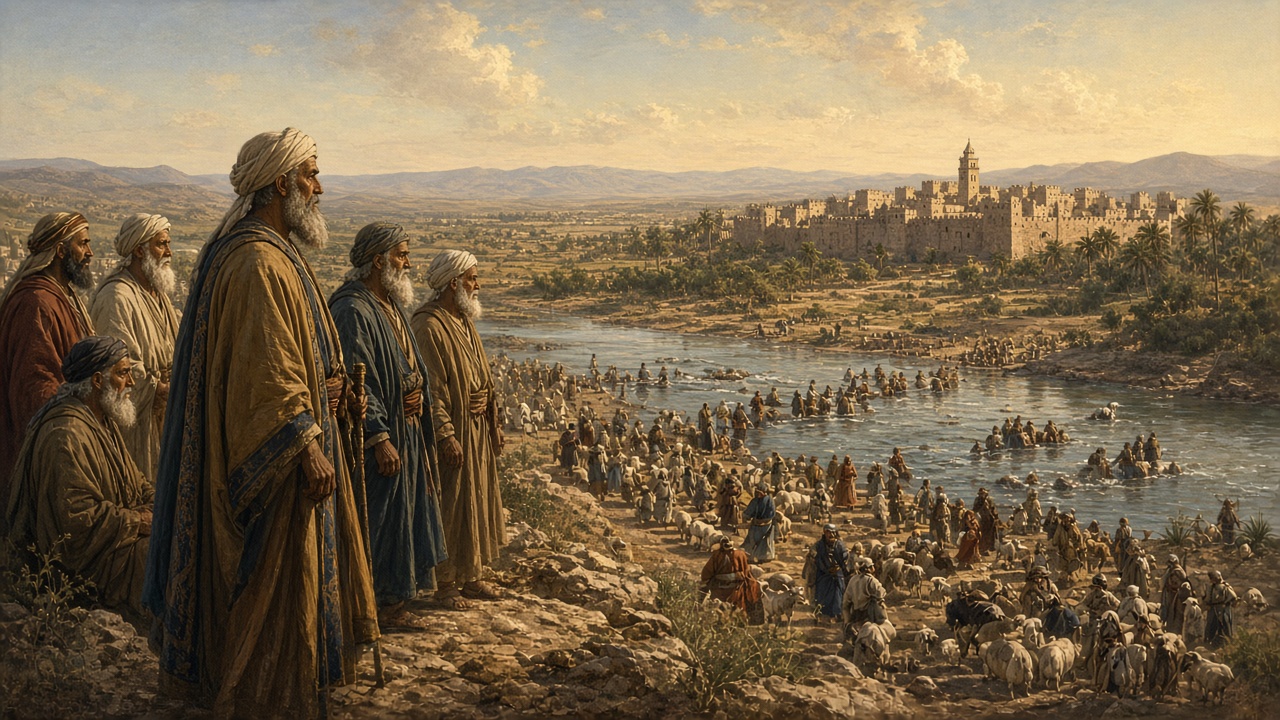
- Cuando Josué asumió el mando, el pueblo estaba acampado en Sitim. Cruzaron el Jordán y acamparon en Gilgal, donde, según Easton, circuncidó al pueblo y celebró la Pascua. Jericó, ciudad fortificada entre palmeras, a unas cinco millas al oeste del Jordán, se describe como la fortaleza más fuerte de Canaán y la llave de la Palestina occidental; Hai, al este de Betel, fue la segunda ciudad cananea tomada, después de una derrota inicial.Fuentes: Easton: Joshua · Jericho · Ai
- El Diccionario Bíblico de Easton (1897) dice que Josué conquistó seis naciones y treinta y un reyes, y luego repartió la tierra entre las tribus, quedándose Timnat-sera, en el monte Efraín, como herencia propia. Al este del Jordán, Galaad se describe como una región montañosa ocupada por las tribus de Gad y Rubén y por la parte sur de Manasés.Fuentes: Easton: Joshua · Gilead
- Citando a Edersheim, el diccionario dice que el nombre de Josué fue cambiado de Oshea, "ayuda", a Jehoshua, "Jehová es ayuda", y señala que se le llama Jesús en Hechos 7:45 y Hebreos 4:8. Afirma que murió a los ciento diez años, veinticinco años después de cruzar el Jordán, y que fue sepultado en su propia ciudad, Timnat-sera; de su padre, Nun, no se registra nada más que el hecho de que era el padre de Josué.Fuentes: Easton: Joshua · Joshua · Nun
- Antes de dirigir la conquista, Josué comandó el ejército de Israel contra los amalecitas en Refidim, sirvió como ministro de Moisés y fue uno de los doce enviados a explorar Canaán; solo él y Caleb trajeron un informe alentador. Tal como Easton describe el libro, este va desde el cruce del Jordán y la toma de Jericó, a través de años de guerra, hasta el reparto de la tierra y el último discurso de Josué.Fuentes: Easton: Joshua
Notas escritas con ayuda de IA a partir de fuentes abiertas (Theographic Bible Metadata, CC BY-SA 4.0; Easton’s Bible Dictionary, dominio público) y revisadas antes de publicarse.
God Instructs Joshua
1Now after the death of His servant Moses, the LORD spoke to Joshua son of Nun, Moses’ assistant, saying, 2“Moses My servant is dead. Now therefore arise, you and all these people, and cross over the Jordan into the land that I am giving to the children of Israel.
3I have given you every place where the sole of your foot will tread, just as I promised to Moses. 4Your territory shall extend from the wilderness and Lebanon to the great River Euphrates—all the land of the Hittites—and west as far as the Great Sea.
5No one shall stand against you all the days of your life. As I was with Moses, so will I be with you; I will never leave you nor forsake you.
6Be strong and courageous, for you shall give these people the inheritance of the land that I swore to their fathers I would give them.
7Above all, be strong and very courageous. Be careful to observe all the law that My servant Moses commanded you. Do not turn from it to the right or to the left, so that you may prosper wherever you go. 8This Book of the Law must not depart from your mouth; meditate on it day and night, so that you may be careful to do everything written in it. For then you will prosper and succeed in all you do.
9Have I not commanded you to be strong and courageous? Do not be afraid; do not be discouraged, for the LORD your God is with you wherever you go.”
Joshua Takes Charge
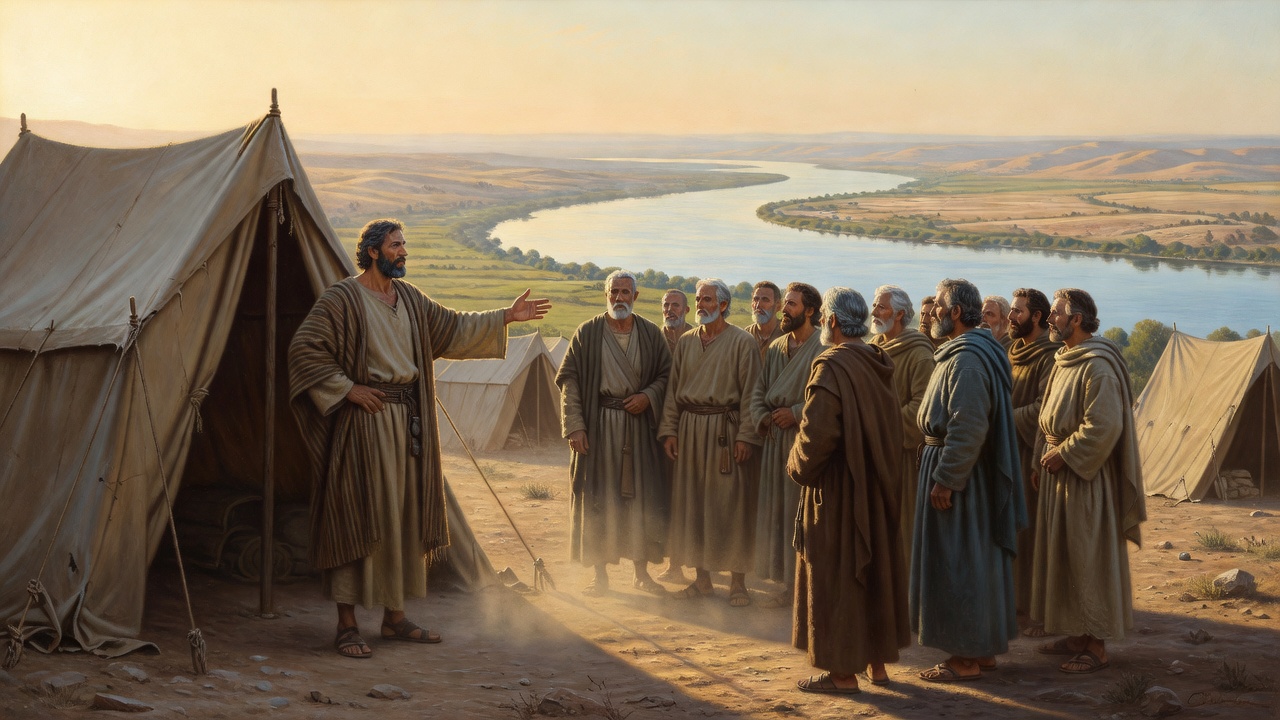
10Then Joshua commanded the officers of the people: 11“Go through the camp and tell the people, ‘Prepare your provisions, for within three days you will cross the Jordan to go in and take possession of the land that the LORD your God is giving you to possess.’”
12But to the Reubenites, the Gadites, and the half-tribe of Manasseh, Joshua said, 13“Remember what Moses the servant of the LORD commanded you when he said, ‘The LORD your God will give you rest, and He will give you this land.’ 14Your wives, your young children, and your livestock may remain in the land that Moses gave you on this side of the Jordan. But all your mighty men of valor must be armed for battle to cross over ahead of your brothers and help them, 15until the LORD gives them rest as He has done for you, and your brothers also possess the land that the LORD your God is giving them. Then you may return to the land of your inheritance and take possession of that which Moses the servant of the LORD gave you on the east side of the Jordan.”
16So they answered Joshua, “Everything you have commanded us we will do, and everywhere you send us we will go. 17Just as we obeyed Moses in all things, so we will obey you. And may the LORD your God be with you, as He was with Moses. 18Anyone who rebels against your order and does not obey your words, all that you command him, will be put to death. Above all, be strong and courageous!”
¿Sabías que…?
Josué asume el liderazgo
- Josué, hijo de Nun y de la tribu de Efraín, sirvió como asistente y comandante militar de Moisés antes de ser designado para sucederlo como líder de Israel. Su nombre significa "el Señor es su ayuda" o "el Señor el Salvador".Fuentes: Joshua · el propio texto bíblico
- El territorio descrito en el encargo a Josué abarcaba desde el desierto y la cordillera del Líbano, al norte, hasta el río Éufrates ("el gran río"), al este, y el mar Mediterráneo ("el gran mar"), al oeste.Fuentes: el propio texto bíblico · Lebanon · Euphrates · Great Sea
- Las tribos de Rubén, Gad y la media tribu de Manasés ya habían recibido tierras al este del río Jordán bajo el mando de Moisés. Aun así, sus hombres de guerra debían cruzar armados delante de las demás tribus para ayudarlas hasta asegurar toda la tierra.Fuentes: el propio texto bíblico · Manasseh (son of Joseph)
Notas escritas con ayuda de IA a partir de fuentes abiertas (Theographic Bible Metadata, CC BY-SA 4.0; Easton’s Bible Dictionary, dominio público) y revisadas antes de publicarse.
Lugares de este capítulo
- Jordan · Hoy: Jordan River · 31.761, 35.558 · versículos 2, 11, 14, 15
- Euphrates · Hoy: Euphrates River · 31.004, 47.442 · versículo 4
- Great Sea · Hoy: Mediterranean Sea · 31.805, 34.170 · versículo 4
- Lebanon · 33.540, 35.584 · versículo 4
- Negeb · 31.245, 34.841 · versículo 4
- Syria · Hoy: Aram · 33.511, 36.306 · versículo 4
Solo aparecen lugares identificados con alta confianza (90 % o más según las fuentes académicas reunidas por OpenBible). Mapa de la época: DARE (Digital Atlas of the Roman Empire), CC BY 4.0; mapa actual: © colaboradores de OpenStreetMap; lugares: OpenBible.info (CC BY 4.0).
Créditos y licencia de esta traducción
Berean Standard Bible
The Holy Bible in English: Berean Standard Bible
Public Domain
Language: English
Contributor: BSB Publishing, LLC
2026-10-02
Fuente: http://ebible.org/engbsb/ · eBible.org