Joel 1
Berean Standard Bible · Toca un versículo para ver sus referencias cruzadas.
Acerca de este libro
Acerca de Joel
- El diccionario presenta a Joel como el segundo de los doce profetas menores. Era hijo de Petuel, nombre que allí se explica como Visión de Dios, y su historia personal solo se conoce por su libro.Fuentes: Joel · Pethuel
- El Easton's Bible Dictionary (1897) dice que Joel probablemente residía en Judá, pues su encargo era para ese pueblo, y que menciona con frecuencia Judá y Jerusalén. También dice que probablemente estuvo activo en el reinado de Uzías, hacia 800 a.C., y que fue contemporáneo de Amós e Isaías.Fuentes: Easton: Joel, Book of
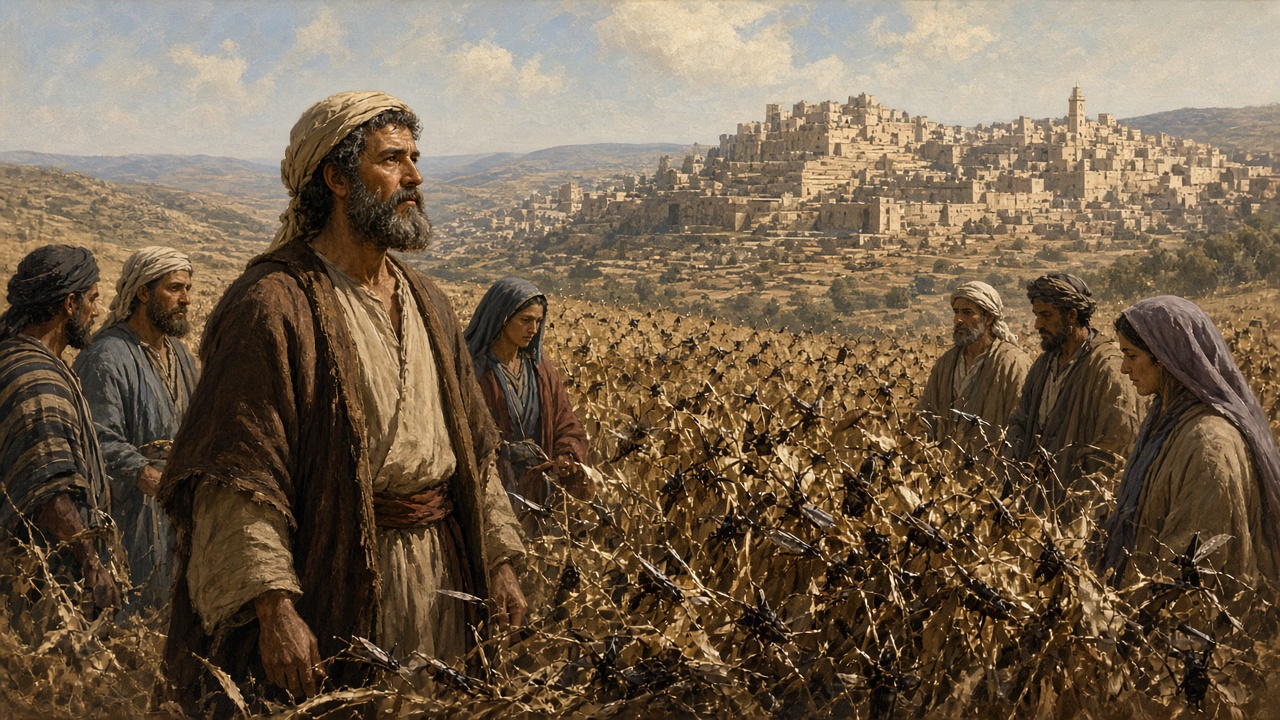
- Jerusalén, que el libro nombra con frecuencia, se describe como una ciudad de montaña edificada sobre alturas que incluyen Sion, la colina del sureste que llegó a ser la ciudad de David. La profecía inicial advierte de una gran calamidad pública entonces inminente sobre la tierra: falta de agua y una plaga extraordinaria de langostas.Fuentes: Easton: Joel, Book of · Jerusalem · Zion
- El Easton's Bible Dictionary (1897) dice que el profeta entonces llama a sus compatriotas a arrepentirse y volverse a Dios, les asegura la disposición de Dios para perdonar y anuncia la restauración de la tierra a su fecundidad acostumbrada. La misma entrada describe luego una profecía que llama mesiánica, de la cual dice que Pedro la cita, y termina con portentos y juicios destinados a caer sobre los enemigos de Dios.Fuentes: Easton: Joel, Book of
- Un detalle notable es la numeración de los capítulos al final del libro. El Easton's Bible Dictionary (1897) presenta la sección final como capítulo 3, pero señala que en el texto hebreo es el capítulo 4.Fuentes: Easton: Joel, Book of
Notas escritas con ayuda de IA a partir de fuentes abiertas (Theographic Bible Metadata, CC BY-SA 4.0; Easton’s Bible Dictionary, dominio público) y revisadas antes de publicarse.
The Invasion of Locusts
1This is the word of the LORD that came to Joel son of Pethuel:
2Hear this, O elders;
and give ear, all who dwell in the land.
Has anything like this ever happened in your days
or in the days of your fathers?
3Tell it to your children;
let your children tell it to their children,
and their children to the next generation.
4What the devouring locust has left,
the swarming locust has eaten;
what the swarming locust has left,
the young locust has eaten;
and what the young locust has left,
the destroying locust has eaten.
5Wake up, you drunkards, and weep;
wail, all you drinkers of wine,
because of the sweet wine,
for it has been cut off from your mouth.
6For a nation has invaded My land,
powerful and without number;
its teeth are the teeth of a lion,
and its fangs are the fangs of a lioness.
7It has laid waste My grapevine
and splintered My fig tree.
It has stripped off the bark and thrown it away;
the branches have turned white.
A Call to Mourning
8Wail like a virgin dressed in sackcloth,
grieving for the husband of her youth.
9Grain and drink offerings have been cut off
from the house of the LORD;
the priests are in mourning,
those who minister before the LORD.
10The field is ruined;
the land mourns.
For the grain is destroyed,
the new wine is dried up, and the oil fails.
11Be dismayed, O farmers,
wail, O vinedressers,
over the wheat and barley,
because the harvest of the field has perished.
12The grapevine is dried up,
and the fig tree is withered;
the pomegranate, palm, and apple—
all the trees of the orchard—are withered.
Surely the joy of mankind has dried up.
A Call to Repentance
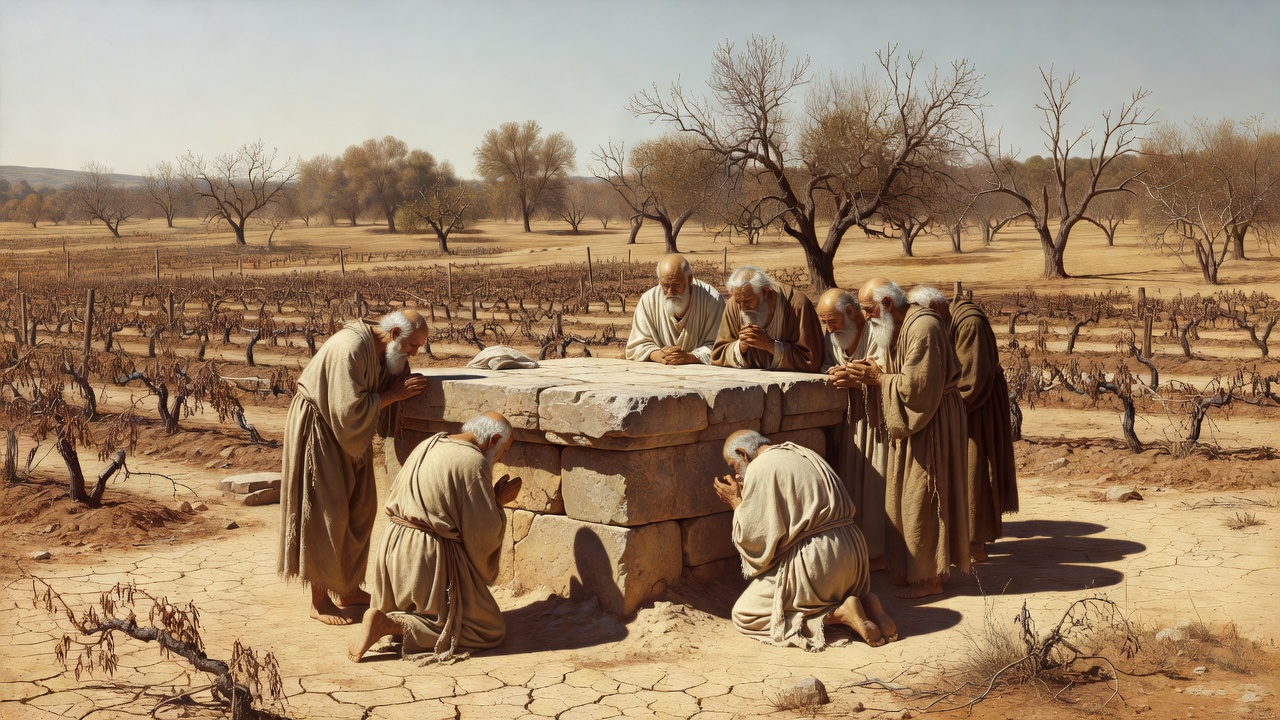
13Put on sackcloth and lament, O priests;
wail, O ministers of the altar.
Come, spend the night in sackcloth,
O ministers of my God,
because the grain and drink offerings
are withheld from the house of your God.
14Consecrate a fast;
proclaim a solemn assembly!
Gather the elders
and all the residents of the land
to the house of the LORD your God,
and cry out to the LORD.
15Alas for the day!
For the Day of the LORD is near,
and it will come
as destruction from the Almighty.
16Has not the food been cut off
before our very eyes—
joy and gladness
from the house of our God?
17The seeds lie shriveled beneath the clods;
the storehouses are in ruins;
the granaries are broken down,
for the grain has withered away.
18How the cattle groan!
The herds wander in confusion
because they have no pasture.
Even the flocks of sheep are suffering.
19To You, O LORD, I call,
for fire has consumed the open pastures
and flames have scorched all the trees of the field.
20Even the beasts of the field pant for You,
for the streams of water have dried up,
and fire has consumed the open pastures.
¿Sabías que…?
Una plaga de langostas y el luto nacional
- Joel figura como el segundo de los doce Profetas Menores, presentado únicamente como hijo de Petuel, sin que se conserven otros datos sobre su vida personal fuera de su libro profético.Fuentes: Joel · Pethuel · el propio texto bíblico
- El capítulo describe una catástrofe agrícola sin precedentes provocada por sucesivas oleadas de langostas y una grave sequía, que descortezaron las higueras y devastaron cultivos básicos como el trigo, la cebada, la vid y el olivo.Fuentes: el propio texto bíblico
- Debido a que la ruina del campo interrumpió las ofrendas de cereal y las libaciones en el templo, el profeta instó a los sacerdotes y líderes a vestir cilicio, proclamar un ayuno solemne y reunir al pueblo en súplica ante el cercano Día del SEÑOR.Fuentes: el propio texto bíblico
Notas escritas con ayuda de IA a partir de fuentes abiertas (Theographic Bible Metadata, CC BY-SA 4.0; Easton’s Bible Dictionary, dominio público) y revisadas antes de publicarse.
Créditos y licencia de esta traducción
Berean Standard Bible
The Holy Bible in English: Berean Standard Bible
Public Domain
Language: English
Contributor: BSB Publishing, LLC
2026-10-02
Fuente: http://ebible.org/engbsb/ · eBible.org