Eclesiastés 6
Berean Standard Bible · Toca un versículo para ver sus referencias cruzadas.
The Futility of Life
1There is another evil I have seen under the sun, and it weighs heavily upon mankind: 2God gives a man riches, wealth, and honor, so that he lacks nothing his heart desires; but God does not allow him to enjoy them. Instead, a stranger will enjoy them. This is futile and a grievous affliction.
3A man may father a hundred children and live for many years; yet no matter how long he lives, if he is unsatisfied with his prosperity and does not even receive a proper burial, I say that a stillborn child is better off than he. 4For a stillborn child enters in futility and departs in darkness, and his name is shrouded in obscurity. 5The child, though neither seeing the sun nor knowing anything, has more rest than that man, 6even if he lives a thousand years twice over but fails to enjoy his prosperity. Do not all go to the same place?
7All a man’s labor is for his mouth,
yet his appetite is never satisfied.
8What advantage, then, has the wise man over the fool? What gain comes to the poor man who knows how to conduct himself before others? 9Better what the eye can see than the wandering of desire. This too is futile and a pursuit of the wind.
10Whatever exists was named long ago, and what happens to a man is foreknown; but he cannot contend with one stronger than he. 11For the more words, the more futility—and how does that profit anyone? 12For who knows what is good for a man during the few days in which he passes through his fleeting life like a shadow? Who can tell a man what will come after him under the sun?
¿Sabías que…?
La Vanidad de la Riqueza Insatisfecha
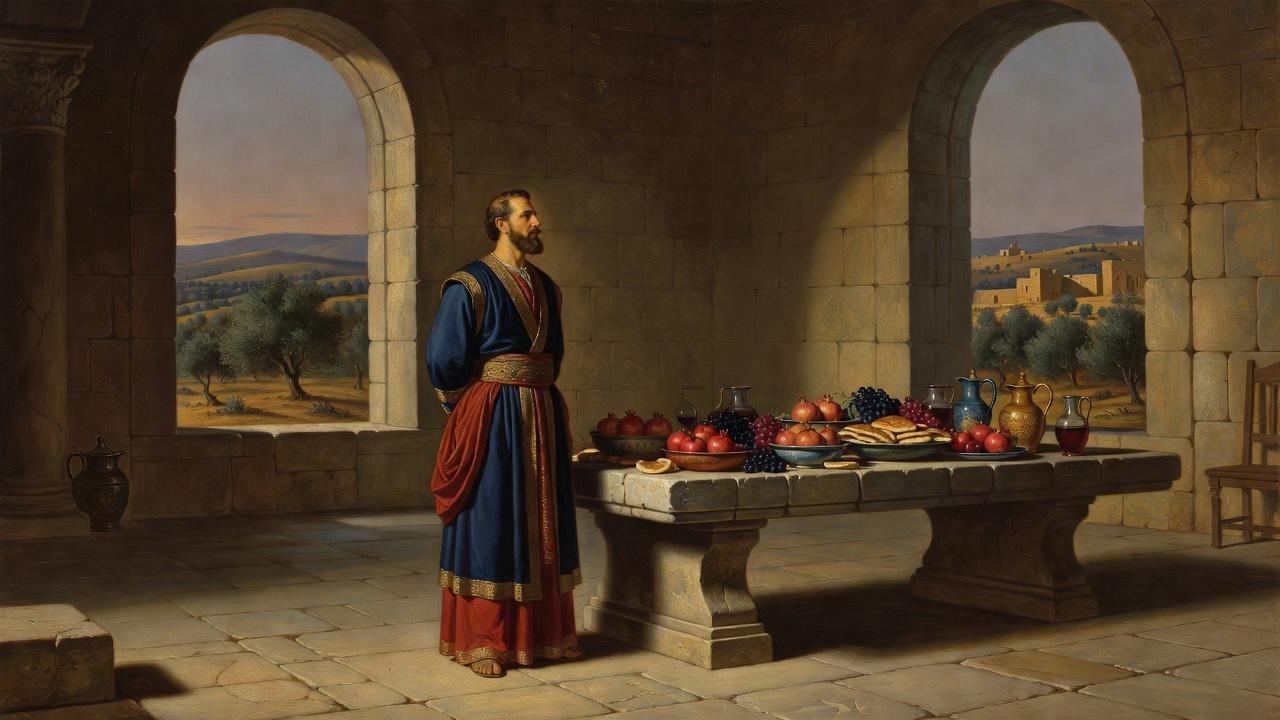
- En el pensamiento antiguo, gozar de una larga vida y engendrar muchos hijos se consideraban las mayores señales de bendición. Sin embargo, Eclesiastés observa que incluso vivir dos mil años y tener cien hijos carece de sentido si la persona no puede disfrutar de su prosperidad ni recibir una sepultura digna.Fuentes: el propio texto bíblico
- El autor señala que, aunque el trabajo humano se destina a satisfacer necesidades físicas básicas como la comida, el apetito y los deseos nunca quedan del todo satisfechos. Él contrasta el valorar lo que está presente ante los ojos con la persecución incesante de anhelos errantes.Fuentes: el propio texto bíblico
- El capítulo resalta los límites humanos, señalando que los mortales no pueden contender con lo que ha sido dispuesto por alguien más fuerte que ellos. Dado que la vida es efímera como una sombra, el ser humano no puede discernir con certeza qué es lo mejor para sí ni saber qué sucederá después de su muerte.Fuentes: el propio texto bíblico
Notas escritas con ayuda de IA a partir de fuentes abiertas (Theographic Bible Metadata, CC BY-SA 4.0; Easton’s Bible Dictionary, dominio público) y revisadas antes de publicarse.
Créditos y licencia de esta traducción
Berean Standard Bible
The Holy Bible in English: Berean Standard Bible
Public Domain
Language: English
Contributor: BSB Publishing, LLC
2026-10-02
Fuente: http://ebible.org/engbsb/ · eBible.org