Deuteronomio 23
Berean Standard Bible · Toca un versículo para ver sus referencias cruzadas.
Exclusion from the Congregation
1No man with crushed or severed genitals may enter the assembly of the LORD.
2No one of illegitimate birth may enter the assembly of the LORD, nor may any of his descendants, even to the tenth generation.
3No Ammonite or Moabite or any of their descendants may enter the assembly of the LORD, even to the tenth generation. 4For they did not meet you with food and water on your way out of Egypt, and they hired Balaam son of Beor from Pethor in Aram-naharaim to curse you. 5Yet the LORD your God would not listen to Balaam, and the LORD your God turned the curse into a blessing for you, because the LORD your God loves you. 6You are not to seek peace or prosperity from them as long as you live.
7Do not despise an Edomite, for he is your brother. Do not despise an Egyptian, because you lived as a foreigner in his land. 8The third generation of children born to them may enter the assembly of the LORD.
Uncleanness in the Camp
9When you are encamped against your enemies, then you shall keep yourself from every wicked thing. 10If any man among you becomes unclean because of a nocturnal emission, he must leave the camp and stay outside. 11When evening approaches, he must wash with water, and when the sun sets he may return to the camp.
12You must have a place outside the camp to go and relieve yourself. 13And you must have a digging tool in your equipment so that when you relieve yourself you can dig a hole and cover up your excrement.
14For the LORD your God walks throughout your camp to protect you and deliver your enemies to you. Your camp must be holy, lest He see anything unclean among you and turn away from you.
Miscellaneous Laws
15Do not return a slave to his master if he has taken refuge with you. 16Let him live among you wherever he chooses, in the town of his pleasing. Do not oppress him.
17No daughter or son of Israel is to be a shrine prostitute. 18You must not bring the wages of a prostitute, whether female or male, into the house of the LORD your God to fulfill any vow, because both are detestable to the LORD your God.
19Do not charge your brother interest on money, food, or any other type of loan. 20You may charge a foreigner interest, but not your brother, so that the LORD your God may bless you in everything to which you put your hand in the land that you are entering to possess.
21If you make a vow to the LORD your God, do not be slow to keep it, because He will surely require it of you, and you will be guilty of sin. 22But if you refrain from making a vow, you will not be guilty of sin. 23Be careful to follow through on what comes from your lips, because you have freely vowed to the LORD your God with your own mouth.
24When you enter your neighbor’s vineyard, you may eat your fill of grapes, but you must not put any in your basket.
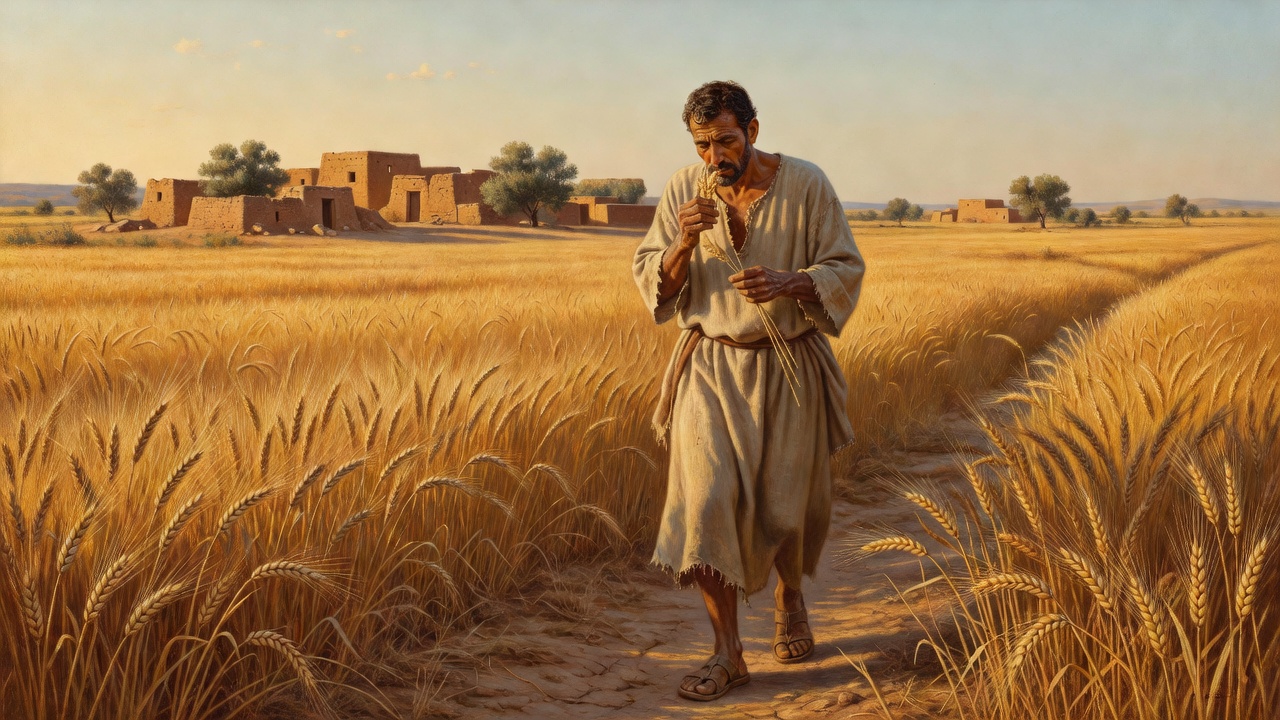
25When you enter your neighbor’s grainfield, you may pluck the heads of grain with your hand, but you must not put a sickle to your neighbor’s grain.
¿Sabías que…?
Pureza de la Comunidad y Leyes Sociales
- Amonitas y moabitas fueron excluidos de la asamblea porque negaron pan y agua y contrataron a Balaam hijo de Beor contra Israel. Balaam procedía de Petor en Aram-naharaim (Mesopotamia), una región entre los ríos Tigris y Éufrates donde Petor se identifica con el antiguo enclave de Pitru.Fuentes: el propio texto bíblico · Balaam · Pethor · Mesopotamia
- En contraste con la exclusión de Amón y Moab, se ordenó a los israelitas no aborrecer a los edomitas, a quienes consideraban hermanos, ni a los egipcios, en cuya tierra vivieron como forasteros. Los descendientes de la tercera generación de ambos grupos podían entrar en la asamblea del Señor.Fuentes: el propio texto bíblico · Egypt
- El capítulo establece protecciones sociales y militares singulares, como dar asilo a los esclavos fugitivos en lugar de devolverlos a sus amos. También permitía a los viajeros hambrientos comer uvas o arrancar espigas con la mano en el campo ajeno, siempre que no usaran recipientes ni hoces.Fuentes: el propio texto bíblico
Notas escritas con ayuda de IA a partir de fuentes abiertas (Theographic Bible Metadata, CC BY-SA 4.0; Easton’s Bible Dictionary, dominio público) y revisadas antes de publicarse.
Lugares de este capítulo
- Egypt · 30.129, 31.308 · versículo 4
- Mesopotamia · Hoy: Aram-naharaim · 36.864, 39.033 · versículo 4
- Pethor · Hoy: Til Barsip · 36.701, 38.087 · versículo 4
Solo aparecen lugares identificados con alta confianza (90 % o más según las fuentes académicas reunidas por OpenBible). Mapa de la época: DARE (Digital Atlas of the Roman Empire), CC BY 4.0; mapa actual: © colaboradores de OpenStreetMap; lugares: OpenBible.info (CC BY 4.0).
Créditos y licencia de esta traducción
Berean Standard Bible
The Holy Bible in English: Berean Standard Bible
Public Domain
Language: English
Contributor: BSB Publishing, LLC
2026-10-02
Fuente: http://ebible.org/engbsb/ · eBible.org