Hechos 19
Berean Standard Bible · Toca un versículo para ver sus referencias cruzadas.
The Holy Spirit Received at Ephesus
1While Apollos was at Corinth, Paul passed through the interior and came to Ephesus. There he found some disciples 2and asked them, “Did you receive the Holy Spirit when you became believers?”
“No,” they answered, “we have not even heard that there is a Holy Spirit.”
3“Into what, then, were you baptized?” Paul asked.
“The baptism of John,” they replied.
4Paul explained: “John’s baptism was a baptism of repentance. He told the people to believe in the One coming after him, that is, in Jesus.”
5On hearing this, they were baptized into the name of the Lord Jesus. 6And when Paul laid his hands on them, the Holy Spirit came upon them, and they spoke in tongues and prophesied. 7There were about twelve men in all.
Paul Ministers in Ephesus
8Then Paul went into the synagogue and spoke boldly there for three months, arguing persuasively about the kingdom of God. 9But when some of them stubbornly refused to believe and publicly maligned the Way, Paul took his disciples and left the synagogue to conduct daily discussions in the lecture hall of Tyrannus. 10This continued for two years, so that everyone who lived in the province of Asia, Jews and Greeks alike, heard the word of the Lord.
11God did extraordinary miracles through the hands of Paul, 12so that even handkerchiefs and aprons that had touched him were taken to the sick, and the diseases and evil spirits left them.
Seven Sons of Sceva
13Now there were some itinerant Jewish exorcists who tried to invoke the name of the Lord Jesus over those with evil spirits. They would say, “I bind you by Jesus, whom Paul proclaims.” 14Seven sons of Sceva, a Jewish chief priest, were doing this.
15Eventually, one of the evil spirits answered them, “Jesus I know, and I know about Paul, but who are you?” 16Then the man with the evil spirit jumped on them and overpowered them all. The attack was so violent that they ran out of the house naked and wounded.
17This became known to all the Jews and Greeks living in Ephesus, and fear came over all of them. So the name of the Lord Jesus was held in high honor. 18Many who had believed now came forward, confessing and disclosing their deeds. 19And a number of those who had practiced magic arts brought their books and burned them in front of everyone. When the value of the books was calculated, the total came to fifty thousand drachmas. 20So the word of the Lord powerfully continued to spread and prevail.
The Riot in Ephesus
21After these things had happened, Paul resolved in the Spirit to go to Jerusalem after he had passed through Macedonia and Achaia. “After I have been there,” he said, “I must see Rome as well.” 22He sent two of his helpers, Timothy and Erastus, to Macedonia, while he stayed for a time in the province of Asia.
23About that time there arose a great disturbance about the Way. 24It began with a silversmith named Demetrius who made silver shrines of Artemis, bringing much business to the craftsmen.
25Demetrius assembled the craftsmen, along with the workmen in related trades. “Men,” he said, “you know that this business is our source of prosperity. 26And you can see and hear that not only in Ephesus, but in nearly the whole province of Asia, Paul has persuaded a great number of people to turn away. He says that man-made gods are no gods at all. 27There is danger not only that our business will fall into disrepute, but also that the temple of the great goddess Artemis will be discredited and her majesty deposed—she who is worshiped by all the province of Asia and the whole world.”
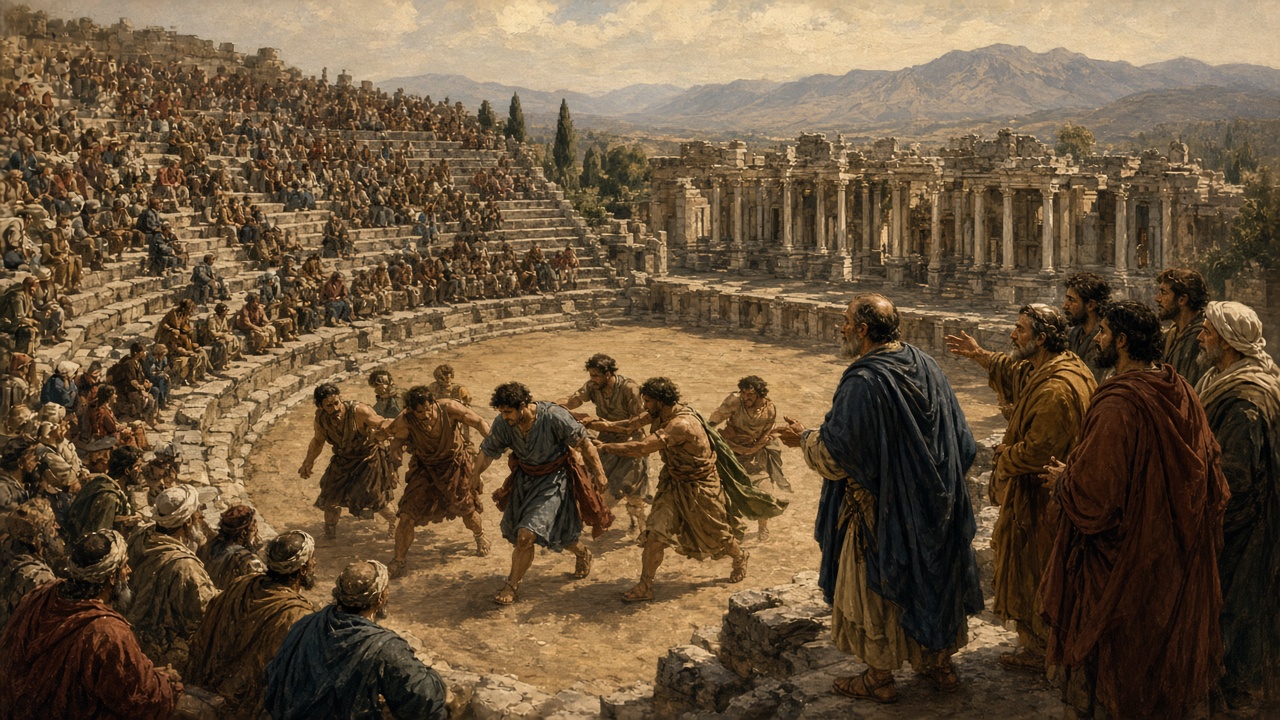
28When the men heard this, they were enraged and began shouting, “Great is Artemis of the Ephesians!” 29Soon the whole city was in disarray. They rushed together into the theatre, dragging with them Gaius and Aristarchus, Paul’s traveling companions from Macedonia.
30Paul wanted to go before the assembly, but the disciples would not allow him. 31Even some of Paul’s friends who were officials of the province of Asia sent word to him, begging him not to venture into the theatre.
32Meanwhile the assembly was in turmoil. Some were shouting one thing and some another, and most of them did not even know why they were there. 33The Jews in the crowd pushed Alexander forward to explain himself, and he motioned for silence so he could make his defense to the people. 34But when they realized that he was a Jew, they all shouted in unison for about two hours: “Great is Artemis of the Ephesians!”
35Finally the city clerk quieted the crowd and declared, “Men of Ephesus, doesn’t everyone know that the city of Ephesus is guardian of the temple of the great Artemis and of her image, which fell from heaven? 36Since these things are undeniable, you ought to be calm and not do anything rash. 37For you have brought these men here, though they have neither robbed our temple nor blasphemed our goddess.
38So if Demetrius and his fellow craftsmen have a complaint against anyone, the courts are open and proconsuls are available. Let them bring charges against one another there. 39But if you are seeking anything beyond this, it must be settled in a legal assembly. 40For we are in jeopardy of being charged with rioting for today’s events, and we have no justification to account for this commotion.”
41After he had said this, he dismissed the assembly.
¿Sabías que…?
Pablo, el Camino y Artemisa en Éfeso
- Éfeso era la capital del Asia proconsular, la provincia romana que abarcaba la parte occidental de Asia Menor, y en tiempos romanos llevaba el título de primera y más grande metrópoli de Asia. La ciudad se distinguía por el templo de Artemisa, a quien los romanos llamaban Diana, construido fuera de las murallas y contado entre las siete maravillas del mundo antiguo. En el centro había una imagen antigua de la diosa, de la que se decía que había caído del cielo.Fuentes: Ephesus · Diana · Asia
- Demetrio, un platero de Éfeso, hacía santuarios de plata de Artemisa, modelos del templo o de la estatua de la diosa, que se vendían con facilidad a los visitantes llegados de toda Asia Menor. Hechos dice que ese oficio era la fuente de prosperidad de los artesanos y que Demetrio les advirtió del peligro para el negocio y para el honor del templo de Artemisa, la diosa que, según él, era adorada en toda la provincia de Asia y en el mundo entero.Fuentes: Demetrius · el propio texto bíblico
- La multitud se lanzó al teatro de Éfeso, que el Diccionario Bíblico de Easton (1897) describe como el más grande del mundo, a cielo abierto y capaz de albergar a 50.000 espectadores. Amigos de Pablo entre los jefes de Asia, ciudadanos ricos elegidos cada año para presidir los juegos y las fiestas religiosas de sus ciudades, le rogaron que no entrara. El secretario de la ciudad recordó entonces a la asamblea que Éfeso era guardiana del templo de la gran Artemisa y de su imagen, de la que se decía que había caído del cielo.Fuentes: Ephesus · Asia · el propio texto bíblico
Notas escritas con ayuda de IA a partir de fuentes abiertas (Theographic Bible Metadata, CC BY-SA 4.0; Easton’s Bible Dictionary, dominio público) y revisadas antes de publicarse.
Lugares de este capítulo
- Corinth · 37.906, 22.879 · versículo 1
- Ephesus · 37.939, 27.341 · versículos 1, 17, 23, 26, 35
- Asia · 38.400, 28.300 · versículos 10, 22, 26, 27, 31
- Achaia · 38.720, 22.540 · versículo 21
- Jerusalem · 31.777, 35.234 · versículo 21
- Macedonia · 41.600, 22.540 · versículos 21, 22, 29
- Rome · 41.892, 12.485 · versículos 21, 40
Solo aparecen lugares identificados con alta confianza (90 % o más según las fuentes académicas reunidas por OpenBible). Mapa de la época: DARE (Digital Atlas of the Roman Empire), CC BY 4.0; mapa actual: © colaboradores de OpenStreetMap; lugares: OpenBible.info (CC BY 4.0).
Créditos y licencia de esta traducción
Berean Standard Bible
The Holy Bible in English: Berean Standard Bible
Public Domain
Language: English
Contributor: BSB Publishing, LLC
2026-10-02
Fuente: http://ebible.org/engbsb/ · eBible.org