Salmos 79
American Standard Version Byzantine Text · Toca un versículo para ver sus referencias cruzadas.
A Psalm of Asaph.
A Prayer for Deliverance
1O God, the nations are come into thine inheritance;
Thy holy temple have they defiled;
They have laid Jerusalem in heaps.
2The dead bodies of thy servants have they given to be food unto the birds of the heavens,
The flesh of thy saints unto the beasts of the earth.
3Their blood have they shed like water round about Jerusalem;
And there was none to bury them.
4We are become a reproach to our neighbors,
A scoffing and derision to them that are round about us.
5How long, O Jehovah? wilt thou be angry forever?
Shall thy jealousy burn like fire?
6Pour out thy wrath upon the nations that know thee not,
And upon the kingdoms that call not upon thy name.
7For they have devoured Jacob,
And laid waste his habitation.
8Remember not against us the iniquities of our forefathers:
Let thy tender mercies speedily meet us;
For we are brought very low.
9Help us, O God of our salvation, for the glory of thy name;
And deliver us, and forgive our sins, for thy name’s sake.
10Wherefore should the nations say, Where is their God?
Let the avenging of the blood of thy servants which is shed
Be known among the nations in our sight.
11Let the sighing of the prisoner come before thee:
According to the greatness of thy power preserve thou those that are appointed to death;
12And render unto our neighbors sevenfold into their bosom
Their reproach, wherewith they have reproached thee, O Lord.
13So we thy people and sheep of thy pasture
Will give thee thanks forever:
We will show forth thy praise to all generations.
¿Sabías que…?
Un lamento por la destrucción de Jerusalén
- El Salmo 79 lleva por título un salmo de Asaf, ubicándose en la colección de salmos (Salmos 50 y 73–83) asociados con el músico y vidente levita Asaf. En el registro bíblico, el encabezado también puede referirse a los hijos de Asaf, un gremio de cantores y poetas del templo.Fuentes: Asaph (Levite) · el propio texto bíblico
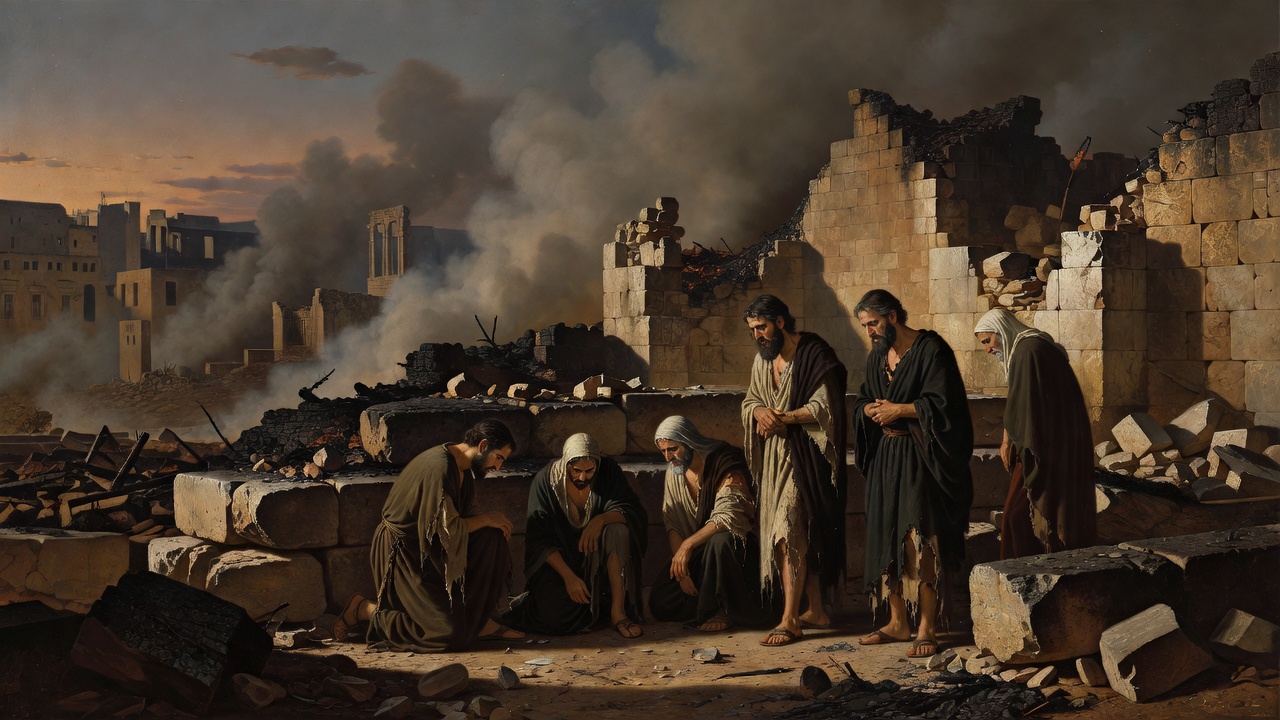
- El salmo lamenta la profanación del santo templo, la reducción de Jerusalén a escombros y los cadáveres insepultos alrededor de la ciudad. Jerusalén, conocida como la ciudad santa y una fortaleza montañosa, es presentada sufriendo una invasión devastadora por parte de naciones vecinas.Fuentes: Jerusalem · el propio texto bíblico
- El poema pide la ayuda divina debido a que naciones extranjeras han devorado a Jacob y asolado su morada. En la tradición bíblica, el nombre del patriarca Jacob se utiliza a menudo de manera poética para designar a todos sus descendientes y su territorio.Fuentes: Jacob (Israel) · el propio texto bíblico
Notas escritas con ayuda de IA a partir de fuentes abiertas (Theographic Bible Metadata, CC BY-SA 4.0; Easton’s Bible Dictionary, dominio público) y revisadas antes de publicarse.
Lugares de este capítulo
Solo aparecen lugares identificados con alta confianza (90 % o más según las fuentes académicas reunidas por OpenBible). Mapa de la época: DARE (Digital Atlas of the Roman Empire), CC BY 4.0; mapa actual: © colaboradores de OpenStreetMap; lugares: OpenBible.info (CC BY 4.0).
Créditos y licencia de esta traducción
American Standard Version Byzantine Text
The Holy Bible with Apocrypha, American Standard Version conformed to the Byzantine Text New Testament
Public Domain
Language: English
Dialect: Archaic American
Changes to the ASV dedicated to the Public Domain by Adam Boyd in 2021. The ASV itself is in the Public Domain due to copyright expiration.
2026-10-02
Títulos de sección adaptados de la Berean Standard Bible (dominio público); no forman parte del texto bíblico de esta traducción.
Fuente: http://ebible.org/engasvbt/ · eBible.org