Job 35
American Standard Version Byzantine Text · Toca un versículo para ver sus referencias cruzadas.
Elihu Recalls God’s Justice
1Moreover Elihu answered and said,
2Thinkest thou this to be thy right,
Or sayest thou, My righteousness is more than God’s,
3That thou sayest, What advantage will it be unto thee?
And, What profit shall I have, more than if I had sinned?
4I will answer thee,
And thy companions with thee.
5Look unto the heavens, and see;
And behold the skies, which are higher than thou.
6If thou hast sinned, what effectest thou against him?
And if thy transgressions be multiplied, what doest thou unto him?
7If thou be righteous, what givest thou him?
Or what receiveth he of thy hand?
8Thy wickedness may hurt a man as thou art;
And thy righteousness may profit a son of man.
9By reason of the multitude of oppressions they cry out;
They cry for help by reason of the arm of the mighty.
10But none saith, Where is God my Maker,
Who giveth songs in the night,
11Who teacheth us more than the beasts of the earth,
And maketh us wiser than the birds of the heavens?
12There they cry, but none giveth answer,
Because of the pride of evil men.
13Surely God will not hear an empty cry,
Neither will the Almighty regard it.
14How much less when thou sayest thou beholdest him not,
The cause is before him, and thou waitest for him!
15But now, because he hath not visited in his anger,
Neither doth he greatly regard arrogance;
16Therefore doth Job open his mouth in vanity;
He multiplieth words without knowledge.
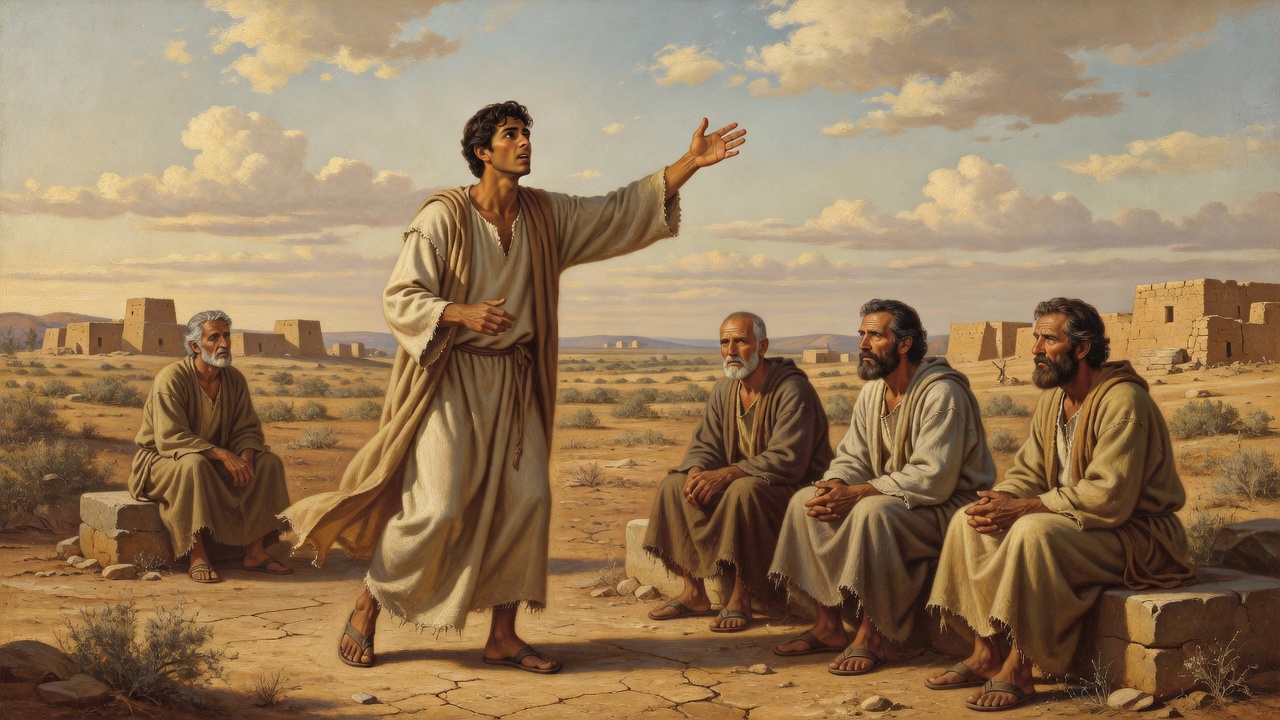
¿Sabías que…?
Eliú sobre la Independencia de Dios y el Clamor Humano
- Eliú interviene después de que el debate entre Job y sus tres compañeros ha concluido, ofreciendo una serie de discursos a lo largo de los capítulos 32 al 37.Fuentes: Elihu · el propio texto bíblico
- En este capítulo, Eliú defiende la trascendencia de Dios al pedirle a Job que contemple los cielos y las nubes, argumentando que el pecado humano no perjudica a Dios ni la rectitud humana lo enriquece.Fuentes: el propio texto bíblico
- Eliú también explica por qué los clamores de auxilio bajo la opresión a veces no reciben respuesta, sosteniendo que las personas a menudo claman solo por alivio del sufrimiento en lugar de buscar con humildad a Dios, su Hacedor.Fuentes: el propio texto bíblico
Notas escritas con ayuda de IA a partir de fuentes abiertas (Theographic Bible Metadata, CC BY-SA 4.0; Easton’s Bible Dictionary, dominio público) y revisadas antes de publicarse.
Créditos y licencia de esta traducción
American Standard Version Byzantine Text
The Holy Bible with Apocrypha, American Standard Version conformed to the Byzantine Text New Testament
Public Domain
Language: English
Dialect: Archaic American
Changes to the ASV dedicated to the Public Domain by Adam Boyd in 2021. The ASV itself is in the Public Domain due to copyright expiration.
2026-10-02
Títulos de sección adaptados de la Berean Standard Bible (dominio público); no forman parte del texto bíblico de esta traducción.
Fuente: http://ebible.org/engasvbt/ · eBible.org