Génesis 2
Anindilyakwa English Bible · Toca un versículo para ver sus referencias cruzadas.
1In that way God made the world and the sky and everything on the earth and in the sky and in the sea. And then he finished his work. 2He worked for six days from when he started until he finished it all, and then he stopped working.
3Then he said, “This seventh day I am resting. So this day is different. It will be separate from the other days, because I have rested from my work today. This is my holy day.” 4That is how God made the world.
About Eden
At first when Yahweh God made the world, 5there were no plants on the land and no seeds had started to grow. And he hadn't yet made the rain fall on the ground. And there were no people to grow trees and plants. 6But water kept coming up out of the ground and it watered the land.
7Then Yahweh God took some soil and made a man from it. He blew his breath into the man's nose so that he could live. And the man came alive.
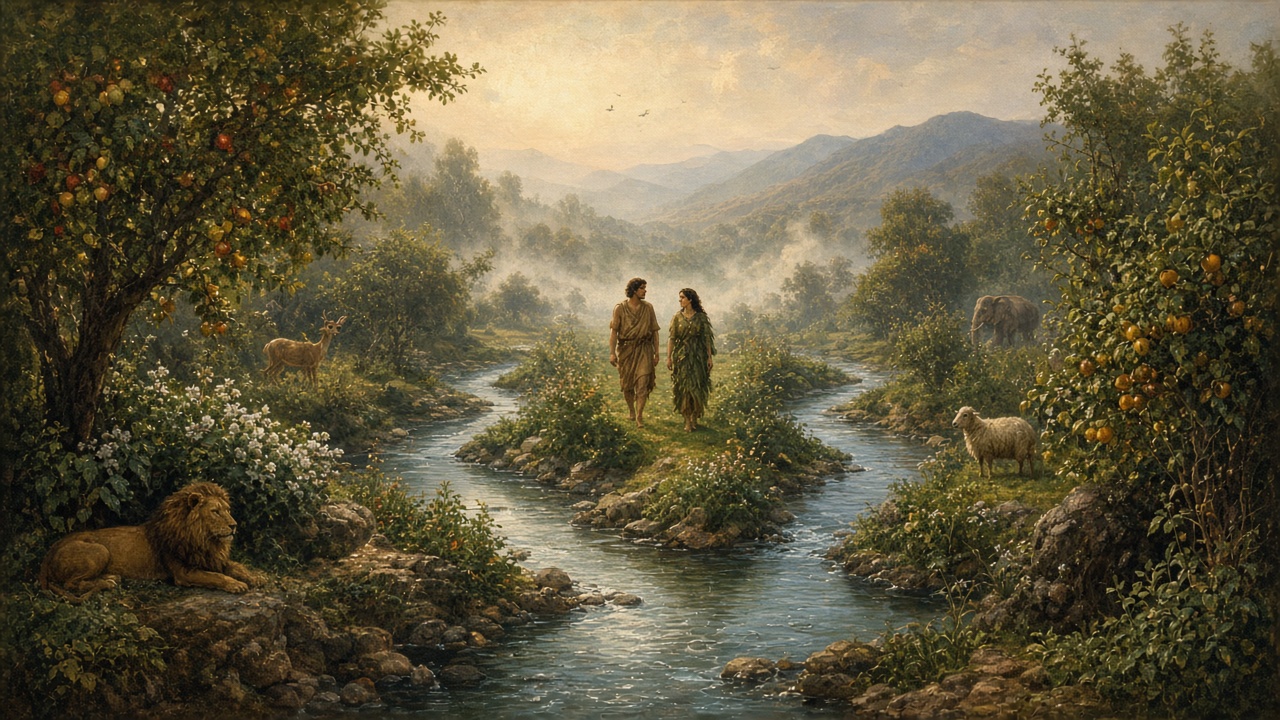
8Then Yahweh God planted trees and other plants in a place called Eden, in the east. And there he put the man he had made. 9It was a beautiful place because Yahweh God had planted all kinds of trees that were lovely to look at, and that provided good fruit. In the middle of all those fruit trees and other plants Yahweh God planted one tree that gives life and one tree that gives knowledge about what is good and what is bad.
10A river flowed in Eden and watered the ground. It flowed on further and divided into four. 11One of the rivers is called Pishon, the one that flows through the land called Havilah. 12In that place there is beautiful gold under the ground and other precious stones and also sweet-smelling perfume.
13Another river called Gihon flows through the land of Cush. 14Another river called Tigris flows to the east through the land of Assyria and further on. And another river is called Euphrates. They are the four rivers.
15Yahweh God put the man there in Eden so that he could grow food and look after the place. 16He said to him, “You can eat the fruit from any of the trees, 17except one. This tree gives knowledge about what is good and what is bad and you mustn't eat its fruit. If you do eat it you will die the same day.”
18Then Yahweh God said, “It is not good for this man to live alone. So I will make a helper to be with him.”
19So Yahweh God took some soil and made animals and birds out of it. He brought the animals and birds to the man so that he could name them all. 20So the man named the animals and the birds, but none of them was a good helper for him.
21Then Yahweh God made the man go to sleep. He went fast asleep and while he was sleeping Yahweh God took a rib from him and closed up his flesh. 22He made a woman out of the rib and he brought her to him.
23The man said, “Ah! Here is someone like me! My bone is in her, and also my flesh. Yahweh God has made this person from a man today, so her name is ‘Woman.’” 24So because of that a man will leave his father and his mother to live with his wife, and then they will become one.
25The man and the woman were both naked, but they weren't ashamed.
¿Sabías que…?
Adán, el Edén y los cuatro ríos
- Adán, que significa “rojo”, es una palabra babilónica y el nombre común del ser humano, con el mismo sentido en hebreo y en asirio. Se le dio al primer hombre. Fue formado del polvo de la tierra —de ahí el nombre— y Dios sopló en sus narices el aliento de vida.Fuentes: Adam · el propio texto bíblico
- Un río salía del Edén y se dividía en cuatro brazos: el Pisón, el Gihón, el Hidekel y el Éufrates. Algunos identifican el Pisón con el Fasis o el Halis; otros, con el Indo, el Ganges u otros ríos más. El Gihón ha sido identificado con el Nilo, y otros lo consideran el Oxo, el Araxes o el Ganges. El Hidekel es el Tigris, llamado por los acadios el río de Idikla; Gesenius entendió el nombre como “el Tigris rápido”.Fuentes: el propio texto bíblico · Pison · Gihon · Hiddekel
- El sitio del Edén, el jardín en el que vivieron los primeros padres, se ha discutido más que casi cualquier otra cuestión geográfica. Se ha situado en Armenia, en la región al oeste del mar Caspio, en Media, cerca de Damasco, en Palestina, en el sur de Arabia y en Babilonia. El Easton's Bible Dictionary (1897) lo busca a lo largo del Tigris y del Éufrates del Asia occidental, en la tierra de Sinar, o Babilonia.Fuentes: Eden
Notas escritas con ayuda de IA a partir de fuentes abiertas (Theographic Bible Metadata, CC BY-SA 4.0; Easton’s Bible Dictionary, dominio público) y revisadas antes de publicarse.
Lugares de este capítulo
- Assyria · 36.359, 43.153 · versículo 14
- Euphrates · Hoy: Euphrates River · 31.004, 47.442 · versículo 14
- Tigris · Hoy: Tigris River · 31.004, 47.442 · versículo 14
Solo aparecen lugares identificados con alta confianza (90 % o más según las fuentes académicas reunidas por OpenBible). Mapa de la época: DARE (Digital Atlas of the Roman Empire), CC BY 4.0; mapa actual: © colaboradores de OpenStreetMap; lugares: OpenBible.info (CC BY 4.0).
Créditos y licencia de esta traducción
Anindilyakwa English Bible
Portions of the Holy Bible in English easy for Anindilyakwa speakers in Australia to understand.
Copyright © 2021 Bible Society Australia
Language: English
This translation is made available to you under the terms of the
Creative Commons Attribution-Noncommercial-No Derivatives license 4.0.
You may share and redistribute this Bible translation or extracts from it in any format, provided that:
You include the above copyright and source information.
You do not sell this work for a profit.
You do not change any of the words or punctuation of the Scriptures.
Pictures included with Scriptures and other documents on this site are licensed just for use with those Scriptures and documents.
For other uses, please contact the respective copyright owners.
2021-11-23
Fuente: http://ebible.org/engaoi/ · eBible.org