Génesis 26
Wycliffe Bible · Toca un versículo para ver sus referencias cruzadas.
God’s Promise to Isaac
1Forsothe for hungur roos on the lond, aftir thilke bareynesse that bifelde in the daies of Abraham, Isaac yede forth to Abymelech, kyng of Palestyns, in Gerara. 2And the Lord apperide to hym, and seide, Go not doun in to Egipt, but reste thou in the lond which Y schal seie to thee, 3and be thou a pilgrym ther ynne; and Y schal be with thee, and Y schal blesse thee; for Y schal yyue alle these cuntrees to thee and to thi seed, and Y schal fille the ooth which Y bihiyte to Abraham, thi fadir. 4And Y schal multiplie thi seed as the sterris of heuene, and Y schal yyue alle these thingis to thin eyris, and alle folkis of erthe schulen be blessid in thi seed, for Abraham obeide to my vois, 5and kepte `my preceptis and comaundementis, and kepte cerymonyes and lawis.
Isaac Deceives Abimelech
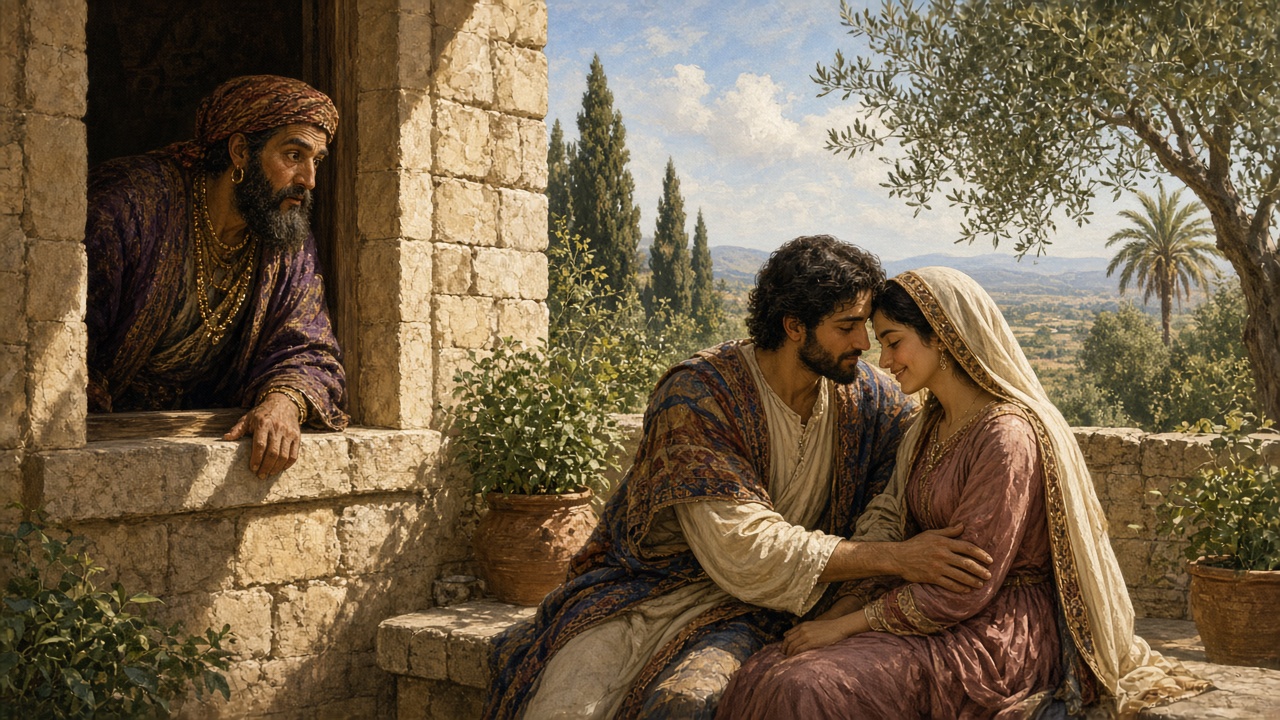
6And so Ysaac dwellide in Geraris. 7And whanne he was axid of men of that place of his wijf, he answarde, Sche is my sistir; for he dredde to knowleche that sche was felouschipid to hym in matrymonye, and gesside lest peraduenture thei wolden sle him for the fairnesse of hir. 8And whanne ful many daies weren passid, and he dwellide there, Abymelech, kyng of Palestyns, bihelde bi a wyndow, and seiy hym pleiynge with Rebecca, his wijf. 9And whanne Isaac was clepid, the kyng seide, It is opyn, that sche is thi wijf; whi liedist thou, that sche was thi sistir? Isaac answerde, Y dredde, lest Y schulde die for hir. 10And Abymelech seide, Whi hast thou disseyued vs? Sum man of the puple myyte do letcherie with thi wijf, and thou haddist brouyt in greuous synne on vs. And the kyng comaundide to al the puple, 11and seide, He that touchith the wijf of this man schal die bi deeth.
Isaac’s Prosperity
12Forsothe Isaac sowide in that lond, and he foond an hundrid fold in that yeer; and the Lord blesside hym. 13And the man was maad riche, and he yede profitynge and encreessynge til he was maad ful greet. 14Also he hadde possessioun of scheep and grete beestis, and ful myche of meyne. For this thing Palestyns hadden enuye to hym, 15and thei stoppiden in that tyme and filliden with erthe alle the pittis whiche the seruauntis of Abraham his fadir hadden diggid, 16in so myche that Abymelech him silf seide to Ysaac, Go thou awei fro vs, for thou art maad greetly myytier than we. 17And he yede awei, that he schulde come to the stronde of Gerare, and dwelle there. 18And he diggide eft other pittis, whiche the seruauntis of Abraham his fadir hadden diggid, and whiche the Filisteis hadden stoppid sumtyme, whanne Abraham was deed; and he clepide tho pittis bi the same names, bi whiche his fadir hadde clepid bifore. 19Thei diggiden in the stronde, and thei founden wellynge watir. 20But also strijf of scheepherdis of Gerare was there ayens the scheepherdis of Isaac, and thei seiden, The watir is oure; wherfor of that that bifelde he clepide the name of the pit fals chaleng. 21And thei diggiden anothir, and thei stryueden also for that, and Ysaac clepide that pit enemytes. 22And he yede forth fro thennus, and diggide another pit, for which thei stryueden not, therfor he clepid the name of that pit largenesse; and seide, Now God hath alargid vs, and hath maad to encreesse on erthe. 23Forsothe he stiede fro that place in to Bersabee, 24where the Lord God apperide to him in that nyyt; and seide, Y am God of Abraham, thi fadir; nyle thou drede, for Y am with thee, and Y schal blesse thee, and Y schal multiplie thi seed for my seruaunt Abraham. 25And so Ysaac bildide ther an auter to the Lord; and whanne the name of the Lord was inwardli clepid, he stretchide forth a tabernacle; and he comaundide hise seruauntis that thei schulden digge pittis.
Isaac’s Covenant with Abimelech
26And whanne Abymelech, and Ochosat, hise frendis, and Ficol, duk of knyytis, hadden come fro Geraris to that place, 27Isaac spak to hem, What camen ye to me, a man whom ye hatiden, and puttiden awei fro you? 28Whiche answeriden, We seiyen that God is with thee, and therfor we seiden now, An ooth be bitwixe vs, and make we a couenaunt of pees, 29that thou do not ony yuel to vs, as we touchiden `not ony thing of thine, nethir diden that that hirtide thee, but with pees we leften thee encressid bi the blessyng of the Lord. 30Therfor Isaac made a feeste to hem; and after mete and drynk thei risen eerli, 31and sworen ech to other; and Isaac lefte hem peisibli in to her place. 32Lo! forsothe in that dai the seruauntis of Ysaac camen, tellynge to him of the pit which thei hadden diggid, and seiden, We han foundun watir. 33Wherfor Ysaac clepide that pit abundaunce; and the name of the citee was set Bersabee til in to present dai.
Esau’s Wives
34Esau forsothe fourti yeer eld weddide twei wyues, Judith, the douytir of Beeri Ethei, and Bethsamath, the douyter of Elon, of the same place; 35whiche bothe offendiden the soule of Isaac and of Rebecca.
¿Sabías que…?
Isaac en Gerar
- Durante una hambruna, Isaac buscó refugio junto a Abimelec, rey de Gerar, una antigua ciudad y distrito en la frontera sur de Palestina. El Easton's Bible Dictionary (1897) señala que Isaac actuó con su esposa Rebeca de manera muy parecida a como su padre Abraham había actuado con Sara allí: dijo que ella era su hermana. Abimelec después lo reprendió, cuando se descubrió el engaño.Fuentes: Abimelech (King of Gerar) · Gerar · el propio texto bíblico
- Los nombres de los pozos en el valle de Gerar recuerdan las disputas por ellos. Esek significa “contienda”, porque los pastores de Gerar reclamaron el agua, y Sitna significa “conflicto”. Isaac también reabrió pozos que los siervos de su padre Abraham habían cavado y que los filisteos habían tapado, y les dio los mismos nombres que su padre les había dado.Fuentes: Esek · Sitnah · el propio texto bíblico
- Beerseba significa “pozo del juramento” o “pozo de los siete”. Según el Easton's Bible Dictionary (1897), Abraham cavó allí un pozo y le puso ese nombre tras un pacto con Abimelec, e Isaac le dio el mismo nombre al reabrirlo. El diccionario también identifica a Ficol —“grande”— como capitán jefe del ejército de Abimelec y dice que participó en la alianza de Abraham acerca de ese pozo.Fuentes: Beersheba · Phichol · el propio texto bíblico
Notas escritas con ayuda de IA a partir de fuentes abiertas (Theographic Bible Metadata, CC BY-SA 4.0; Easton’s Bible Dictionary, dominio público) y revisadas antes de publicarse.
Lugares de este capítulo
- Egypt · 30.129, 31.308 · versículo 2
- Valley of Gerar · Hoy: about 3 km around Tel Haror · 31.382, 34.606 · versículos 17, 19
Solo aparecen lugares identificados con alta confianza (90 % o más según las fuentes académicas reunidas por OpenBible). Mapa de la época: DARE (Digital Atlas of the Roman Empire), CC BY 4.0; mapa actual: © colaboradores de OpenStreetMap; lugares: OpenBible.info (CC BY 4.0).
Créditos y licencia de esta traducción
Wycliffe Bible
This is the Pentateuch and Gospels from The Holy Bible, containing the Old and New Testaments, with the apocryphal books, in the earliest English version made from the latin Vulgate by John Wycliffe and his followers. c.1395
Public Domain
Language: Middle English (English)
Dialect: Middle
Translation by: John Wycliffe
2016-11-08
Títulos de sección adaptados de la Berean Standard Bible (dominio público); no forman parte del texto bíblico de esta traducción.
Fuente: http://ebible.org/engWycliffe/ · eBible.org