Números 35
Unlocked Literal Bible · Toca un versículo para ver sus referencias cruzadas.
Forty-Eight Cities for the Levites
1Yahweh spoke to Moses on the plains of Moab by the Jordan at Jericho and said, 2“Command the people of Israel to give some of their own shares of land to the Levites. They must give them cities to live in and pastureland surrounding those cities. 3The Levites will have these cities to live in. The pastureland will be for their cattle, their flocks, and all their animals. 4The pasturelands around the cities that you will give to the Levites must extend from the city walls for one thousand cubits in every direction. 5You must measure two thousand cubits from outside the city on the east side, and two thousand cubits to the south side, two thousand cubits to the west side, and two thousand cubits to the north side. This will be the pasturelands for their cities. The cities will be in the center. 6Six of the cities that you will give to Levites must serve as cities of refuge. You must provide these as places to which a person who has killed someone can flee. Also provide forty-two other cities. 7The cities that you give to the Levites will total forty-eight. You must give their pasturelands with them. 8The larger tribes of the people of Israel, the tribes that have more land, must provide more cities. The smaller tribes will provide fewer cities. Each tribe must provide for the Levites according to the share that it has received.”
Six Cities of Refuge
9Then Yahweh spoke to Moses and said, 10“Speak to the people of Israel and say to them, 'When you cross over the Jordan into the land of Canaan, 11then you must choose cities to serve as cities of refuge for you, a place to which a person who has killed someone unintentionally may flee. 12These cities must be your refuge from the avenger, so that the accused man will not be killed without first standing trial before the community. 13You must choose six cities as cities of refuge. 14You must provide three cities beyond the Jordan and three in the land of Canaan. They will be cities of refuge. 15For the people of Israel, for the foreigners, for anyone living among you, these six cities will serve as a refuge to which anyone who kills someone unintentionally can flee.
16But if an accused man has struck his victim with an instrument of iron, and if his victim dies, then the accused is indeed a murderer. He must certainly be put to death. 17If an accused man has struck his victim with a stone in his hand that might kill the victim, and if his victim dies, then the accused is indeed a murderer. He must certainly be put to death. 18If an accused man has struck his victim with a wooden weapon that might kill the victim, and if the victim dies, then the accused is indeed a murderer. He must certainly be put to death. 19The avenger of blood may put the murderer to death. When he meets him, the avenger of blood must put him to death. 20If he strikes another in hatred or throws something at him, while hiding to ambush him, so that the victim dies, 21or if he strikes him down in hatred with his hand so that the victim dies, then the accused who struck him must surely be put to death. He is a murderer. The avenger of blood may put the murderer to death when he meets him.
22But if an accused man suddenly hits a victim without premeditated hate or throws something that hits the victim without lying in wait 23or if he throws a stone that could kill a victim without seeing the victim, then the accused was not the victim's enemy; he was not trying to hurt the victim. But this is what to do if the victim dies anyway. 24In that case, the community must judge between the accused and the avenger of blood on the basis of these rules. 25The community must rescue the accused from the power of the avenger of blood. The community must return the accused to the city of refuge to which he had originally fled. He must live there until the death of the current high priest, the one who was anointed with the holy oil. 26But if the accused man at any time goes beyond the border of the city of refuge to which he fled, 27and if the avenger of blood finds him outside the border of his city of refuge, and if he kills the accused man, the avenger of blood will not be guilty of murder. 28This is because the accused man should have remained in his city of refuge until the death of the high priest. After the death of the high priest, the accused may return to the land where he has his own property.
29These laws must be statutes for you through all your people's generations in all the places where you live. 30Whoever kills any person, the murderer must be killed, as testified to by the words of witnesses. But one witness' word alone may not cause any person to be put to death. 31Also, you must not accept ransom for the life of a murderer who is guilty of murder. He must certainly be put to death. 32You must not accept ransom for the one who has fled to a city of refuge. You must not in this way allow him to reside on his own property until the high priest dies. 33Do not pollute in this way the land where you live, because blood from murder pollutes the land. No atonement can be made for the land when blood has been shed on it, except by the blood of the one who shed it. 34So you must not defile the land in which you live because I am living in it. I, Yahweh, live among the people of Israel.'”
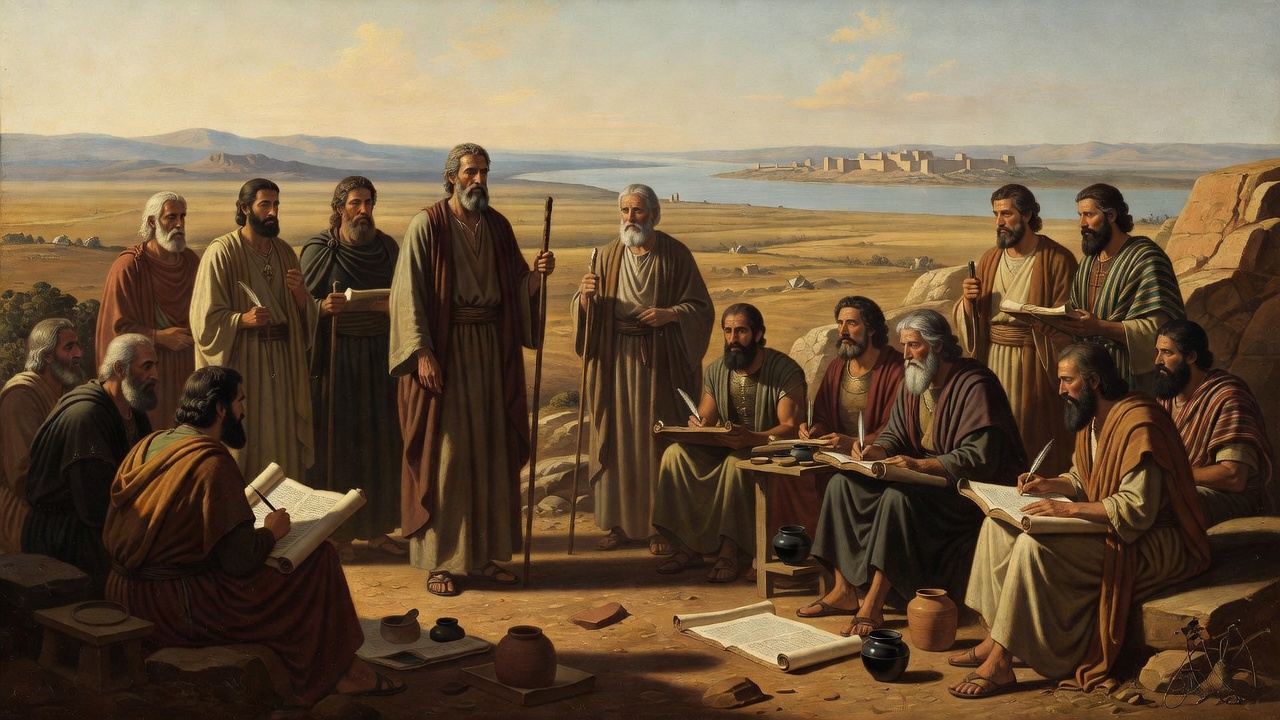
¿Sabías que…?
Ciudades Levíticas y Ciudades de Refugio
- A diferencia de las demás tribus, los levitas no recibieron un territorio continuo. En su lugar, los israelitas debían asignarles cuarenta y ocho ciudades junto con sus campos de pastoreo circundantes, entregadas por cada tribu en proporción al tamaño de su heredad.Fuentes: el propio texto bíblico
- Seis de las cuarenta y ocho ciudades levíticas fueron designadas como ciudades de refugio, situándose tres al oriente del Jordán y tres en la tierra de Canaán. Estos lugares brindaban protección legal a israelitas y extranjeros residentes que causaran una muerte accidental, resguardándolos del vengador de la sangre hasta el juicio formal.Fuentes: el propio texto bíblico · Canaan · Jordan
- La ley diferenciaba rigurosamente entre el asesinato premeditado y la muerte involuntaria, exigiendo más de un testigo antes de dictar la pena de muerte. Asimismo, se prohibía aceptar cualquier rescate para salvar a un homicida o para permitir que el refugiado regresara a sus tierras antes de la muerte del sumo sacerdote.Fuentes: el propio texto bíblico
Notas escritas con ayuda de IA a partir de fuentes abiertas (Theographic Bible Metadata, CC BY-SA 4.0; Easton’s Bible Dictionary, dominio público) y revisadas antes de publicarse.
Lugares de este capítulo
- Jericho · Hoy: Tell es Sultan · 31.872, 35.445 · versículo 1
- Jordan · Hoy: Jordan River · 31.761, 35.558 · versículos 1, 10, 14
- Moab · Hoy: Moab 2 · 31.840, 35.674 · versículo 1
- Canaan · 32.767, 35.333 · versículos 10, 14
Solo aparecen lugares identificados con alta confianza (90 % o más según las fuentes académicas reunidas por OpenBible). Mapa de la época: DARE (Digital Atlas of the Roman Empire), CC BY 4.0; mapa actual: © colaboradores de OpenStreetMap; lugares: OpenBible.info (CC BY 4.0).
Créditos y licencia de esta traducción
Unlocked Literal Bible
The Holy Bible in English, Unlocked Literal Bible translation
copyright © 2017 Door43 World Missions Community
Language: English
Translation by: Door43 World Missions Community
Contributor: 'Alrick G. Headley, M.Div., Th.M.', 'Adam W. Nagelvoort, M.Div. Academic
Ministries, Columbia International University', 'Dave Statezni, BA Orig langs.,
M.Div. Fuller Theological Seminary', 'Bram van den Heuvel, M.A.', 'C. Harry
Harriss, M.Div.', 'David Trombold, M. Div.', 'Elizabeth Oakes, BA in Religious
Studies, Linguistics', 'George "Drew" Curley, M.Div., PhD, Professor of Biblical
Languages', Hendrik "Henry" de Vries, 'Henry Whitney, BA Linguistics', 'Jesse
Griffin, BA Biblical Studies, MA Biblical Languages', 'James N. Pohlig, M.Div.,
MA in Linguistics, D. Litt. in Biblical Languages', 'Larry T Brooks, M.Div.,
Assemblies of God Theological Seminary', 'Larry Sallee, D.Min.', 'Paul M Fahnestock,
M.Div. Reformed Theological Seminary, D. Min. Pittsburgh Theological Seminary',
'Perry Oakes, PhD in Old Testament, MA in Linguistics', 'Peter Smircich, BA Philosophy',
'Susan Quigley, MA in Linguistics', 'Thomas Warren, M.Div., Trinity Evangelical
Divinity School, D.Min, Reformed Theological Seminary', 'Timothy Neu, Ph.D.
Biblical Studies', 'Ward Pyles, M.Div., Western Baptist Theological Seminary',
David Trombold, Dean Ropp, Gene Mullen, James Vigen, Leonard Smith, Nicholas Alsop,
Michael Francis
This is an open-licensed update of the ASV, intended to provide a 'form-centric' understanding of the Bible. It increases the translator's understanding of the lexical and grammatical composition of the underlying text by adhering closely to the word order and structure of the originals.
This translation is made available to you under the terms of the
Creative Commons Attribution Share-Alike license 4.0.
You have permission to share and redistribute this Bible translation in any format and to make reasonable revisions and adaptations of this translation, provided that:
You include the above copyright and source information.
If you make any changes to the text, you must indicate that you did so in a way that makes it clear that the original licensor is not necessarily endorsing your changes.
If you redistribute this text, you must distribute your contributions under the same license as the original.
Pictures included with Scriptures and other documents on this site are licensed just for use with those Scriptures and documents.
For other uses, please contact the respective copyright owners.
Note that in addition to the rules above, revising and adapting God's Word involves a great responsibility to be true to God's Word. See Revelation 22:18-19.
2020-12-04
Títulos de sección adaptados de la Berean Standard Bible (dominio público); no forman parte del texto bíblico de esta traducción.
Fuente: http://ebible.org/engULB/ · eBible.org