Salmos 1
Plain English Version · Toca un versículo para ver sus referencias cruzadas.
Acerca de este libro
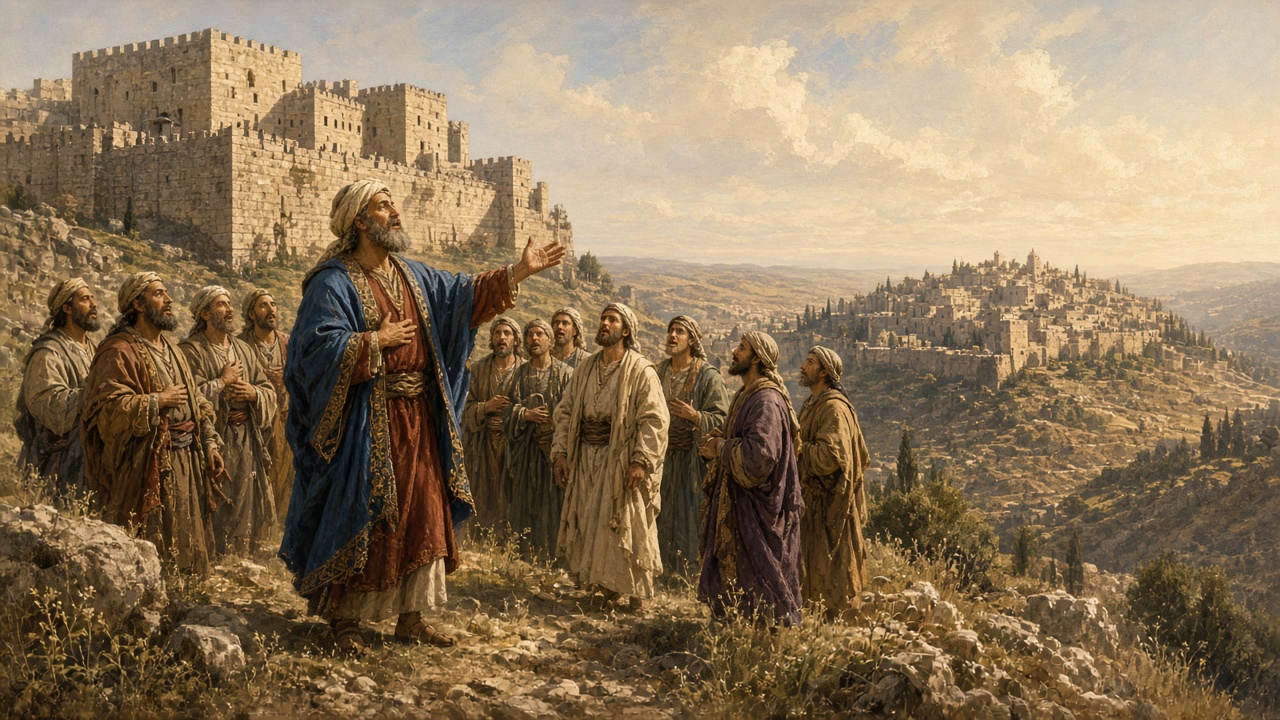
Acerca de los Salmos
- El Diccionario Bíblico de Easton (1897) presenta los Salmos como obra de varios autores, debida sobre todo a David y a sus contemporáneos, mientras poetas de generaciones posteriores añadieron otros cantos. Easton observa que, por ello, la colección refleja de modo más completo cada fase de la emoción y de las circunstancias humanas de lo que lo haría de otro modo. Los títulos atribuyen 73 salmos a David; Easton también señala que Pedro y Juan (Hechos 4:25) le atribuyen el Salmo 2, que es anónimo, y que cerca de dos tercios de la colección se han atribuido a David.Fuentes: Easton: Psalms
- El Diccionario Bíblico de Easton (1897) sostiene que ningún salmo puede demostrarse posterior al tiempo de Esdras y Nehemías, de modo que la colección abarca unos mil años. Recoge la presunción de que las cinco colecciones menores se reunieron en tiempos de elevada vida religiosa: la primera cerca del final de la vida de David, la segunda en días de Salomón, la tercera por los cantores de Josafat, la cuarta por los hombres de Ezequías y la quinta en días de Esdras.Fuentes: Easton: Psalms
- A semejanza del Pentateuco, el Salterio se divide en cinco libros, cada uno cerrado con una doxología o bendición: Salmos 1-41, 42-72, 73-89, 90-106 y los 44 restantes. Easton registra muchas atribuciones a David, a Salomón en los Salmos 72 y 127, a Moisés en el Salmo 90, a Hemán ezraíta en el Salmo 88 y a Etán ezraíta en el Salmo 89, mientras muchos otros salmos son anónimos.Fuentes: Easton: Psalms
- Algunos títulos vinculan salmos con los cantores del culto. Los Salmos 50 y 73-83 se dirigen a Asaf, un levita y uno de los líderes del coro de David, diestro en la música y llamado vidente; la entrada sobre Asaf dice que los hijos de Asaf eran sus descendientes o, más probablemente, una clase de poetas o cantores que lo reconocían como maestro. Los hijos de Coré, parte destacada de los cantores coatitas, fueron encargados de organizar y cantar los Salmos 42, 44-49, 84, 85, 87 y 88, y los Salmos 39, 62 y 77 se dirigen a Jedutún, para ser cantados según su manera o en su coro.Fuentes: Easton: Psalms · Asaph (Levite)
- El Salmo 136 suele llamarse el gran hallel, aunque el Talmud incluye también los Salmos 120-135. Los Salmos 113-118 forman el hallel recitado en las tres grandes fiestas, en la luna nueva y en los ocho días de la fiesta de la dedicación. Easton cuenta 116 citas directas del Salterio en el Nuevo Testamento y señala que, en Lucas 24:44, la palabra salmos designa los Hagiógrafos, los escritos sagrados, una de las secciones en que los judíos dividían el Antiguo Testamento.Fuentes: Easton: Psalms
Notas escritas con ayuda de IA a partir de fuentes abiertas (Theographic Bible Metadata, CC BY-SA 4.0; Easton’s Bible Dictionary, dominio público) y revisadas antes de publicarse.
People that live the right way are really happy
1People that live the right way are really happy.
If people tell them to do bad things, they don’t listen.
And they don’t copy the things that bad people do.
And they don’t rubbish God the way bad people do.
2They love God’s word, and they listen to it.
They think about God’s word in the day time and in the night time.
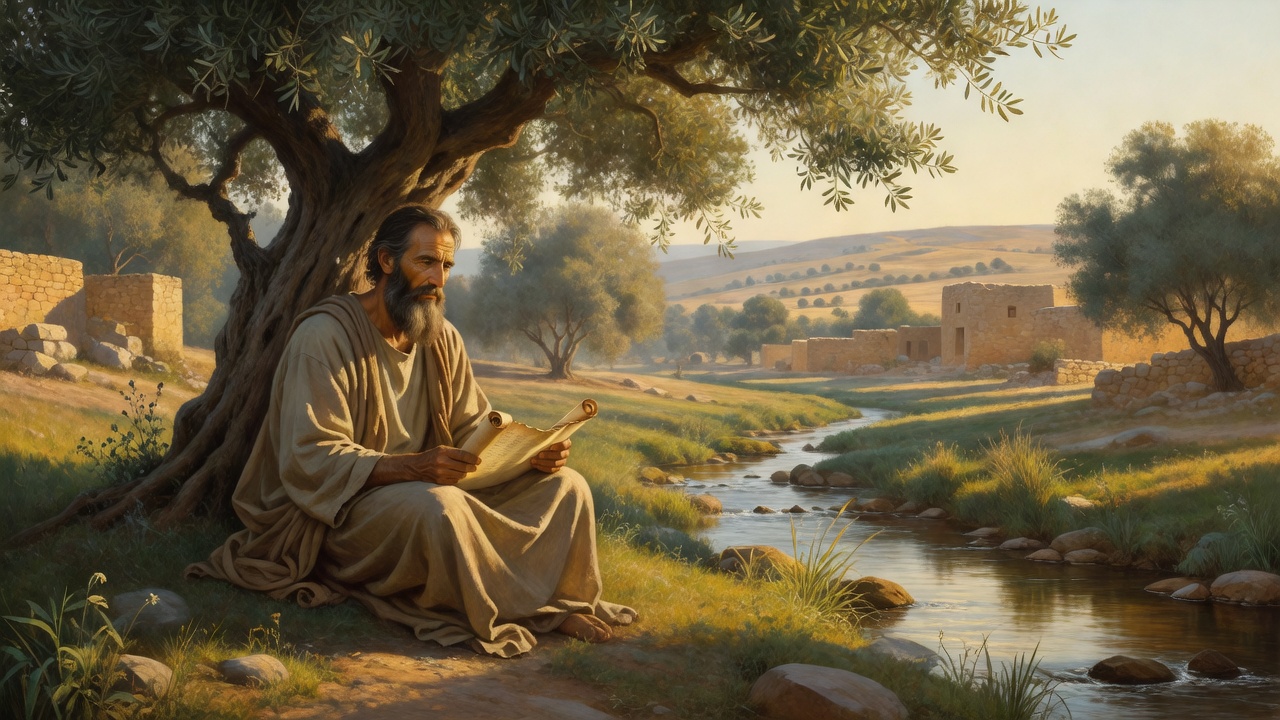
3Those people are like trees that grow right next to a river.
Those trees grow fruit every year.
Their leaves never go brown and dry up.
People that live the right way, they are like those trees.
Everything that they do always goes well.
4But bad people are not like that.
They are like the rubbish bits of a plant that the wind blows away.
5Later, on the day when God will judge everybody,
God will say that those bad people are guilty,
and they will not be with the people that live God’s way.
6You see, God knows the people that always live his way.
He watches them, and he takes care of them.
But those bad people go their own way,
and God will finish them up.
¿Sabías que…?
Los dos caminos
- El Salmo 1 contrasta dos formas de vida mediante imágenes agrícolas: la persona justa es comparada con un árbol frondoso nutrido junto a corrientes de agua, mientras que los malvados son semejantes a la paja que el viento arrebata fácilmente.Fuentes: el propio texto bíblico
- Los versos iniciales describen una clara postura de rechazo al mal —no andar en el consejo de los impíos, no detenerse en el camino de los pecadores ni sentarse con los burladores—, eligiendo en su lugar meditar continuamente en la Ley del Señor.Fuentes: el propio texto bíblico
Notas escritas con ayuda de IA a partir de fuentes abiertas (Theographic Bible Metadata, CC BY-SA 4.0; Easton’s Bible Dictionary, dominio público) y revisadas antes de publicarse.
Créditos y licencia de esta traducción
Plain English Version
Portions of the Holy Bible in the Plain English Version translation for Australian Aboriginal people who speak English as a second language
Copyright © 2026 Wycliffe Bible Translators Australia
Language: Aboriginal English (English)
Dialect: Australian Aboriginal
Plain English Version © 2026 by Wycliffe Bible Translators Australia, licensed under Creative Commons Attribution-Share Alike 4.0 International (CC BY SA 4.0)
This licence allows you to copy and redistribute the material in any medium or format, even commercially. You may adapt, remix, transform, and build upon the material for any purpose, but if you do so, you must distribute your contributions under the same license as the original. You must always give appropriate credit, provide a link to the license, and indicate if changes were made. You may not suggest that Wycliffe Bible Translators endorses you or your use.
For full details of the licence, visit: creativecommons.org/licenses/by-sa/4.0/legalcode
This translation is made available to you under the terms of the
Creative Commons Attribution Share-Alike license 4.0.
You have permission to share and redistribute this Bible translation in any format and to make reasonable revisions and adaptations of this translation, provided that:
You include the above copyright and source information.
If you make any changes to the text, you must indicate that you did so in a way that makes it clear that the original licensor is not necessarily endorsing your changes.
If you redistribute this text, you must distribute your contributions under the same license as the original.
Pictures included with Scriptures and other documents on this site are licensed just for use with those Scriptures and documents.
For other uses, please contact the respective copyright owners.
Note that in addition to the rules above, revising and adapting God's Word involves a great responsibility to be true to God's Word. See Revelation 22:18-19.
2026-10-02
Fuente: http://ebible.org/engPEV/ · eBible.org