Salmos 55
Douay-Rheims 1899 · Toca un versículo para ver sus referencias cruzadas.
Cast Your Burden upon the LORD
1Unto the end, for a people that is removed at a distance from the sanctuary for David, for an inscription of a title (or pillar) when the Philistines held him in Geth.
2Have mercy on me, O God, for man hath trodden me under foot; all the day long he hath afflicted me fighting against me.
3My enemies have trodden on me all the day long; for they are many that make war against me.
4From the height of the day I shall fear: but I will trust in thee.
5In God I will praise my words, in God I have put my trust: I will not fear what flesh can do against me.
6All the day long they detested my words: all their thoughts were against me unto evil.
7They will dwell and hide themselves: they will watch my heel. As they have waited for my soul,
8For nothing shalt thou save them: in thy anger thou shalt break the people in pieces, O God,
9I have declared to thee my life: thou hast set my tears in thy sight, As also in thy promise.
10Then shall my enemies be turned back. In what day soever I shall call upon thee, behold I know thou art my God.
11In God will I praise the word, in the Lord will I praise his speech. In God have I hoped, I will not fear what man can do to me.
12In me, O God, are vows to thee, which I will pay, praises to thee:
13Because thou hast delivered my soul from death, my feet from falling: that I may please in the sight of God, in the light of the living.
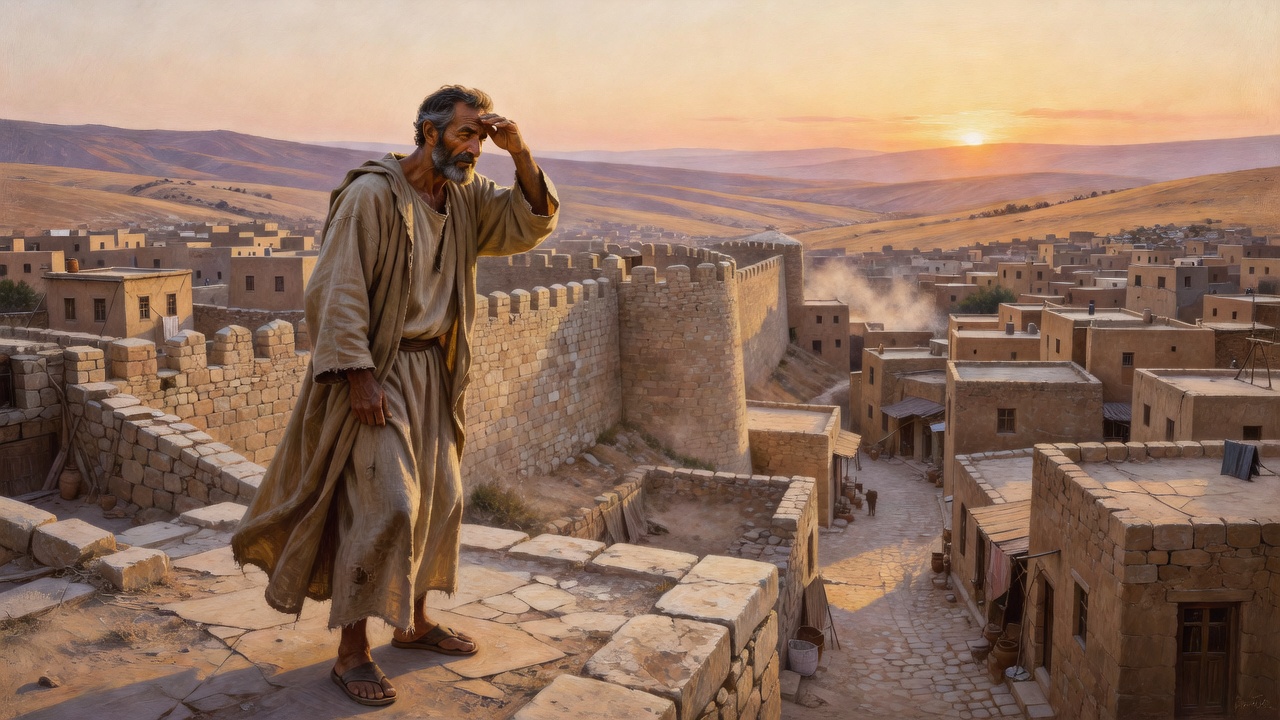
¿Sabías que…?
Traición, Conflicto en la Ciudad y Refugio en Dios
- El salmo resalta el dolor particular de la traición cometida por un compañero íntimo y no por un enemigo declarado. El autor describe al traidor como un amigo cercano con quien compartía una dulce comunión y caminaba junto a la multitud hacia la casa de Dios.Fuentes: el propio texto bíblico
- Frente al engaño, la opresión y la violencia que consumían la ciudad, el salmista anhela tener alas como una paloma para huir lejos y hallar refugio en el desierto.Fuentes: el propio texto bíblico
- El pasaje refleja una práctica constante de oración diaria en medio de la angustia, donde el autor afirma que clama a Dios por la mañana, al mediodía y al atardecer.Fuentes: el propio texto bíblico
Notas escritas con ayuda de IA a partir de fuentes abiertas (Theographic Bible Metadata, CC BY-SA 4.0; Easton’s Bible Dictionary, dominio público) y revisadas antes de publicarse.
Créditos y licencia de esta traducción
Douay-Rheims 1899
The Holy Bible in English, Douay-Rheims American Edition of 1899, translated from the Latin Vulgate
Public Domain
Language: English
Dialect: archaic American
Translation by: English College, Douai
This Public Domain Bible text is brought to you courtesy of eBible.org.
Help support free Bible access at https://eBible.org/give.php .
2022-11-03
Títulos de sección adaptados de la Berean Standard Bible (dominio público); no forman parte del texto bíblico de esta traducción.
Fuente: http://ebible.org/engDRA/ · eBible.org