Malaquías 1
Douay-Rheims 1899 · Toca un versículo para ver sus referencias cruzadas.
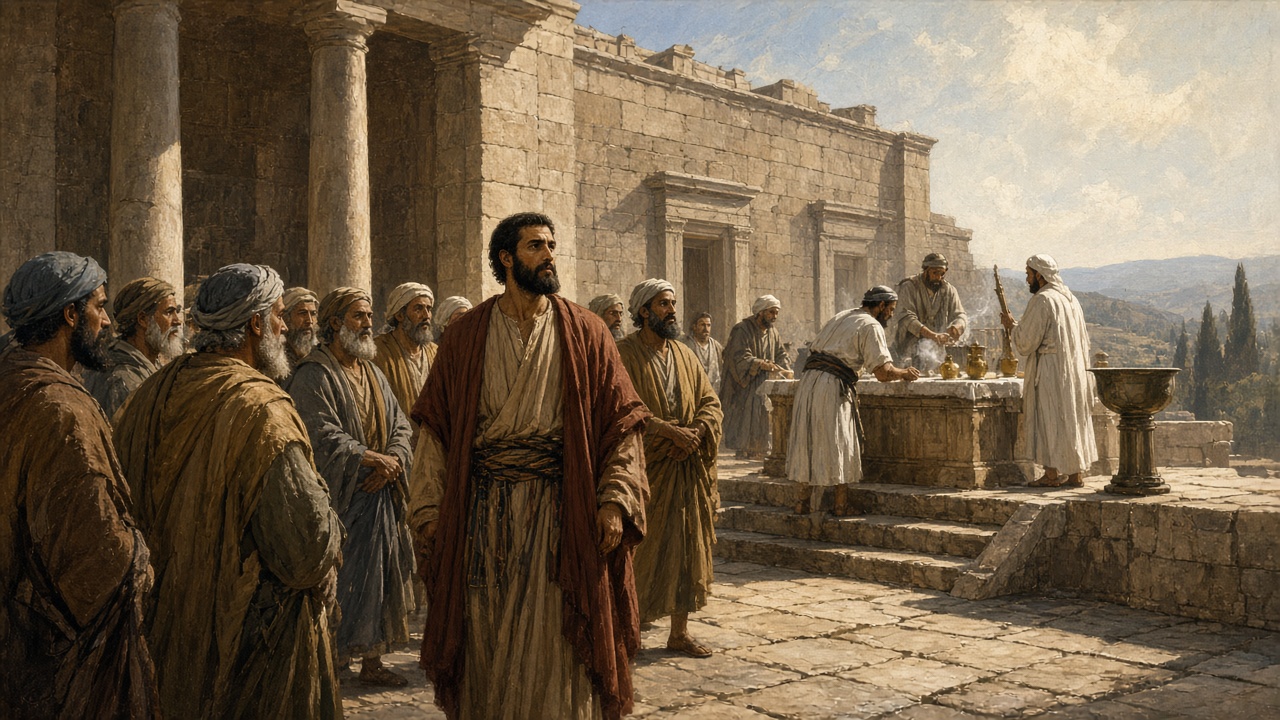
Acerca de este libro
Sobre Malaquías
- El Easton's Bible Dictionary (1897) presenta a Malaquías, nombre que significa "mensajero" o "ángel", como el último de los profetas menores y el autor del último libro del canon del Antiguo Testamento. No se sabe nada de él más allá de lo que contiene su libro de profecías.Fuentes: Easton: Malachi · Malachi
- Algunos han supuesto que el nombre es simplemente un título para un mensajero de Jehová, y no un nombre propio. El Easton's Bible Dictionary (1897), sin embargo, concluye que hay razón para considerar que Malaquías era el nombre habitual del profeta.Fuentes: Easton: Malachi · Malachi
- El Easton's Bible Dictionary (1897) fecha las profecías hacia 420 a. C., después del segundo regreso de Nehemías desde Persia, o posiblemente antes de ese regreso. Como Esdras no lo menciona y él no habla de la restauración del templo, el diccionario infiere que profetizó después de Hageo y Zacarías.Fuentes: Easton: Malachi
- El Easton's Bible Dictionary (1897) trata a Malaquías como contemporáneo de Nehemías, al comparar Malaquías 2:8 con Nehemías 13:15 y Malaquías 2:10-16 con Nehemías 13:23. También señala que los servicios del templo aún existían, citando Malaquías 1:10, 3:1 y 3:10.Fuentes: Easton: Malachi
Notas escritas con ayuda de IA a partir de fuentes abiertas (Theographic Bible Metadata, CC BY-SA 4.0; Easton’s Bible Dictionary, dominio público) y revisadas antes de publicarse.
The LORD’s Love for Israel
1The burden of the word of the Lord to Israel by the hand of Malachias. 2I have loved you, saith the Lord: and you have said: Wherein hast thou loved us? Was not Esau brother to Jacob, saith the Lord, and I have loved Jacob, 3But have hated Esau? and I have made his mountains a wilderness, and given his inheritance to the dragons of the desert. 4But if Edom shall say: We are destroyed, but we will return and build up what hath been destroyed: thus saith the Lord of hosts: They shall build up, and I will throw down: and they shall be called the borders of wickedness, and the people with whom the Lord is angry for ever. 5And your eyes shall see, and you shall say: The Lord be magnified upon the border of Israel.
The Polluted Offerings
6The son honoureth the father, and the servant his master: if then I be a father, where is my honour? and if I be a master, where is my fear? saith the Lord of hosts. 7To you, O priests, that despise my name, and have said: Wherein have we despised thy name? You offer polluted bread upon my altar, and you say: Wherein have we polluted thee? In that you say: The table of the Lord is contemptible. 8If you offer the blind for sacrifice, is it not evil? and if you offer the lame and the sick, is it not evil? offer it to thy prince, if he will be pleased with it, or if he will regard thy face, saith the Lord of hosts. 9And now beseech ye the face of God, that he may have mercy on you, (for by your hand hath this been done,) if by any means he will receive your faces, saith the Lord of hosts. 10Who is there among you, that will shut the doors, and will kindle the fire on my altar gratis? I have no pleasure in you, saith the Lord of hosts: and I will not receive a gift of your hand. 11For from the rising of the sun even to the going down, my name is great among the Gentiles, and in every place there is sacrifice, and there is offered to my name a clean oblation: for my name is great among the Gentiles, saith the Lord of hosts. 12And you have profaned it in that you say: The table of the Lord is defiled: and that which is laid thereupon is contemptible with the fire that devoureth it. 13And you have said: Behold of our labour, and you puffed it away, saith the Lord of hosts, and you brought in of rapine the lame, and the sick, and brought in an offering: shall I accept it at your hands, saith the Lord? 14Cursed is the deceitful man that hath in his flock a male, and making a vow offereth in sacrifice that which is feeble to the Lord: for I am a great King, saith the Lord of hosts, and my name is dreadful among the Gentiles.
¿Sabías que…?
La honra a Dios y los sacrificios defectuosos
- El nombre Malaquías significa mensajero o ángel. Aunque algunos han sugerido que se trataba de un título en vez de un nombre propio, la tradición lo considera el nombre del profeta, ubicando su ministerio en la época de Nehemías, después de Hageo y Zacarías.Fuentes: Malachi
- El mensaje inicial evoca a los hermanos gemelos Jacob y Esaú, antepasados de Israel y Edom. El texto contrasta el amor del pacto con Israel frente a la desolación que sobrevendría sobre la región montañosa de Edom.Fuentes: Esau (Edom) · Jacob (Israel) · Edom · el propio texto bíblico
- Los sacerdotes son reprendidos por presentar sobre el altar animales ciegos, cojos y enfermos en lugar de animales sanos. Malaquías evidencia su falta de respeto preguntando si acaso un gobernador aceptaría tales ofrendas defectuosas.Fuentes: el propio texto bíblico
Notas escritas con ayuda de IA a partir de fuentes abiertas (Theographic Bible Metadata, CC BY-SA 4.0; Easton’s Bible Dictionary, dominio público) y revisadas antes de publicarse.
Lugares de este capítulo
- Edom · 30.746, 35.604 · versículo 4
Solo aparecen lugares identificados con alta confianza (90 % o más según las fuentes académicas reunidas por OpenBible). Mapa de la época: DARE (Digital Atlas of the Roman Empire), CC BY 4.0; mapa actual: © colaboradores de OpenStreetMap; lugares: OpenBible.info (CC BY 4.0).
Créditos y licencia de esta traducción
Douay-Rheims 1899
The Holy Bible in English, Douay-Rheims American Edition of 1899, translated from the Latin Vulgate
Public Domain
Language: English
Dialect: archaic American
Translation by: English College, Douai
This Public Domain Bible text is brought to you courtesy of eBible.org.
Help support free Bible access at https://eBible.org/give.php .
2022-11-03
Títulos de sección adaptados de la Berean Standard Bible (dominio público); no forman parte del texto bíblico de esta traducción.
Fuente: http://ebible.org/engDRA/ · eBible.org