Job 34
Douay-Rheims 1899 · Toca un versículo para ver sus referencias cruzadas.
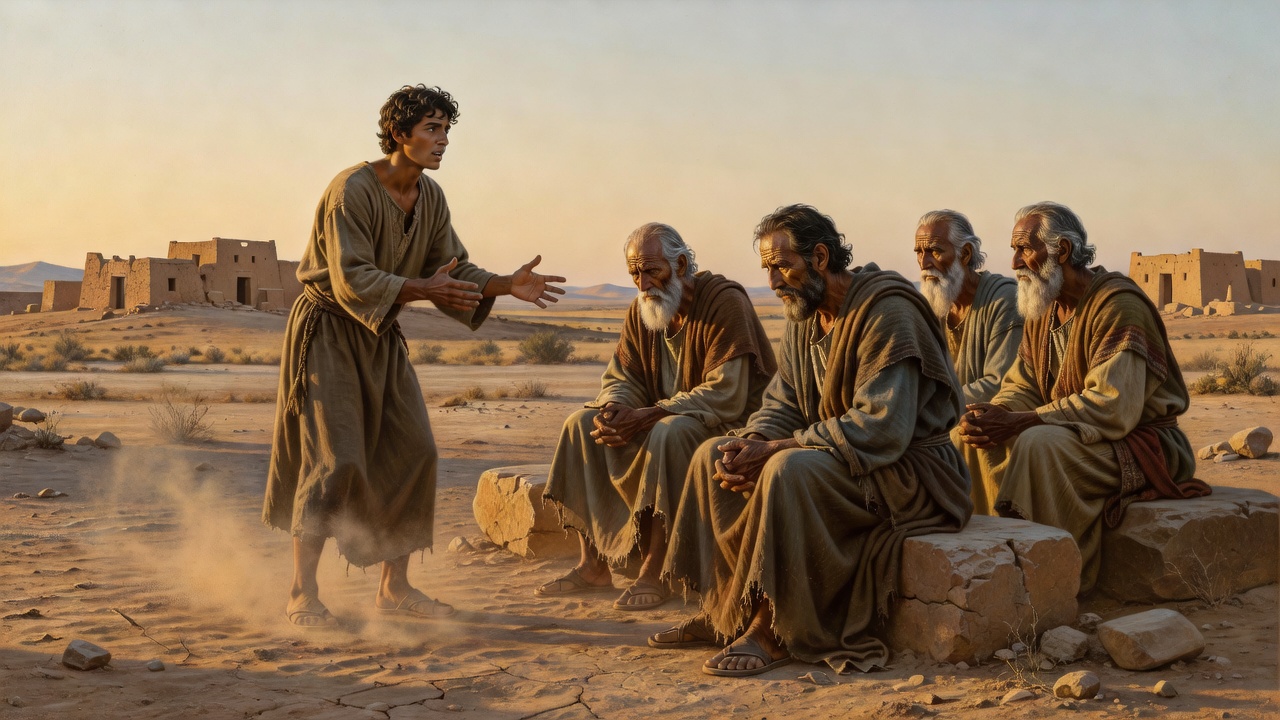
Elihu Confirms God’s Justice
1And Eliu continued his discourse, and said: 2Hear ye, wise men, my words, and ye learned, hearken to me: 3For the ear trieth words, and the mouth discerneth meats by the taste. 4Let us choose to us judgment, and let us see among ourselves what is the best. 5For Job hath said: I am just, and God hath overthrown my judgment. 6For in judging me there is a lie: my arrow is violent without any sin. 7What man is there like Job, who drinketh up scorning like water? 8Who goeth in company with them that work iniquity, and walketh with wicked men? 9For he hath said: Man shall not please God, although he run with him. 10Therefore, ye men of understanding, hear me: far from god be wickedness, and iniquity from the Almighty. 11For he will render to a man his work, and according to the ways of every one he will reward them. 12For in very deed God will not condemn without cause, neither will the Almighty pervert judgment. 13What other hath he appointed over the earth? or whom hath he set over the world which he made? 14If he turn his heart to him, he shall draw his spirit and breath unto himself. 15All flesh shall perish together, and man shall return into ashes. 16If then thou hast understanding, hear what is said, and hearken to the voice of my words. 17Can he be healed that loveth not judgment? and how dost thou so far condemn him that is just? 18Who saith to the king: Thou art an apostate: who calleth rulers ungodly? 19Who accepteth not the persons of princes: nor hath regarded the tyrant, when he contended against the poor man: for all are the work of his hands. 20They shall suddenly die, and the people shall be troubled at midnight, and they shall pass, and take away the violent without hand. 21For his eyes are upon the ways of men, and he considereth all their steps. 22There is no darkness, and there is no shadow of death, where they may be hid who work iniquity. 23For it is no longer in the power of man to enter into judgment with God. 24He shall break in pieces many and innumerable, and shall make others to stand in their stead. 25For he knoweth their works: and therefore he shall bring night on them, and they shall be destroyed. 26He hath struck them, as being wicked, in open sight. 27Who as it were on purpose have revolted from him, and would not understand all his ways: 28So that they caused the cry of the needy to come to him, and he heard the voice of the poor. 29For when he granteth peace, who is there that can condemn? When he hideth his countenance, who is there that can behold him, whether it regard nations, or all men? 30Who maketh a man that is a hypocrite to reign for the sins of the people? 31Seeing then I have spoken of God, I will not hinder thee in thy turn. 32If I have erred, teach thou me: if I have spoken iniquity, I will add no more. 33Doth God require it of thee, because it hath displeased thee? for thou begannest to speak, and not I: but if thou know any thing better, speak. 34Let men of understanding speak to me, and let a wise man hearken to me. 35But Job hath spoken foolishly, and his words sound not discipline. 36My father, let Job be tried even to the end: cease not from the man of iniquity. 37Because he addeth blasphemy upon his sins, let him be tied fast in the mean time amongst us: and then let him provoke God to judgment with his speeches.
¿Sabías que…?
Eliú defiende la justicia de Dios
- Eliú, hijo de Baraquel el buzita, entró en el diálogo después de que concluyó el debate entre Job y sus tres amigos, presentando su propia evaluación de la crisis a lo largo de los capítulos 32 al 37.Fuentes: Elihu · el propio texto bíblico
- En el capítulo 34, Eliú apela directamente a los oyentes y hombres sabios presentes, invitándolos a evaluar su razonamiento tal como el paladar prueba la comida, mientras defiende la absoluta imparcialidad de Dios hacia reyes, nobles y pobres por igual.Fuentes: el propio texto bíblico
Notas escritas con ayuda de IA a partir de fuentes abiertas (Theographic Bible Metadata, CC BY-SA 4.0; Easton’s Bible Dictionary, dominio público) y revisadas antes de publicarse.
Créditos y licencia de esta traducción
Douay-Rheims 1899
The Holy Bible in English, Douay-Rheims American Edition of 1899, translated from the Latin Vulgate
Public Domain
Language: English
Dialect: archaic American
Translation by: English College, Douai
This Public Domain Bible text is brought to you courtesy of eBible.org.
Help support free Bible access at https://eBible.org/give.php .
2022-11-03
Títulos de sección adaptados de la Berean Standard Bible (dominio público); no forman parte del texto bíblico de esta traducción.
Fuente: http://ebible.org/engDRA/ · eBible.org