Isaías 13
Douay-Rheims 1899 · Toca un versículo para ver sus referencias cruzadas.
The Burden against Babylon
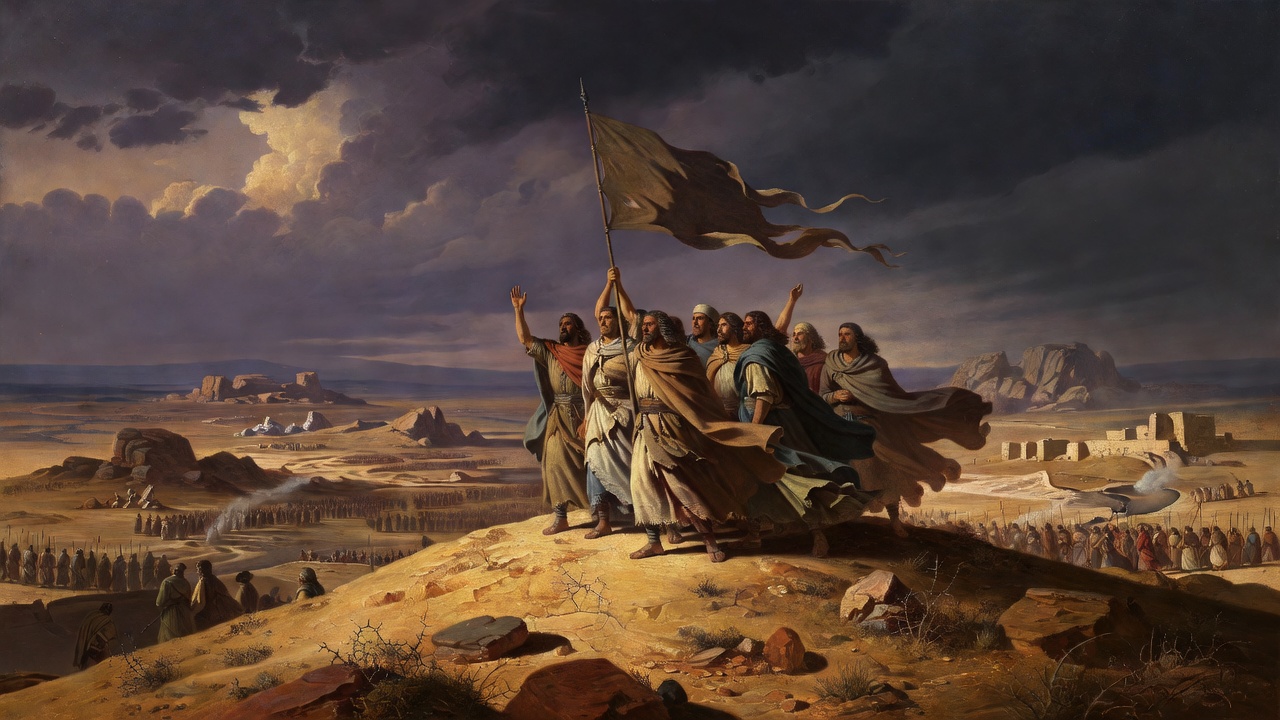
1The burden of Babylon, which Isaias the son of Amos saw. 2Upon the dark mountain lift ye up a banner, exalt the voice, lift up the hand, and let the rulers go into the gates. 3I have commanded my sanctified ones, and have called my strong ones in my wrath, them that rejoice in my glory. 4The noise of a multitude in the mountains, as it were of many people, the noise of the sound of kings, of nations gathered together: the Lord of hosts hath given charge to the troops of war. 5To them that come from a country afar off, from the end of heaven: tile Lord and the instruments of his wrath, to destroy the whole land. 6Howl ye, for the day of the Lord is near: it shall come as a destruction from the Lord. 7Therefore shall all hands be faint, and every heart of man shall melt, 8And shall be broken. Gripings and pains shall take hold of them, they shall be in pain as a woman in labour. Every one shall be amazed at his neighbour, their countenances shall be as faces burnt. 9Behold, the day of the Lord shall come, a cruel day, and full of indignation, and of wrath, and fury, to lay the land desolate, and to destroy the sinners thereof out of it. 10For the stars of heaven, and their brightness shall not display their light: the sun shall be darkened in his rising, and the moon shall not shine with her light. 11And I will visit the evils of the world, and against the wicked for their iniquity: and I will make the pride of infidels to cease, and will bring down the arrogancy of the mighty. 12A man shall be more precious than gold, yea a man than the finest of gold. 13For this I will trouble the heaven: and the earth shall be moved out of her place, for the indignation of the Lord of hosts, and for the day of his tierce wrath. 14And they shall be as a doe fleeing away, and as a sheep: and there shall be none to gather them together: every man shall turn to his own people, and every one shall flee to his own land. 15Every one that shall be found, shall be slain: and every one that shall come to their aid, shall fall by the sword. 16Their infants shall be dashed in pieces before their eyes: their houses shall be pillaged, and their wives shall be ravished. 17Behold I will stir up the Medes against them, who shall not seek silver, nor desire gold: 18But with their arrows they shall kill the children, and shall have no pity upon the sucklings of the womb, and their eye shall not spare their sons. 19And that Babylon, glorious among kingdoms, the famous pride of the Chaldeans, shall be even as the Lord destroyed Sodom and Gomorrha. 20It shall no more be inhabited for ever, and it shall not be founded unto generation and generation: neither shall the Arabian pitch his tents there, nor shall shepherds rest there. 21But wild beasts shall rest there, and their houses shall be filled with serpents, and ostriches shall dwell there, and the hairy ones shall dance there: 22And owls shall answer one another there, in the houses thereof, and sirens in the temples of pleasure.
¿Sabías que…?
El juicio contra Babilonia
- Isaías, hijo de Amoz, proclama un oráculo de juicio inminente contra Babilonia, anunciando que los medos se levantarían contra ella. La desolación total de la ciudad imperial se compara con la antigua y proverbial destrucción de Sodoma y Gomorra.Fuentes: el propio texto bíblico · Isaiah · Sodom · Gomorrah
- La profecía describe a los sobrevivientes volviéndose más escasos que el oro puro de Ofir. Ofir era célebre en todo el antiguo Cercano Oriente por su rico oro, y diversas tradiciones y comentaristas la han ubicado en Arabia, la India u otras regiones comerciales lejanas.Fuentes: el propio texto bíblico · Ophir
- Situada sobre el río Éufrates, Babilonia era celebrada como joya de los reinos y el orgullo de los caldeos. Isaías retrata su futura desolación como total, prediciendo que sus lujosos palacios y fortalezas serían habitados únicamente por chacales, hienas y criaturas salvajes del desierto.Fuentes: el propio texto bíblico · Babylon
Notas escritas con ayuda de IA a partir de fuentes abiertas (Theographic Bible Metadata, CC BY-SA 4.0; Easton’s Bible Dictionary, dominio público) y revisadas antes de publicarse.
Lugares de este capítulo
- Babylon · 32.543, 44.422 · versículos 1, 2, 14, 17, 19, 20, 22
- Chaldea · 30.962, 46.104 · versículo 19
Solo aparecen lugares identificados con alta confianza (90 % o más según las fuentes académicas reunidas por OpenBible). Mapa de la época: DARE (Digital Atlas of the Roman Empire), CC BY 4.0; mapa actual: © colaboradores de OpenStreetMap; lugares: OpenBible.info (CC BY 4.0).
Créditos y licencia de esta traducción
Douay-Rheims 1899
The Holy Bible in English, Douay-Rheims American Edition of 1899, translated from the Latin Vulgate
Public Domain
Language: English
Dialect: archaic American
Translation by: English College, Douai
This Public Domain Bible text is brought to you courtesy of eBible.org.
Help support free Bible access at https://eBible.org/give.php .
2022-11-03
Títulos de sección adaptados de la Berean Standard Bible (dominio público); no forman parte del texto bíblico de esta traducción.
Fuente: http://ebible.org/engDRA/ · eBible.org