Eclesiastés 5
Douay-Rheims 1899 · Toca un versículo para ver sus referencias cruzadas.
Approaching God with Awe
1Speak not any thing rashly, and let not thy heart be hasty to utter a word before God. For God is in heaven, and thou upon earth: therefore let thy words be few. 2Dreams follow many cares: and in many words shall be found folly. 3If thou hast vowed any thing to God, defer not to pay it: for an unfaithful and foolish promise displeaseth him: but whatsoever thou hast vowed, pay it. 4And it is much better not to vow, than after a vow not to perform the things promised. 5Give not thy mouth to cause thy flesh to sin: and say not before the angel: There is no providence: lest God be angry at thy words, and destroy all the works of thy hands. 6Where there are many dreams, there are many vanities, and words without number: but do thou fear God. 7If thou shalt see the oppressions of the poor, and violent judgments, and justice perverted in the province, wonder not at this matter: for he that is high hath another higher, and there are others still higher than these:
The Futility of Wealth
8Moreover there is the king that reigneth over all the land subject to him. 9A covetous man shall not be satisfied with money: and he that loveth riches shall reap no fruit from them: so this also is vanity. 10Where there are great riches, there are also many to eat them. And what doth it profit the owner, but that he seeth the riches with his eyes? 11Sleep is sweet to a labouring man, whether he eat little or much: but the fulness of the rich will not suffer him to sleep. 12There is also another grievous evil, which I have seen under the sun: riches kept to the hurt of the owner. 13For they are lost with very great affliction: he hath begotten a son, who shall be in extremity of want. 14As he came forth naked from his mother’s womb, so shall he return, and shall take nothing away with him of his labour. 15A most deplorable evil: as he came, so shall he return. What then doth it profit him that he hath laboured for the wind? 16All the days of his life he eateth in darkness, and in many cares, and in misery, and sorrow. 17This therefore hath seemed good to me, that a man should eat and drink, and enjoy the fruit of his labour, wherewith he hath laboured under the sun, all the days of his life, which God hath given him: and this is his portion. 18And every man to whom God hath given riches, and substance, and hath given him power to eat thereof, and to enjoy his portion, and to rejoice of his labour: this is the gift of God. 19For he shall not much remember the days of his life, because God entertaineth his heart with delight,
¿Sabías que…?
Reverencia, justicia y los límites de la riqueza
- El autor advierte contra las palabras apresuradas en el culto, recordando a los adoradores que Dios está en el cielo mientras los mortales están en la tierra. Los votos hechos a Dios se consideraban compromisos serios; el texto advierte que demorar o incumplir un voto es una necedad, por lo que es preferible no hacer votos que prometer y no cumplir.Fuentes: el propio texto bíblico
- Al abordar la injusticia y la opresión de los pobres en una provincia, el autor señala la burocracia gubernamental estratificada, donde cada funcionario es supervisado por una autoridad superior. A pesar de esta jerarquía administrativa, todos los niveles, incluido el rey, dependen en última instancia de los frutos del campo.Fuentes: el propio texto bíblico
- El capítulo contrasta el insomnio inquieto de los ricos con el sueño dulce del trabajador común, señalando que el afán por las riquezas no produce una satisfacción duradera. El verdadero contento surge cuando la persona acepta su porción y disfruta de la comida, la bebida y el trabajo honesto como dones de Dios.Fuentes: el propio texto bíblico
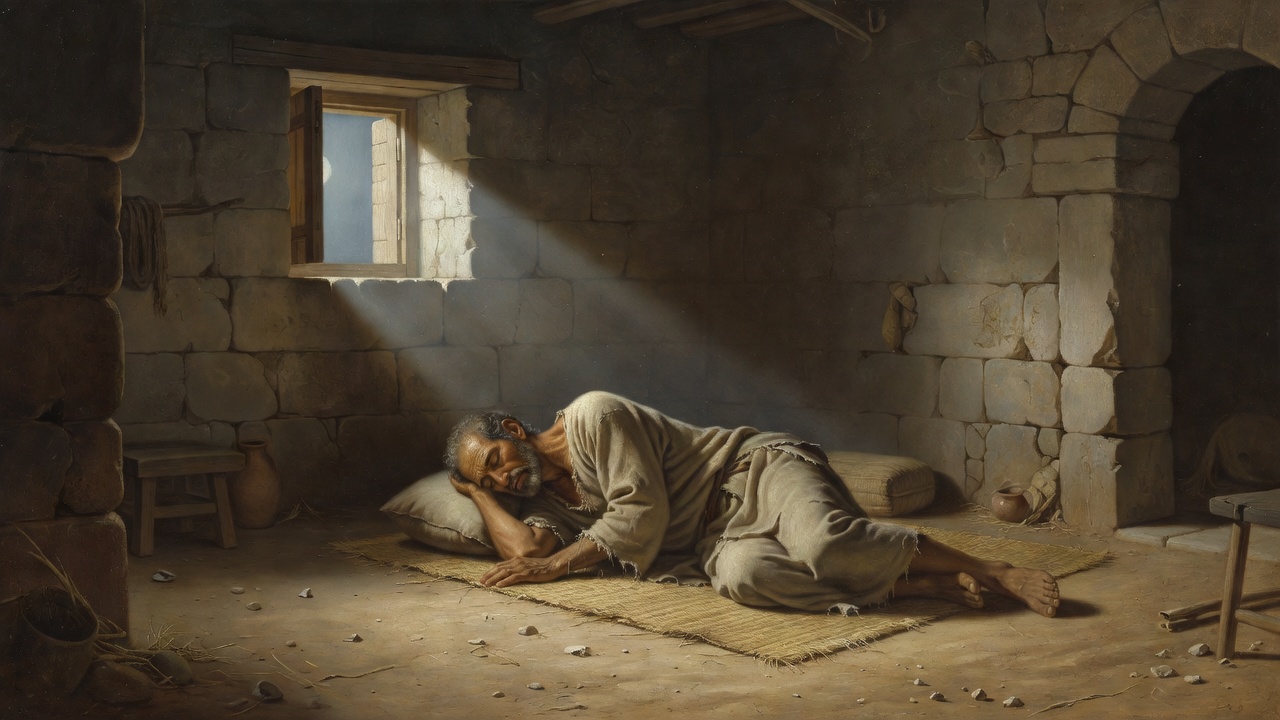
Notas escritas con ayuda de IA a partir de fuentes abiertas (Theographic Bible Metadata, CC BY-SA 4.0; Easton’s Bible Dictionary, dominio público) y revisadas antes de publicarse.
Créditos y licencia de esta traducción
Douay-Rheims 1899
The Holy Bible in English, Douay-Rheims American Edition of 1899, translated from the Latin Vulgate
Public Domain
Language: English
Dialect: archaic American
Translation by: English College, Douai
This Public Domain Bible text is brought to you courtesy of eBible.org.
Help support free Bible access at https://eBible.org/give.php .
2022-11-03
Títulos de sección adaptados de la Berean Standard Bible (dominio público); no forman parte del texto bíblico de esta traducción.
Fuente: http://ebible.org/engDRA/ · eBible.org