Salmos 42
Darby Translation · Toca un versículo para ver sus referencias cruzadas.
To the chief Musician. An instruction; of the sons of Korah.
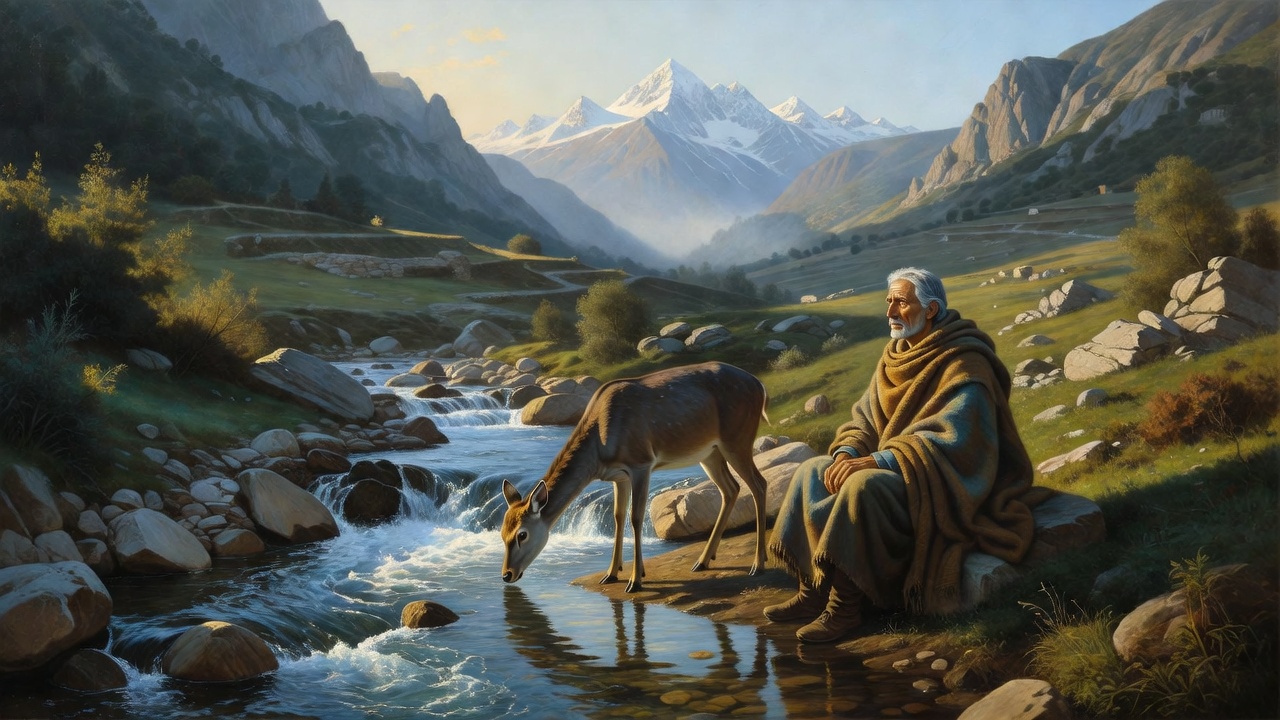
As the Deer Pants for the Water
1As the hart panteth after the water-brooks, so panteth my soul after thee, O God.
2My soul thirsteth for God, for the living God: when shall I come and appear before God?
3My tears have been my bread day and night, while they say unto me all the day, Where is thy God?
4These things I remember and have poured out my soul within me: how I passed along with the multitude, how I went on with them to the house of God, with the voice of joy and praise, a festive multitude.
5Why art thou cast down, my soul, and art disquieted in me? hope in God; for I shall yet praise him, [for] the health of his countenance.
6My God, my soul is cast down within me; therefore do I remember thee from the land of the Jordan, and the Hermons, from mount Mizar.
7Deep calleth unto deep at the noise of thy cataracts; all thy breakers and thy billows are gone over me.
8In the day-time will Jehovah command his loving-kindness, and in the night his song shall be with me, a prayer unto the God of my life.
9I will say unto God my rock, Why hast thou forgotten me? why go I mourning because of the oppression of the enemy?
10As with a crushing in my bones mine adversaries reproach me, while they say unto me all the day, Where is thy God?
11Why art thou cast down, my soul? and why art thou disquieted within me? hope in God; for I shall yet praise him, [who is] the health of my countenance, and my God.
¿Sabías que…?
La Sed de Dios Lejos del Hogar
- El salmo se presenta como un cántico de los hijos de Coré, una familia levítica descendiente del levita Coré que participaba en la música y el culto del templo.Fuentes: el propio texto bíblico · Korah (Levite)
- El autor anhela a Dios desde las tierras del norte, mencionando la región del Jordán, el monte Hermón y el monte Mizar. El Hermón es una imponente cordillera con varias cumbres de unos 2.800 metros de altitud, mientras que Mizar (que significa 'pequenez') alude a una elevación menor en sus alrededores.Fuentes: el propio texto bíblico · Hermon · Hill Mizar
- El poema recurre a vivas metáforas acuáticas, desde un ciervo sediento que brama por corrientes de agua hasta cascadas estruendosas y olas desbordantes que simbolizan una profunda aflicción emocional.Fuentes: el propio texto bíblico
Notas escritas con ayuda de IA a partir de fuentes abiertas (Theographic Bible Metadata, CC BY-SA 4.0; Easton’s Bible Dictionary, dominio público) y revisadas antes de publicarse.
Lugares de este capítulo
- Jordan · Hoy: Jordan River · 31.761, 35.558 · versículo 6
- Mount Hermon · 33.400, 35.850 · versículo 6
Solo aparecen lugares identificados con alta confianza (90 % o más según las fuentes académicas reunidas por OpenBible). Mapa de la época: DARE (Digital Atlas of the Roman Empire), CC BY 4.0; mapa actual: © colaboradores de OpenStreetMap; lugares: OpenBible.info (CC BY 4.0).
Créditos y licencia de esta traducción
Darby Translation
The Holy Scriptures, a New Translation from the Original Languages by J. N. Darby
Public Domain
Language: English
Dialect: archaic British
Translation by: J. N. Darby
2019-11-15
Títulos de sección adaptados de la Berean Standard Bible (dominio público); no forman parte del texto bíblico de esta traducción.
Fuente: http://ebible.org/engDBY/ · eBible.org