Levítico 22
Darby Translation · Toca un versículo para ver sus referencias cruzadas.
Restrictions against the Unclean
1And Jehovah spoke to Moses, saying, 2Speak unto Aaron, and to his sons, that they separate themselves from the holy things of the children of Israel, and that they profane not my holy name in the things that they hallow unto me: I am Jehovah. 3Say unto them, Every one of all your seed, throughout your generations, that approacheth the holy things, which the children of Israel hallow unto Jehovah, having his uncleanness upon him, that soul shall be cut off from before me: I am Jehovah. 4Whatsoever man of the seed of Aaron is a leper, or hath a flux, he shall not eat of the holy things, until he is clean. And he that toucheth any one that is unclean by a dead person, or a man whose seed of copulation hath passed from him; 5or a man that toucheth any crawling thing whereby he becometh unclean, or a man by whom he may become unclean, whatever may be his uncleanness, 6— a person that toucheth any such shall be unclean until even, and shall not eat of the holy things; but he shall bathe his flesh with water, 7and when the sun goeth down, he shall be clean, and may afterwards eat of the holy things; for it is his food. 8Of a dead carcase and what is torn shall he not eat, to make himself unclean therewith: I am Jehovah. 9And they shall keep my charge, lest they bear sin for it, and die by it, if they profane it: I am Jehovah who do hallow them. 10And no stranger shall eat the holy thing; the sojourner with the priest, and the hired servant, shall not eat of the holy thing. 11But if a priest buy any one for money, he may eat of it, and he that is born in his house: they may eat of his food. 12And a priest's daughter who is [married] to a stranger may not eat of the heave-offering of the holy things. 13But a priest's daughter that becometh a widow, or is divorced, and hath no seed, and returneth unto her father's house, as in her youth, she may eat of her father's food; but no stranger shall eat thereof. 14And if a man eat of a holy thing through inadvertence, then he shall put the fifth part thereof unto it, and shall give it unto the priest with the holy thing. 15And they shall not profane the holy things of the children of Israel which they offer unto Jehovah, 16and cause them to bear the iniquity of trespass when they eat their holy things; for I am Jehovah who do hallow them.
Worthy Offerings
17And Jehovah spoke to Moses, saying, 18Speak unto Aaron, and to his sons, and unto all the children of Israel, and say unto them, Whatever man of the house of Israel, or of the sojourners in Israel, that presenteth his offering for any of his vows, and for any of his voluntary offerings, which they present to Jehovah as a burnt-offering, 19it shall be for your acceptance, without blemish, a male of the oxen, of the sheep, and of the goats. 20Nothing that hath a defect shall ye present; for it shall not be acceptable for you. 21And if any present a sacrifice of peace-offering to Jehovah to accomplish a vow, or a voluntary offering of oxen or small cattle, it shall be without blemish to be accepted: there shall be no defect therein. 22Blind, or broken, or maimed, or ulcerous, or with itch, or scabbed — ye shall not present these to Jehovah, nor make an offering by fire of them on the altar to Jehovah. 23A bullock and a sheep that hath a member too long or too short, that mayest thou offer as a voluntary offering; but as a vow it shall not be accepted. 24That which is bruised, or crushed, or broken, or cut shall ye not present to Jehovah; neither in your land shall ye do [the like]. 25Nor from the hand of the stranger shall ye present the bread of your God, of any of these; for their corruption is in them: a defect is in them; they shall not be accepted for you. 26And Jehovah spoke to Moses, saying, 27An ox, or a sheep, or a goat, when it is brought forth, shall be seven days under its dam; and from the eighth day and thenceforth it shall be accepted for an offering by fire to Jehovah. 28A cow, or sheep — it and its young shall ye not slaughter in one day. 29And when ye sacrifice a sacrifice of thanksgiving to Jehovah, ye shall sacrifice it for your acceptance. 30On that day shall it be eaten: ye shall leave none of it until morning: I am Jehovah. 31And ye shall observe my commandments and do them: I am Jehovah. 32And ye shall not profane my holy name; but I will be hallowed among the children of Israel: I am Jehovah who do hallow you, 33who brought you out of the land of Egypt, to be your God: I am Jehovah.
¿Sabías que…?
Santidad en las Ofrendas y el Sacerdocio
- Las ofrendas sagradas consagradas por los israelitas estaban destinadas como alimento para los sacerdotes y sus familias. Sin embargo, normas estrictas regulaban su consumo: un descendiente de Aarón impuro no podía comer hasta el atardecer tras lavarse con agua, los extraños y jornaleros quedaban excluidos, mientras que los siervos comprados o nacidos en la casa sí podían comerlas.Fuentes: el propio texto bíblico
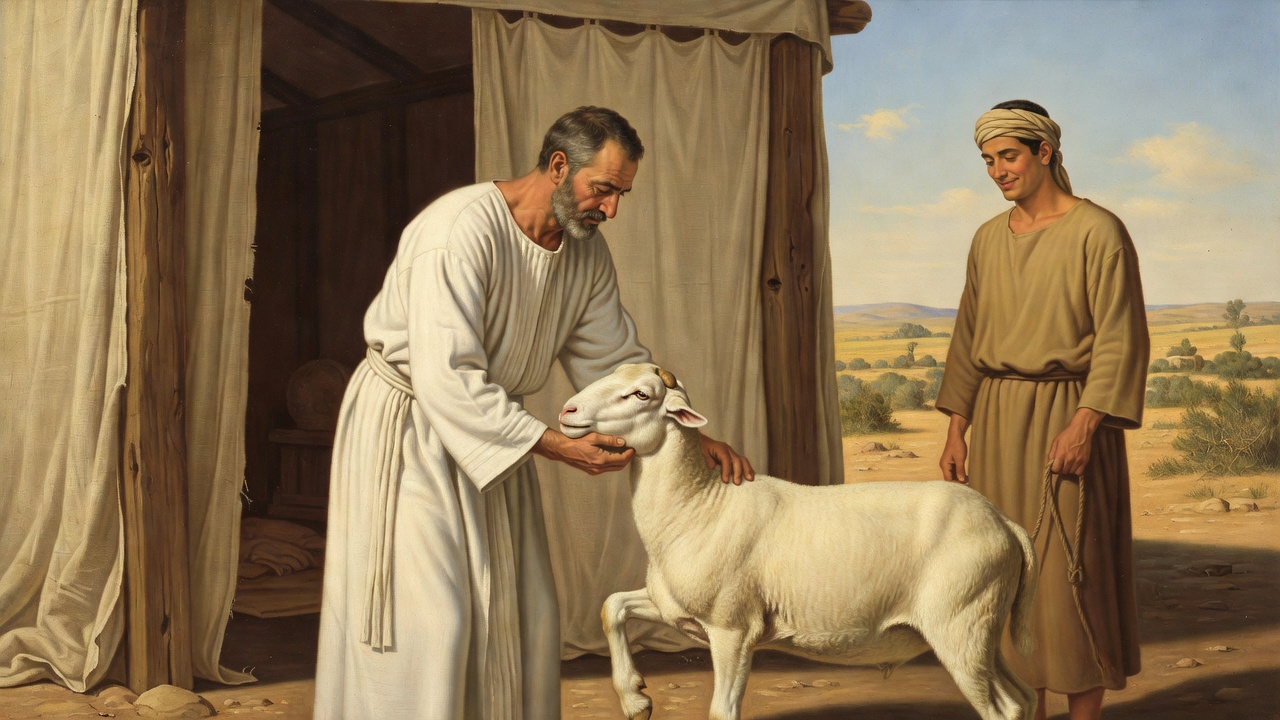
- Los animales ofrecidos en holocausto o sacrificios de paz debían ser sin defecto físico, libres de ceguera, heridas o llagas. Asimismo, las crías de ganado debían permanecer con su madre durante siete días antes de ser aptas para el sacrificio a partir del octavo día.Fuentes: el propio texto bíblico
- Si una persona ajena al sacerdocio comía de las ofrendas sagradas por inadvertencia, debía restituir su valor más una quinta parte adicional entregada al sacerdote. Esto aseguraba que las cosas consagradas a Dios fueran tratadas con debido respeto.Fuentes: el propio texto bíblico
Notas escritas con ayuda de IA a partir de fuentes abiertas (Theographic Bible Metadata, CC BY-SA 4.0; Easton’s Bible Dictionary, dominio público) y revisadas antes de publicarse.
Lugares de este capítulo
- Egypt · 30.129, 31.308 · versículo 33
Solo aparecen lugares identificados con alta confianza (90 % o más según las fuentes académicas reunidas por OpenBible). Mapa de la época: DARE (Digital Atlas of the Roman Empire), CC BY 4.0; mapa actual: © colaboradores de OpenStreetMap; lugares: OpenBible.info (CC BY 4.0).
Créditos y licencia de esta traducción
Darby Translation
The Holy Scriptures, a New Translation from the Original Languages by J. N. Darby
Public Domain
Language: English
Dialect: archaic British
Translation by: J. N. Darby
2019-11-15
Títulos de sección adaptados de la Berean Standard Bible (dominio público); no forman parte del texto bíblico de esta traducción.
Fuente: http://ebible.org/engDBY/ · eBible.org