Lamentaciones 4
Darby Translation · Toca un versículo para ver sus referencias cruzadas.
The Distress of Zion
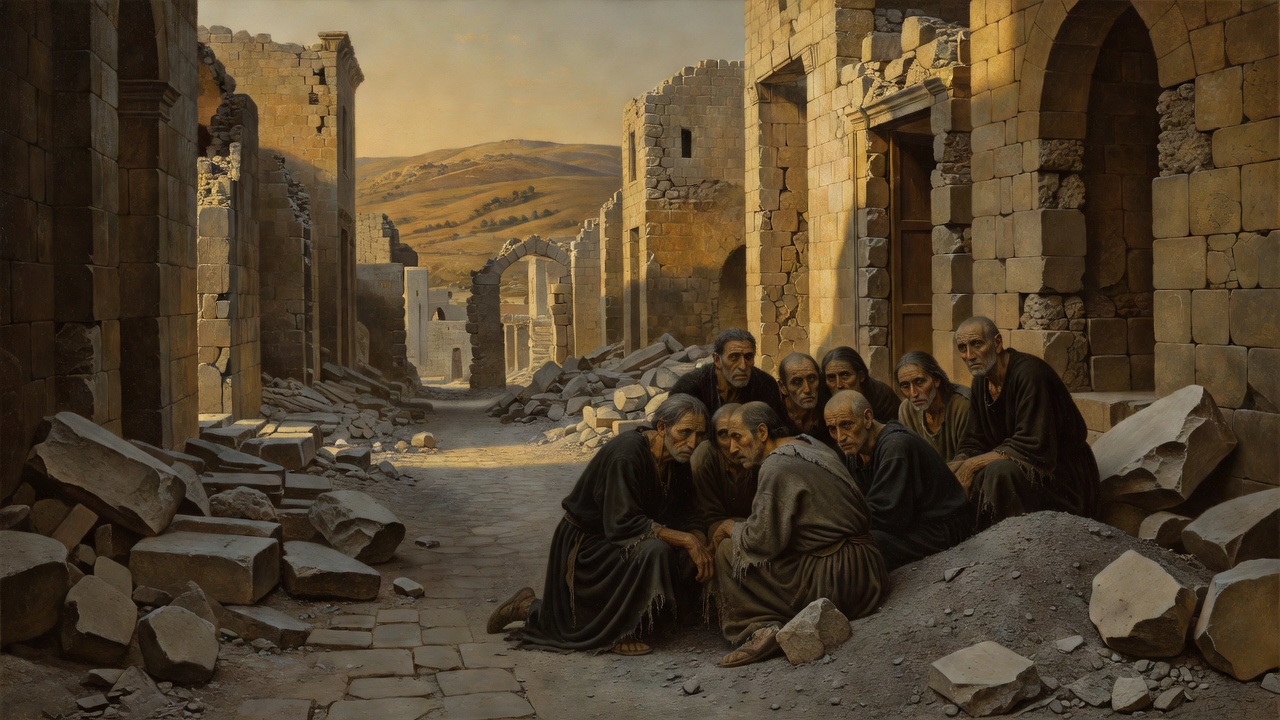
1How is the gold become dim! the most pure gold changed! the stones of the sanctuary poured out at the top of all the streets! 2The sons of Zion, so precious, comparable to fine gold, how are they esteemed as earthen pitchers, the work of the hands of the potter! 3Even the jackals offer the breast, they give suck to their young; the daughter of my people is become cruel, like the ostriches in the wilderness. 4The tongue of the sucking child cleaveth to the roof of his mouth for thirst; the young children ask bread, no man breaketh it unto them. 5They that fed delicately are desolate in the streets; they that were brought up in scarlet embrace dung-hills. 6And the punishment of the iniquity of the daughter of my people is greater than the reward of the sin of Sodom, which was overthrown as in a moment, and no hands were violently laid upon her. 7Her Nazarites were purer than snow, whiter than milk; they were more ruddy in body than rubies, their figure was as sapphire. 8Their visage is darker than blackness, they are not known in the streets; their skin cleaveth to their bones, it is withered, it is become like a stick. 9The slain with the sword are happier than the slain with hunger; for these pine away, stricken through for want of the fruits of the field. 10The hands of pitiful women have boiled their own children: they were their meat in the ruin of the daughter of my people. 11Jehovah hath accomplished his fury; he hath poured out his fierce anger, and hath kindled a fire in Zion, which hath consumed the foundations thereof. 12The kings of the earth, and all the inhabitants of the world, would not have believed that the adversary and the enemy should enter into the gates of Jerusalem. 13[It is] for the sins of her prophets, [and] the iniquities of her priests, who have shed the blood of the righteous in the midst of her. 14They wandered about blind in the streets; they were polluted with blood, so that men could not touch their garments. 15They cried unto them, Depart! Unclean! Depart! depart, touch not! When they fled away, and wandered about, it was said among the nations, They shall no more sojourn [there]. 16The face of Jehovah hath divided them; he will no more regard them. They respected not the persons of the priests, they favoured not the aged. 17Our eyes still failed for our vain help; in our watching, we have watched for a nation that did not save. 18They hunted our steps, that we could not go in our streets: our end is near, our days are fulfilled; for our end is come. 19Our pursuers were swifter than the eagles of the heavens; they chased us hotly upon the mountains, they laid wait for us in the wilderness. 20The breath of our nostrils, the anointed of Jehovah, was taken in their pits; of whom we said, Under his shadow we shall live among the nations. 21Rejoice and be glad, daughter of Edom, that dwellest in the land of Uz: the cup shall pass also unto thee; thou shalt be drunken, and make thyself naked. 22The punishment of thine iniquity is accomplished, O daughter of Zion; he will no more carry thee away into captivity. He will visit thine iniquity, O daughter of Edom; he will discover thy sins.
¿Sabías que…?
La Agonía de la Ciudad Caída
- El poeta considera que el prolongado sufrimiento de Jerusalén fue peor que el destino de Sodoma. Mientras que Sodoma fue destruida en un instante por fuego divino, los habitantes de Jerusalén soportaron el tormento lento y desgarrador del asedio y la hambruna.Fuentes: el propio texto bíblico · Sodom
- Antes de su caída, Jerusalén era considerada en gran medida como una ciudad montañosa impenetrable. El texto señala que los reyes extranjeros y las naciones vecinas nunca creyeron que un enemigo pudiera traspasar sus puertas fortificadas.Fuentes: el propio texto bíblico · Jerusalem
- El capítulo concluye dirigiéndose a Edom, que habitaba en la tierra de Uz, advirtiendo que el juicio pronto la alcanzaría a ella también. La tierra de Uz se menciona únicamente en tres libros bíblicos: Job, Jeremías y Lamentaciones.Fuentes: el propio texto bíblico · Uz · Edom
Notas escritas con ayuda de IA a partir de fuentes abiertas (Theographic Bible Metadata, CC BY-SA 4.0; Easton’s Bible Dictionary, dominio público) y revisadas antes de publicarse.
Lugares de este capítulo
- Zion · Hoy: Jerusalem · 31.777, 35.234 · versículos 2, 11, 22
- Jerusalem · 31.777, 35.234 · versículo 12
- Edom · 30.746, 35.604 · versículos 21, 22
Solo aparecen lugares identificados con alta confianza (90 % o más según las fuentes académicas reunidas por OpenBible). Mapa de la época: DARE (Digital Atlas of the Roman Empire), CC BY 4.0; mapa actual: © colaboradores de OpenStreetMap; lugares: OpenBible.info (CC BY 4.0).
Créditos y licencia de esta traducción
Darby Translation
The Holy Scriptures, a New Translation from the Original Languages by J. N. Darby
Public Domain
Language: English
Dialect: archaic British
Translation by: J. N. Darby
2019-11-15
Títulos de sección adaptados de la Berean Standard Bible (dominio público); no forman parte del texto bíblico de esta traducción.
Fuente: http://ebible.org/engDBY/ · eBible.org