Josué 1
Darby Translation · Toca un versículo para ver sus referencias cruzadas.
Acerca de este libro
Acerca de Josué
- El Diccionario Bíblico de Easton (1897) explica el nombre de Josué como "Jehová es su ayuda" o "Jehová el Salvador". Era hijo de Nun, de la tribu de Efraín, nacido en Egipto, y sucesor de Moisés como líder de Israel; las guerras de conquista que dirigió quedan registradas en el libro que lleva su nombre. Ese artículo no nombra al autor del libro ni da una fecha para su composición.Fuentes: Easton: Joshua · Joshua
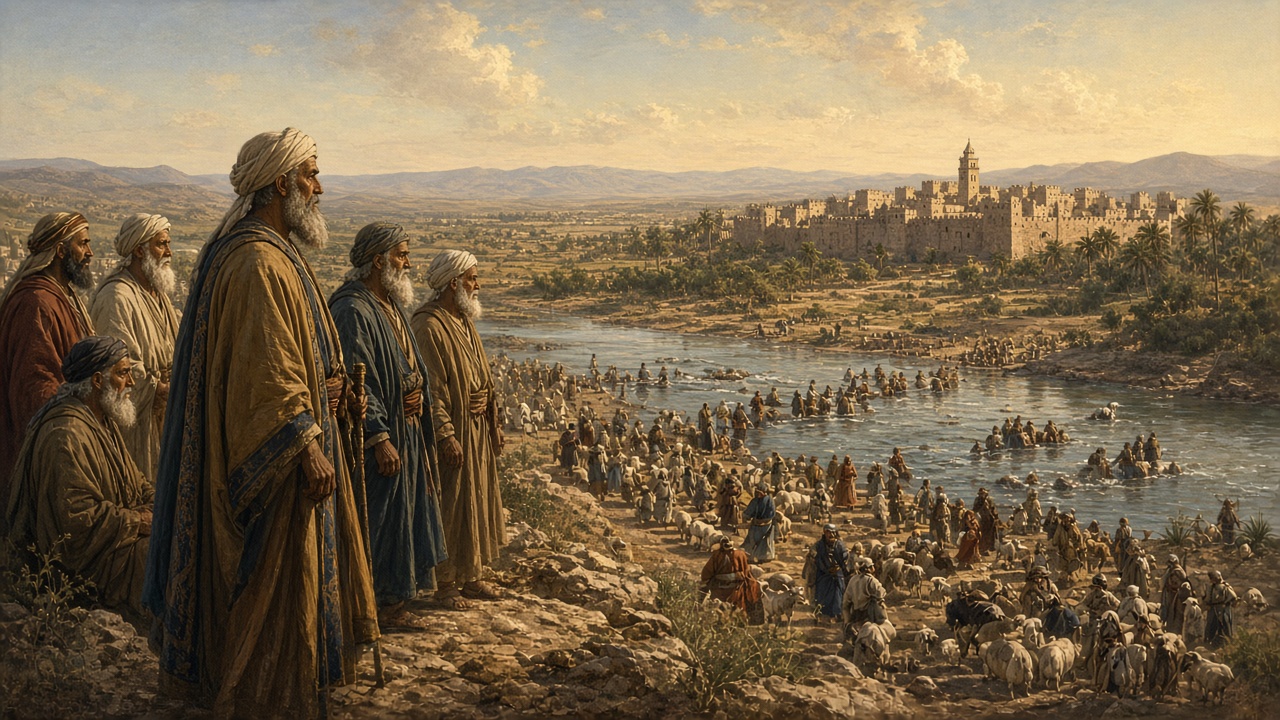
- Cuando Josué asumió el mando, el pueblo estaba acampado en Sitim. Cruzaron el Jordán y acamparon en Gilgal, donde, según Easton, circuncidó al pueblo y celebró la Pascua. Jericó, ciudad fortificada entre palmeras, a unas cinco millas al oeste del Jordán, se describe como la fortaleza más fuerte de Canaán y la llave de la Palestina occidental; Hai, al este de Betel, fue la segunda ciudad cananea tomada, después de una derrota inicial.Fuentes: Easton: Joshua · Jericho · Ai
- El Diccionario Bíblico de Easton (1897) dice que Josué conquistó seis naciones y treinta y un reyes, y luego repartió la tierra entre las tribus, quedándose Timnat-sera, en el monte Efraín, como herencia propia. Al este del Jordán, Galaad se describe como una región montañosa ocupada por las tribus de Gad y Rubén y por la parte sur de Manasés.Fuentes: Easton: Joshua · Gilead
- Citando a Edersheim, el diccionario dice que el nombre de Josué fue cambiado de Oshea, "ayuda", a Jehoshua, "Jehová es ayuda", y señala que se le llama Jesús en Hechos 7:45 y Hebreos 4:8. Afirma que murió a los ciento diez años, veinticinco años después de cruzar el Jordán, y que fue sepultado en su propia ciudad, Timnat-sera; de su padre, Nun, no se registra nada más que el hecho de que era el padre de Josué.Fuentes: Easton: Joshua · Joshua · Nun
- Antes de dirigir la conquista, Josué comandó el ejército de Israel contra los amalecitas en Refidim, sirvió como ministro de Moisés y fue uno de los doce enviados a explorar Canaán; solo él y Caleb trajeron un informe alentador. Tal como Easton describe el libro, este va desde el cruce del Jordán y la toma de Jericó, a través de años de guerra, hasta el reparto de la tierra y el último discurso de Josué.Fuentes: Easton: Joshua
Notas escritas con ayuda de IA a partir de fuentes abiertas (Theographic Bible Metadata, CC BY-SA 4.0; Easton’s Bible Dictionary, dominio público) y revisadas antes de publicarse.
God Instructs Joshua
1And it came to pass after the death of Moses the servant of Jehovah, that Jehovah spoke to Joshua the son of Nun, Moses' attendant, saying, 2Moses my servant is dead; and now, rise up, go over this Jordan, thou and all this people, into the land which I give unto them, to the children of Israel. 3Every place whereon the sole of your foot shall tread have I given to you, as I said unto Moses. 4From the wilderness and this Lebanon to the great river, the river Euphrates, the whole land of the Hittites, to the great sea, toward the going down of the sun, shall be your border. 5None shall be able to stand before thee all the days of thy life: as I was with Moses, so will I be with thee; I will not leave thee, neither will I forsake thee. 6Be strong and courageous, for thou shalt cause this people to inherit the land which I have sworn unto their fathers to give them. 7Only be strong and very courageous, that thou mayest take heed to do according to all the law that Moses my servant commanded thee. Turn not from it to the right or to the left, that thou mayest prosper whithersoever thou goest. 8This book of the law shall not depart from thy mouth; and thou shalt meditate upon it day and night, that thou mayest take heed to do according to all that is written therein; for then shalt thou have good success in thy ways, and then shalt thou prosper. 9Have I not commanded thee: Be strong and courageous? Be not afraid, neither be dismayed; for Jehovah thy God is with thee whithersoever thou goest.
Joshua Takes Charge
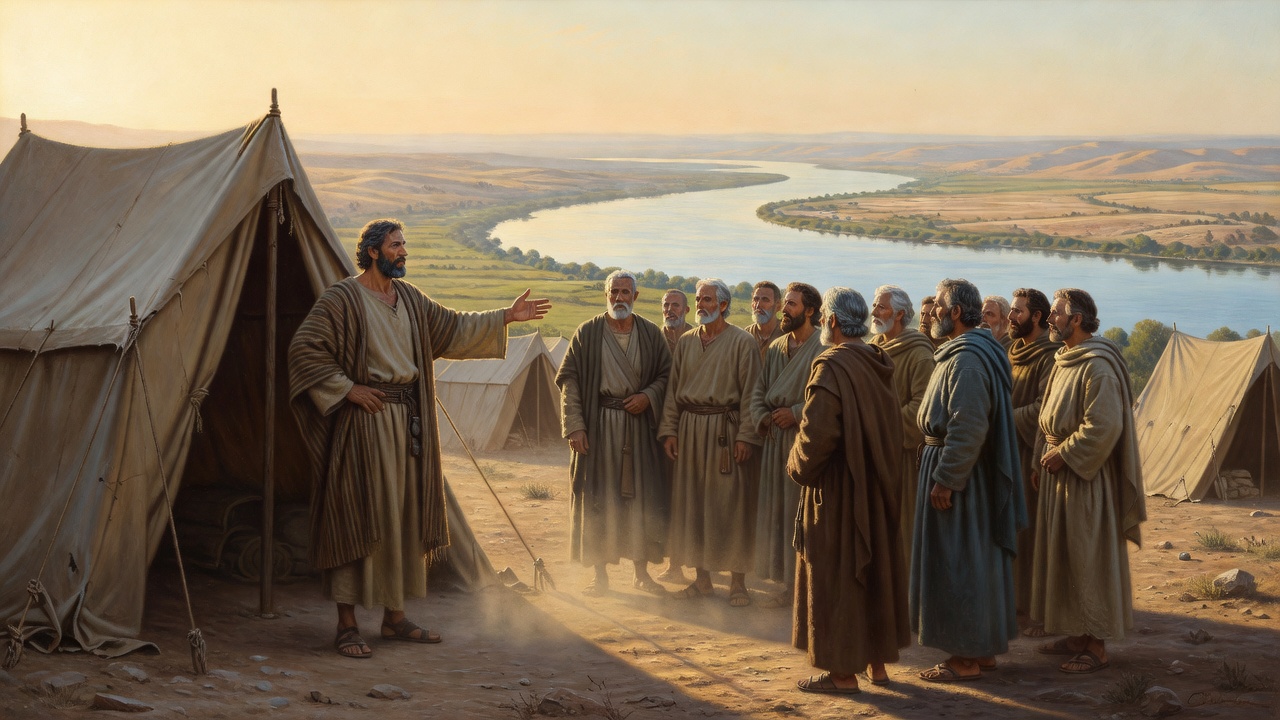
10And Joshua commanded the officers of the people, saying, 11Go through the midst of the camp, and command the people, saying, Prepare yourselves victuals, for in three days ye shall pass over this Jordan, that ye may enter in to take possession of the land which Jehovah your God giveth you to possess it. 12And to the Reubenites and to the Gadites and to half the tribe of Manasseh spoke Joshua, saying, 13Remember the word that Moses the servant of Jehovah commanded you, saying, Jehovah your God has given you rest and has given you this land. 14Your wives, your little ones, and your cattle shall abide in the land that Moses gave you on this side of the Jordan, but ye, all the valiant men, shall go over in array before your brethren and help them, 15until Jehovah give your brethren rest as to you, and they also take possession of the land which Jehovah your God giveth them; then shall ye return into the land of your possession and possess it, which Moses the servant of Jehovah gave you on this side of the Jordan toward the sun-rising. 16And they answered Joshua, saying, All that thou hast commanded us will we do, and whither thou shalt send us will we go. 17According as we hearkened to Moses in all things, so will we hearken to thee; only may Jehovah thy God be with thee as he was with Moses. 18Every one that is rebellious against thy commandment and hearkeneth not to thy words in everything that thou commandest us, shall be put to death. Only be strong and courageous.
¿Sabías que…?
Josué asume el liderazgo
- Josué, hijo de Nun y de la tribu de Efraín, sirvió como asistente y comandante militar de Moisés antes de ser designado para sucederlo como líder de Israel. Su nombre significa "el Señor es su ayuda" o "el Señor el Salvador".Fuentes: Joshua · el propio texto bíblico
- El territorio descrito en el encargo a Josué abarcaba desde el desierto y la cordillera del Líbano, al norte, hasta el río Éufrates ("el gran río"), al este, y el mar Mediterráneo ("el gran mar"), al oeste.Fuentes: el propio texto bíblico · Lebanon · Euphrates · Great Sea
- Las tribos de Rubén, Gad y la media tribu de Manasés ya habían recibido tierras al este del río Jordán bajo el mando de Moisés. Aun así, sus hombres de guerra debían cruzar armados delante de las demás tribus para ayudarlas hasta asegurar toda la tierra.Fuentes: el propio texto bíblico · Manasseh (son of Joseph)
Notas escritas con ayuda de IA a partir de fuentes abiertas (Theographic Bible Metadata, CC BY-SA 4.0; Easton’s Bible Dictionary, dominio público) y revisadas antes de publicarse.
Lugares de este capítulo
- Jordan · Hoy: Jordan River · 31.761, 35.558 · versículos 2, 11, 14, 15
- Euphrates · Hoy: Euphrates River · 31.004, 47.442 · versículo 4
- Great Sea · Hoy: Mediterranean Sea · 31.805, 34.170 · versículo 4
- Lebanon · 33.540, 35.584 · versículo 4
- Negeb · 31.245, 34.841 · versículo 4
- Syria · Hoy: Aram · 33.511, 36.306 · versículo 4
Solo aparecen lugares identificados con alta confianza (90 % o más según las fuentes académicas reunidas por OpenBible). Mapa de la época: DARE (Digital Atlas of the Roman Empire), CC BY 4.0; mapa actual: © colaboradores de OpenStreetMap; lugares: OpenBible.info (CC BY 4.0).
Créditos y licencia de esta traducción
Darby Translation
The Holy Scriptures, a New Translation from the Original Languages by J. N. Darby
Public Domain
Language: English
Dialect: archaic British
Translation by: J. N. Darby
2019-11-15
Títulos de sección adaptados de la Berean Standard Bible (dominio público); no forman parte del texto bíblico de esta traducción.
Fuente: http://ebible.org/engDBY/ · eBible.org