Deuteronomio 24
Darby Translation · Toca un versículo para ver sus referencias cruzadas.
Marriage and Divorce Laws
1When a man taketh a wife, and marrieth her, it shall be if she find no favour in his eyes, because he hath found some unseemly thing in her, that he shall write her a letter of divorce, and give it into her hand, and send her out of his house. 2And she shall depart out of his house, and go away, and may become another man's wife. 3And if the latter husband hate her, and write her a letter of divorce, and give it into her hand, and send her out of his house; or if the latter husband die who took her as his wife; 4her first husband, who sent her away, may not take her again to be his wife, after that she is defiled; for it is an abomination before Jehovah; and thou shalt not cause the land to sin, which Jehovah thy God giveth thee for an inheritance. 5When a man hath newly taken a wife, he shall not go out with the army, neither shall any kind of business be imposed upon him; he shall be free for his house one year, and shall gladden his wife whom he hath taken.
Additional Laws
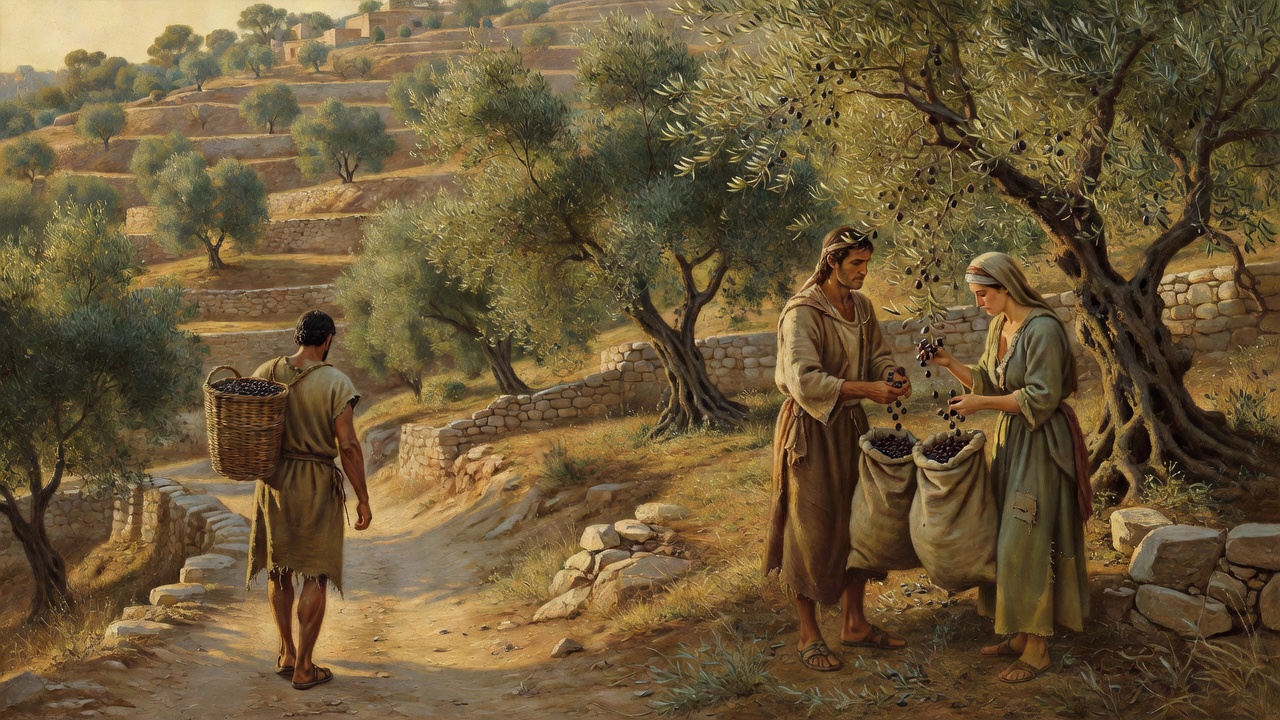
6No man shall take the hand-mill or the upper millstone in pledge; for it would be taking life in pledge. 7If a man be found who hath stolen one of his brethren of the children of Israel, and who hath treated him as a slave and sold him, that thief shall die; and thou shalt put evil away from thy midst. 8Take heed in the plague of leprosy, that thou take great heed, and do according to all that the priests the Levites shall teach you: as I commanded them shall ye take heed to do. 9Remember what Jehovah thy God did unto Miriam on the way, after that ye came forth out of Egypt. 10When thou dost lend thy brother anything, thou shalt not go into his house to secure his pledge. 11Thou shalt stand outside, and the man to whom thou hast made a loan shall bring out the pledge to thee without. 12And if the man be needy, thou shalt not lie down with his pledge; 13in any case thou shalt return him the pledge at the going down of the sun, that he may sleep in his own upper garment and bless thee; and it shall be righteousness unto thee before Jehovah thy God. 14Thou shalt not oppress a hired servant [who is] poor and needy of thy brethren, or of thy sojourners who are in thy land within thy gates: 15on his day thou shalt give him his hire, neither shall the sun go down upon it; for he is poor, and his soul yearneth after it; lest he cry against thee to Jehovah, and it be a sin in thee. 16The fathers shall not be put to death for the sons, neither shall the sons be put to death for the fathers: every man shall be put to death for his own sin. 17Thou shalt not pervert the judgment of the stranger, [or] of the fatherless; and thou shalt not take in pledge a widow's garment. 18And thou shalt remember that thou wast a bondman in Egypt, and that Jehovah thy God redeemed thee from thence; therefore I command thee to do this thing. 19When thou reapest thy harvest in thy field, and forgettest a sheaf in the field, thou shalt not return to fetch it; it shall be for the stranger, for the fatherless, and for the widow; that Jehovah thy God may bless thee in all the work of thy hands. 20When thou shakest thine olive-tree, thou shalt not go over the boughs again; it shall be for the stranger, for the fatherless, and for the widow. 21When thou gatherest the grapes of thy vineyard, thou shalt not glean it afterwards; it shall be for the stranger, for the fatherless, and for the widow. 22And thou shalt remember that thou wast a bondman in the land of Egypt; therefore I command thee to do this thing.
¿Sabías que…?
Leyes de Compasión, Justicia y Protección Social
- Las leyes de cosecha de Israel exigían que los propietarios dejaran gavillas olvidadas, aceitunas rezagadas y rebuscos de uvas para los grupos vulnerables: el extranjero residente, el huérfano y la viuda. Este sistema de ayuda social se fundamentaba en el recuerdo de que los propios israelitas habían sido esclavos en Egipto.Fuentes: el propio texto bíblico · Egypt
- Los deudores y jornaleros estaban protegidos por límites legales específicos. Se prohibía a los acreedores entrar en la casa de un deudor para tomar una prenda, retener piedras de molino esenciales para el sustento diario o quedarse con el manto de dormir de un necesitado tras la puesta del sol, y los pagos debían entregarse antes del anochecer.Fuentes: el propio texto bíblico
- Al dar instrucciones sobre enfermedades infecciosas de la piel y las directivas de los sacerdotes levitas, el texto evoca lo ocurrido a Miriam, hermana de Moisés y Aarón, durante la travesía por el desierto tras salir de Egipto.Fuentes: el propio texto bíblico · Miriam · Egypt
Notas escritas con ayuda de IA a partir de fuentes abiertas (Theographic Bible Metadata, CC BY-SA 4.0; Easton’s Bible Dictionary, dominio público) y revisadas antes de publicarse.
Lugares de este capítulo
Solo aparecen lugares identificados con alta confianza (90 % o más según las fuentes académicas reunidas por OpenBible). Mapa de la época: DARE (Digital Atlas of the Roman Empire), CC BY 4.0; mapa actual: © colaboradores de OpenStreetMap; lugares: OpenBible.info (CC BY 4.0).
Créditos y licencia de esta traducción
Darby Translation
The Holy Scriptures, a New Translation from the Original Languages by J. N. Darby
Public Domain
Language: English
Dialect: archaic British
Translation by: J. N. Darby
2019-11-15
Títulos de sección adaptados de la Berean Standard Bible (dominio público); no forman parte del texto bíblico de esta traducción.
Fuente: http://ebible.org/engDBY/ · eBible.org