Deuteronomio 24
Bible in Basic English · Toca un versículo para ver sus referencias cruzadas.
Marriage and Divorce Laws
1If a man takes a wife, and after they are married she is unpleasing to him because of some bad quality in her, let him give her a statement in writing and send her away from his house. 2And when she has gone away from him, she may become another man's wife. 3And if the second husband has no love for her and, giving her a statement in writing, sends her away; or if death comes to the second husband to whom she was married; 4Her first husband, who had sent her away, may not take her back after she has been wife to another; for that is disgusting to the Lord: and you are not to be a cause of sin in the land which the Lord your God is giving you for your heritage. 5A newly married man will not have to go out with the army or undertake any business, but may be free for one year, living in his house for the comfort of his wife.
Additional Laws
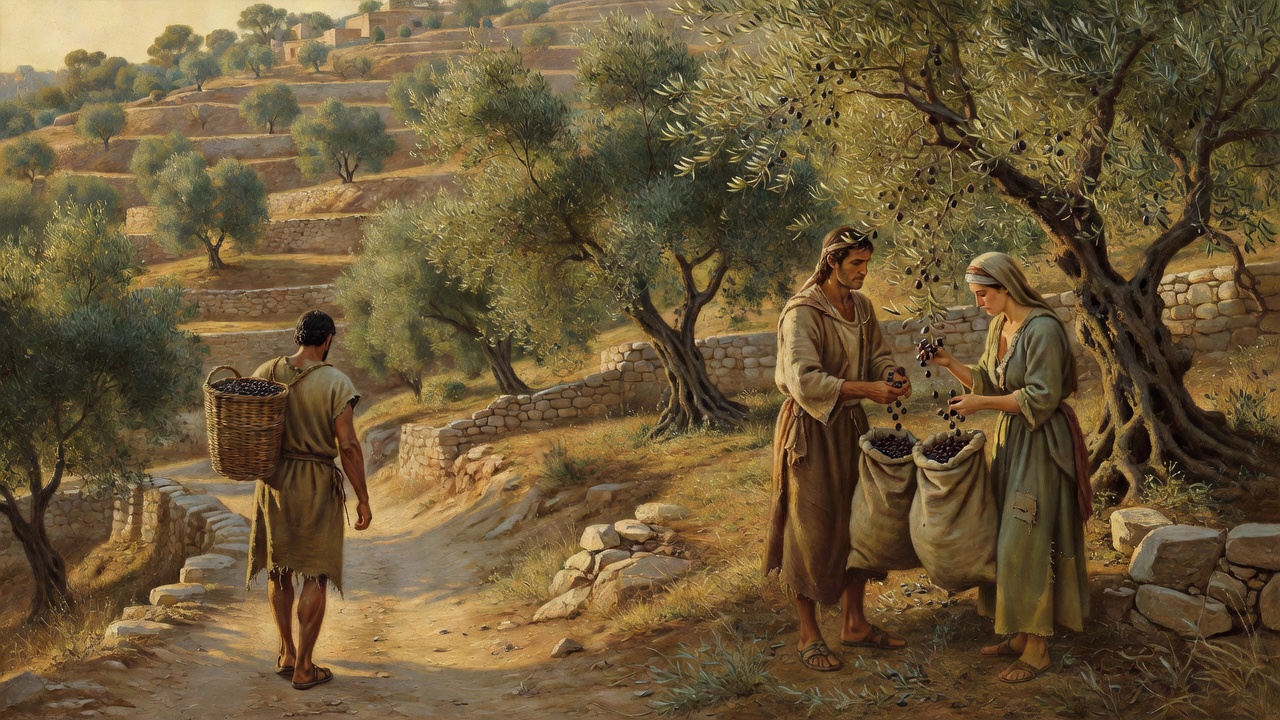
6No one is to take, on account of a debt, the stones with which grain is crushed: for in doing so he takes a man's living. 7If a man takes by force one of his countrymen, the children of Israel, using him as his property or getting a price for him, that thief is to be put to death: so you are to put away evil from among you. 8In connection with the leper's disease, take care to keep and do every detail of the teaching of the priests, the Levites: as I gave them orders, so you are to do. 9Keep in mind what the Lord your God did to Miriam on the way, when you came out of Egypt. 10If you let your brother have the use of anything which is yours, do not go into his house and take anything of his as a sign of his debt; 11But keep outside till he comes out and gives it to you. 12If he is a poor man, do not keep his property all night; 13But be certain to give it back to him when the sun goes down, so that he may have his clothing for sleeping in, and will give you his blessing: and this will be put to your account as righteousness before the Lord your God. 14Do not be hard on a servant who is poor and in need, if he is one of your countrymen or a man from another nation living with you in your land. 15Give him his payment day by day, not keeping it back over night; for he is poor and his living is dependent on it; and if his cry against you comes to the ears of the Lord, it will be judged as sin in you. 16Fathers are not to be put to death for their children or children for their fathers: every man is to be put to death for the sin which he himself has done. 17Be upright in judging the cause of the man from a strange country and of him who has no father; do not take a widow's clothing on account of a debt: 18But keep in mind that you were a servant in the land of Egypt, and the Lord your God made you free: for this is why I give you orders to do this. 19When you get in the grain from your field, if some of the grain has been dropped by chance in the field, do not go back and get it, but let it be for the man from a strange land, the child without a father, and the widow: so that the blessing of the Lord your God may be on all the work of your hands. 20When you are shaking the fruit from your olive-trees, do not go over the branches a second time: let some be for the man from a strange land, the child without a father, and the widow. 21When you are pulling the grapes from your vines, do not take up those which have been dropped; let them be for the man from a strange land, the child without a father, and the widow. 22Keep in mind that you were a servant in the land of Egypt: for this is why I give you orders to do this.
¿Sabías que…?
Leyes de Compasión, Justicia y Protección Social
- Las leyes de cosecha de Israel exigían que los propietarios dejaran gavillas olvidadas, aceitunas rezagadas y rebuscos de uvas para los grupos vulnerables: el extranjero residente, el huérfano y la viuda. Este sistema de ayuda social se fundamentaba en el recuerdo de que los propios israelitas habían sido esclavos en Egipto.Fuentes: el propio texto bíblico · Egypt
- Los deudores y jornaleros estaban protegidos por límites legales específicos. Se prohibía a los acreedores entrar en la casa de un deudor para tomar una prenda, retener piedras de molino esenciales para el sustento diario o quedarse con el manto de dormir de un necesitado tras la puesta del sol, y los pagos debían entregarse antes del anochecer.Fuentes: el propio texto bíblico
- Al dar instrucciones sobre enfermedades infecciosas de la piel y las directivas de los sacerdotes levitas, el texto evoca lo ocurrido a Miriam, hermana de Moisés y Aarón, durante la travesía por el desierto tras salir de Egipto.Fuentes: el propio texto bíblico · Miriam · Egypt
Notas escritas con ayuda de IA a partir de fuentes abiertas (Theographic Bible Metadata, CC BY-SA 4.0; Easton’s Bible Dictionary, dominio público) y revisadas antes de publicarse.
Lugares de este capítulo
Solo aparecen lugares identificados con alta confianza (90 % o más según las fuentes académicas reunidas por OpenBible). Mapa de la época: DARE (Digital Atlas of the Roman Empire), CC BY 4.0; mapa actual: © colaboradores de OpenStreetMap; lugares: OpenBible.info (CC BY 4.0).
Créditos y licencia de esta traducción
Bible in Basic English
The Bible in Basic English
Public Domain
Language: English
Dialect: simple British
Translation by: Samuel Henry Hooke
The Bible In Basic English was printed in 1965 by Cambridge Press in England. Published without any copyright notice and distributed in America, this work fell immediately and irretrievably into the Public Domain in the United States according to the UCC convention of that time. A call to Cambridge prior to placing this work in etext resulted in an admission of this fact.
2020-04-17
Títulos de sección adaptados de la Berean Standard Bible (dominio público); no forman parte del texto bíblico de esta traducción.
Fuente: http://ebible.org/engBBE/ · eBible.org