Salmos 87
World English Bible British Edition with Deuterocanon · Toca un versículo para ver sus referencias cruzadas.
A Psalm by the sons of Korah; a Song.
The LORD Loves the Gates of Zion
1His foundation is in the holy mountains.
2The LORD loves the gates of Zion more than all the dwellings of Jacob.
3Glorious things are spoken about you, city of God. Selah.
4I will record Rahab and Babylon amongst those who acknowledge me.
Behold, Philistia, Tyre, and also Ethiopia:
“This one was born there.”
5Yes, of Zion it will be said, “This one and that one was born in her;”
the Most High himself will establish her.
6The LORD will count, when he writes up the peoples,
“This one was born there.” Selah.
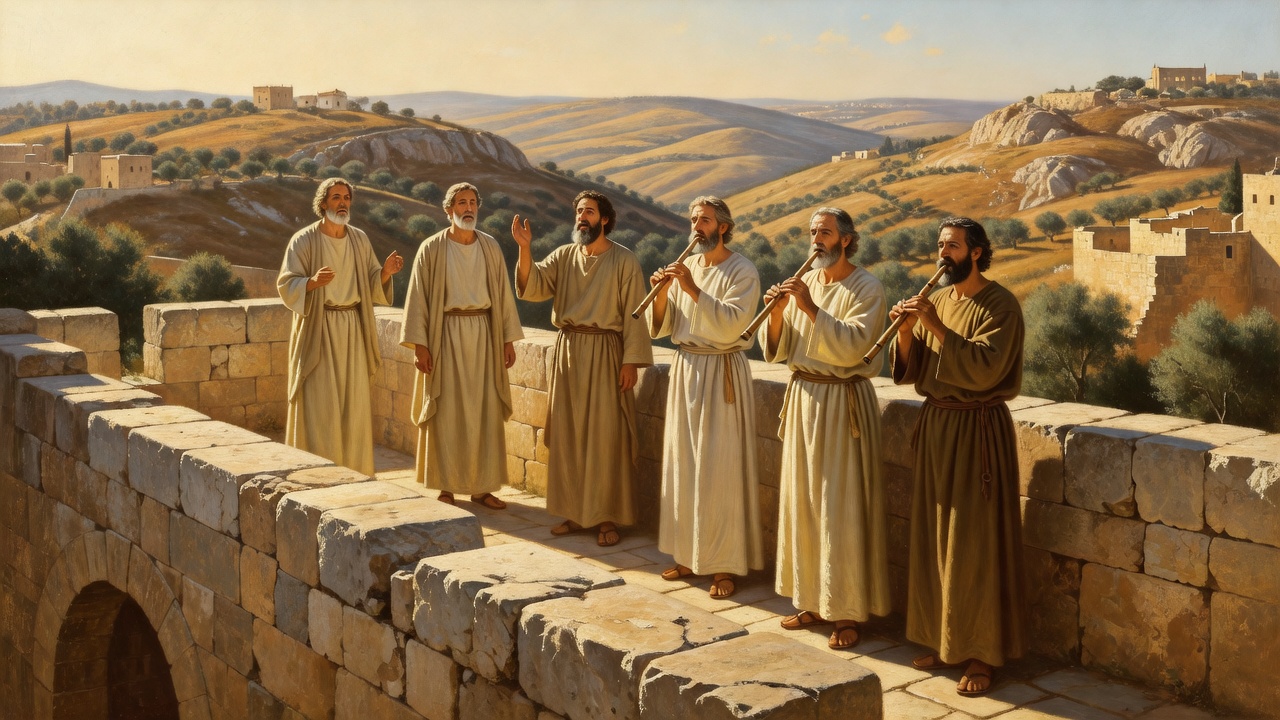
7Those who sing as well as those who dance say,
“All my springs are in you.”
¿Sabías que…?
Sion y las naciones
- En el Salmo 87, regiones extranjeras e históricamente rivales —incluidas Babilonia, Filistea, Tiro y Cus— son retratadas como registradas como ciudadanas nativas nacidas en Sion, la ciudad de Dios.Fuentes: el propio texto bíblico · Zion · Tyre · Babylon
- El nombre 'Rahab' en el versículo 4 es un término poético hebreo que significa insolencia u orgullo, empleado en la poesía bíblica como una designación simbólica de Egipto.Fuentes: Rahab · el propio texto bíblico
- El salmo está atribuido a los 'hijos de Coré', un grupo levítico encargado de la música en Jerusalén siglos después de que su antepasado Coré encabezara una rebelión en el desierto.Fuentes: Korah (Levite) · el propio texto bíblico
Notas escritas con ayuda de IA a partir de fuentes abiertas (Theographic Bible Metadata, CC BY-SA 4.0; Easton’s Bible Dictionary, dominio público) y revisadas antes de publicarse.
Lugares de este capítulo
- Zion · Hoy: Jerusalem · 31.777, 35.234 · versículos 2, 5
- Babylon · 32.543, 44.422 · versículo 4
- Cush · Hoy: Cush 1 · 16.935, 33.751 · versículo 4
- Egypt · 30.129, 31.308 · versículo 4
- Jerusalem · 31.777, 35.234 · versículos 4, 6, 7
- Philistia · 31.664, 34.546 · versículo 4
- Tyre · 33.271, 35.196 · versículo 4
Solo aparecen lugares identificados con alta confianza (90 % o más según las fuentes académicas reunidas por OpenBible). Mapa de la época: DARE (Digital Atlas of the Roman Empire), CC BY 4.0; mapa actual: © colaboradores de OpenStreetMap; lugares: OpenBible.info (CC BY 4.0).
Créditos y licencia de esta traducción
The World English Bible British Edition with Deuterocanon
The World English Bible British Edition is not copyrighted. It is in the Public Domain. However "World English Bible" is a Trademark.
You may copy, publish, proclaim, distribute, redistribute, sell, give away, quote, memorize, read publicly, broadcast, transmit, share, back up, post on the Internet, print, reproduce, preach, teach from, and use the World English Bible as much as you want, and others may also do so. All we ask is that if you CHANGE the actual text of the World English Bible in any way, you not call the result the World English Bible any more. This is to avoid confusion, not to limit your freedom. The Holy Bible is God's Word. It belongs to God. He gave it to us freely, and we who have worked on this translation freely give it to you by dedicating it to the Public Domain.
Donations to help with the expenses of this project and thus help others have free access to the Word of God may be made to us, but are not required. Please see https://MLJohnson.org/partner/ for more about that.
For a list of what is different between the World English Bible and the World English Bible British Edition, besides the handling of God's Proper Name, see phrasetranslog.txt and phrasetranslist.txt .
2020 stable text edition
Títulos de sección adaptados de la Berean Standard Bible (dominio público); no forman parte del texto bíblico de esta traducción.
Fuente: http://ebible.org/eng-webbe/ · eBible.org