Salmos 95
LXX2012: Septuagint in British/International English 2012 · Toca un versículo para ver sus referencias cruzadas.
(96) When the house was built after the Captivity, a Song of David.
Do Not Harden Your Hearts
1Sing to the Lord a new song; sing to the Lord, all the earth.
2Sing to the Lord, bless his name: proclaim his salvation from day to day.
3Publish his glory amongst the Gentiles, his wonderful works amongst all people.
4For the Lord is great, and greatly to be praised: he is terrible above all gods.
5For all the gods of the heathen are devils: but the Lord made the heavens.
6Thanksgiving and beauty are before him: holiness and majesty are in his sanctuary.
7Bring to the Lord, you⌃ families of the Gentiles, bring to the Lord glory and honour.
8Bring to the Lord the glory becoming his name: take offerings, and go into his courts.
9Worship the Lord in his holy court: let all the earth tremble before him.
10Say amongst the heathen, The Lord reigns: for he has established the world so that it shall not be moved: he shall judge the people in righteousness.
11Let the heavens rejoice, and the earth exult; let the sea be moved, and the fullness of it.
12The plains shall rejoice, and all things in them: then shall all the trees of the wood exult before the presence of the Lord:
13for he comes, for he comes to judge the earth; he shall judge the world in righteousness, and the people with his truth.
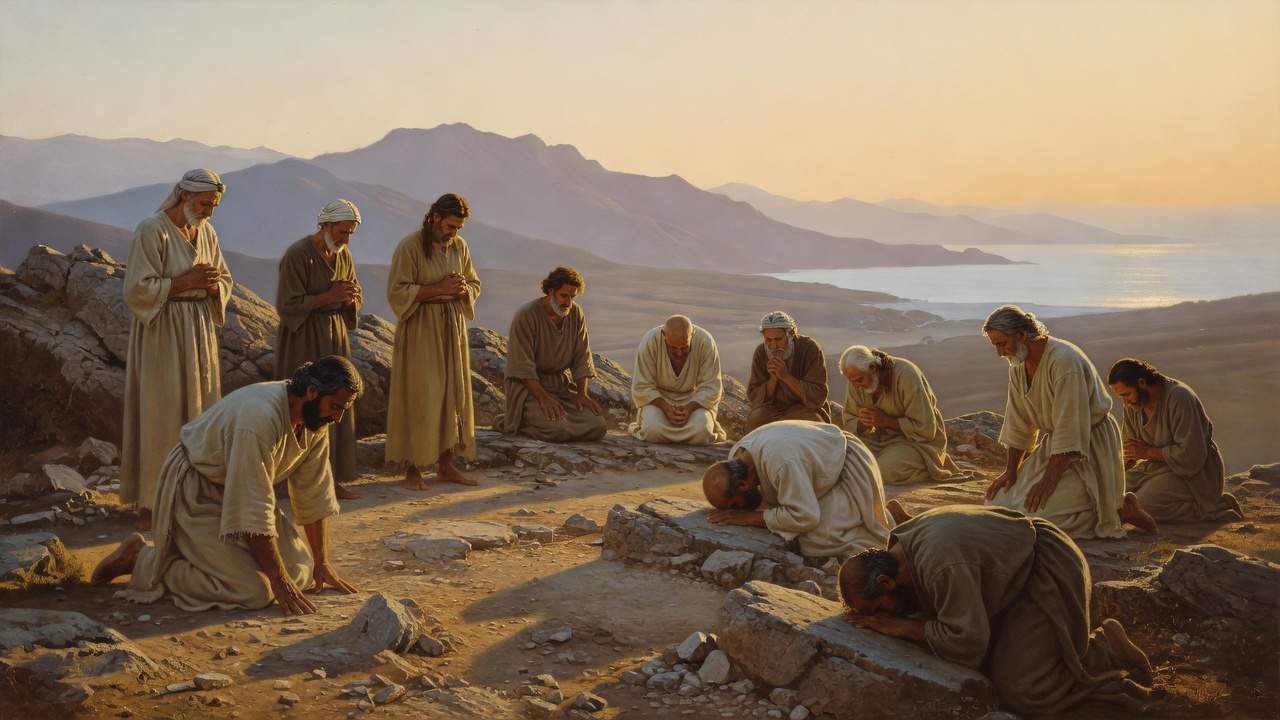
¿Sabías que…?
Un llamado a la alabanza y una solemne advertencia
- El Salmo 95 comienza como una invitación a adorar a Dios con cánticos y acción de gracias, celebrándolo como un gran Rey, Creador de los mares y las montañas, y el pastor que cuida de Su pueblo. El salmo llama a la comunidad no solo a aclamar con júbilo, sino también a postrarse y arrodillarse ante su Hacedor.Fuentes: el propio texto bíblico
- En la segunda mitad del salmo, el tono cambia de manera repentina hacia una advertencia divina contra el endurecimiento del corazón. Recuerda la rebelión en Meriba y Masah en el desierto, donde el pueblo puso a prueba a Dios durante cuarenta años a pesar de haber visto Sus obras, lo que llevó al juramento divino de que no entrarían en Su reposo.Fuentes: el propio texto bíblico
Notas escritas con ayuda de IA a partir de fuentes abiertas (Theographic Bible Metadata, CC BY-SA 4.0; Easton’s Bible Dictionary, dominio público) y revisadas antes de publicarse.
Lugares de este capítulo
- Meribah · Hoy: within 500 m of Wadi Rufaiyil · 28.623, 33.880 · versículo 8
Solo aparecen lugares identificados con alta confianza (90 % o más según las fuentes académicas reunidas por OpenBible). Mapa de la época: DARE (Digital Atlas of the Roman Empire), CC BY 4.0; mapa actual: © colaboradores de OpenStreetMap; lugares: OpenBible.info (CC BY 4.0).
Créditos y licencia de esta traducción
LXX2012: Septuagint in British/International English 2012
The Septuagint with Apocrypha, translated from Greek to English by Sir Lancelot C. L. Brenton and published in 1885, with some language updates (British/International English)
Public Domain
Language: English
Dialect (if applicable): British
Language in English: English
Translation by: Sir Lancelot Charles Lee Breton
LXX2012: Septuagint in English 2012, British/International English Edition
This is a translation of the Old Testament and Apocrypha/Deuterocanon from Hebrew to Greek to 19th Century British English, with some updates of spelling and word usage to contemporary British/International English. The original English translation was done by Sir Lancelot Charles Lee Brenton and published by Samuel Bagster & Sons, Ltd., in London in 1851. It has entered the Public Domain due to the passage of sufficient time. In the process of scanning and typing the text, the original poetry and prose formatting, as well as peripheral material like introductions and notes, have been omitted.
This edition of the Septuagint has some language updates. Brenton's word order and punctuation has been mostly retained, meaning that quotation marks are not used, and sentences within quotes may not start with capital letters, as was standard usage in 1851. Names transliterated from Greek to those transliterated from Hebrew in the common English Bibles often differ. These language updates are dedicated to the Public Domain by the author of those edits, Michael Paul Johnson. Therefore this edition may be freely copied, published, etc.
Before considering making changes to the text of this work, I recommend that you consult with God, because this is really His Book.
If you find errors in the text, please report them so that we can correct them.
Donations to help with the expenses of operating this web site and thus help others have free access to the Word of God may be made to us, but are not required. Please see http://MLJohnson.org/partner/ for more about that.
Títulos de sección adaptados de la Berean Standard Bible (dominio público); no forman parte del texto bíblico de esta traducción.
Fuente: http://ebible.org/eng-uk-lxx2012/ · eBible.org