Salmos 92
LXX2012: Septuagint in British/International English 2012 · Toca un versículo para ver sus referencias cruzadas.
(93) For the day before the Sabbath, when the land was first inhabited, the praise of a Song by David.
How Great Are Your Works!
1The Lord reigns; he has clothed himself with honour: the Lord has clothed and girded himself with strength; for he has established the world, which shall not be moved.
2Your throne is prepared of old: you are from everlasting.
3The rivers have lifted up, O Lord, the rivers have lifted up their voices,
4at the voices of many waters: the billows of the sea are wonderful: the Lord is wonderful in high places.
5Your testimonies are made very sure: holiness becomes your house, O Lord, for ever.
¿Sabías que…?
Un Cántico de Alabanza para el Sábado
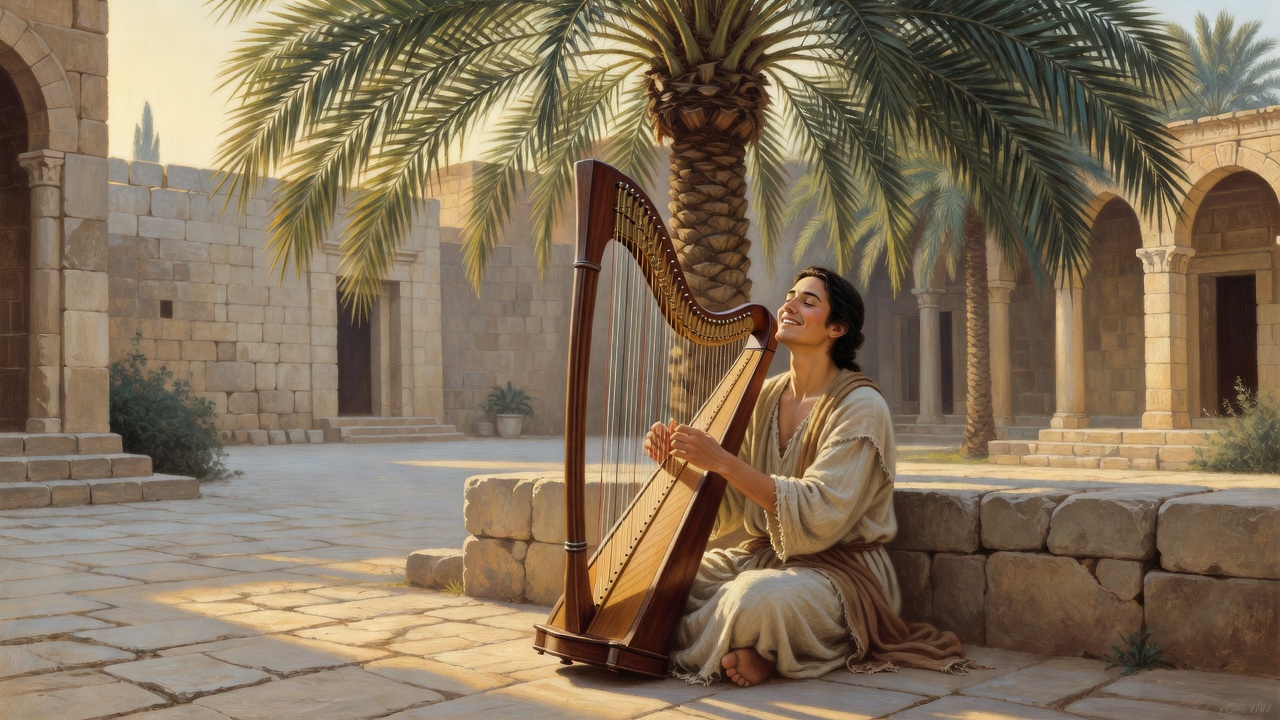
- El Salmo 92 se designa expresamente en su encabezamiento como un cántico para el día de reposo o sábado. Describe la alabanza a Dios tanto de mañana como de noche, acompañada de instrumentos musicales como el arpa de diez cuerdas y la lira.Fuentes: el propio texto bíblico
- El salmo contrasta a los malhechores, que brotan rápidamente como la hierba para luego ser destruidos, con los justos. Los fieles son comparados con palmeras vigorosas y con los altos cedros de la cordillera del Líbano, manteniéndose verdes y dando fruto incluso en la vejez.Fuentes: el propio texto bíblico · Lebanon
Notas escritas con ayuda de IA a partir de fuentes abiertas (Theographic Bible Metadata, CC BY-SA 4.0; Easton’s Bible Dictionary, dominio público) y revisadas antes de publicarse.
Lugares de este capítulo
- Lebanon · 33.540, 35.584 · versículo 12
Solo aparecen lugares identificados con alta confianza (90 % o más según las fuentes académicas reunidas por OpenBible). Mapa de la época: DARE (Digital Atlas of the Roman Empire), CC BY 4.0; mapa actual: © colaboradores de OpenStreetMap; lugares: OpenBible.info (CC BY 4.0).
Créditos y licencia de esta traducción
LXX2012: Septuagint in British/International English 2012
The Septuagint with Apocrypha, translated from Greek to English by Sir Lancelot C. L. Brenton and published in 1885, with some language updates (British/International English)
Public Domain
Language: English
Dialect (if applicable): British
Language in English: English
Translation by: Sir Lancelot Charles Lee Breton
LXX2012: Septuagint in English 2012, British/International English Edition
This is a translation of the Old Testament and Apocrypha/Deuterocanon from Hebrew to Greek to 19th Century British English, with some updates of spelling and word usage to contemporary British/International English. The original English translation was done by Sir Lancelot Charles Lee Brenton and published by Samuel Bagster & Sons, Ltd., in London in 1851. It has entered the Public Domain due to the passage of sufficient time. In the process of scanning and typing the text, the original poetry and prose formatting, as well as peripheral material like introductions and notes, have been omitted.
This edition of the Septuagint has some language updates. Brenton's word order and punctuation has been mostly retained, meaning that quotation marks are not used, and sentences within quotes may not start with capital letters, as was standard usage in 1851. Names transliterated from Greek to those transliterated from Hebrew in the common English Bibles often differ. These language updates are dedicated to the Public Domain by the author of those edits, Michael Paul Johnson. Therefore this edition may be freely copied, published, etc.
Before considering making changes to the text of this work, I recommend that you consult with God, because this is really His Book.
If you find errors in the text, please report them so that we can correct them.
Donations to help with the expenses of operating this web site and thus help others have free access to the Word of God may be made to us, but are not required. Please see http://MLJohnson.org/partner/ for more about that.
Títulos de sección adaptados de la Berean Standard Bible (dominio público); no forman parte del texto bíblico de esta traducción.
Fuente: http://ebible.org/eng-uk-lxx2012/ · eBible.org