Salmos 51
LXX2012: Septuagint in British/International English 2012 · Toca un versículo para ver sus referencias cruzadas.
(52) For the end, a Psalm of instruction by David, when Doec the Idumean came and told Saul, and said to him, David is gone to the house of Abimelech.
Create in Me a Clean Heart, O God
1Why do you, O mighty man, boast of iniquity in your mischief? All the day
2your tongue has devised unrighteousness; like a sharpened razor you have wrought deceit.
3You have loved wickedness more than goodness; unrighteousness better than to speak righteousness. Pause.
4You have loved all words of destruction, and a deceitful tongue.
5Therefore may God destroy you for ever, may he pluck you up and utterly remove you from your dwelling, and your root from the land of the living. Pause.
6And the righteous shall see, and fear, and shall laugh at him, and say,
7Behold the man who made not God his help; but trusted in the abundance of his wealth, and strengthened himself in his vanity.
8But I am as a fruitful olive in the house of God: I have trusted in the mercy of God for ever, even for evermore.
9I will give thanks to you for ever, for you have done it: and I will wait on your name; for it is good before the saints.
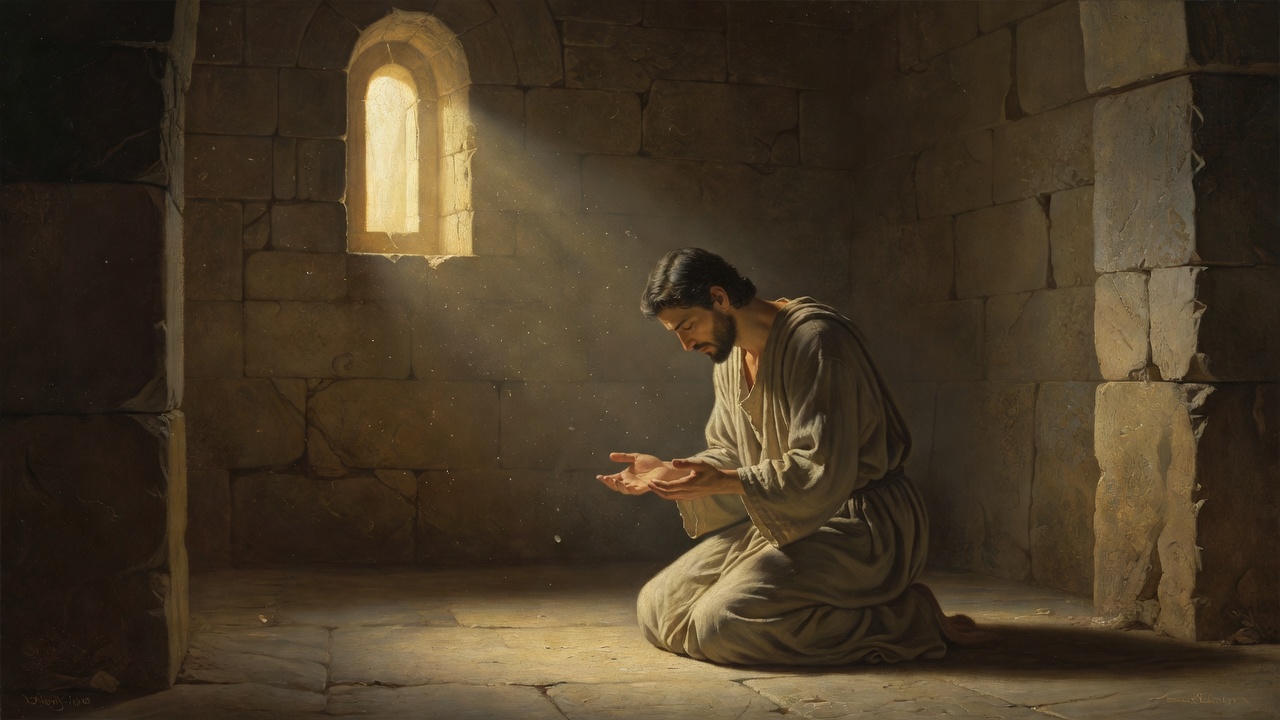
¿Sabías que…?
Un Salmo de Arrepentimiento
- El encabezado introductorio del salmo vincula esta oración a la confrontación entre el profeta Natán y el rey David tras el adulterio con Betsabé, suplicando misericordia y liberación de la culpa de sangre.Fuentes: el propio texto bíblico
- La oración utiliza la figura de la purificación con hisopo y el lavado para describir la limpieza espiritual, señalando que Dios valora un espíritu quebrantado y un corazón contrito más que los simples sacrificios de animales.Fuentes: el propio texto bíblico
- El salmo concluye con una petición para que Dios prospere a Sion y edifique los muros de Jerusalén, anticipando la restauración de sacrificios justos y holocaustos sobre el altar.Fuentes: el propio texto bíblico · Zion · Jerusalem
Notas escritas con ayuda de IA a partir de fuentes abiertas (Theographic Bible Metadata, CC BY-SA 4.0; Easton’s Bible Dictionary, dominio público) y revisadas antes de publicarse.
Lugares de este capítulo
Solo aparecen lugares identificados con alta confianza (90 % o más según las fuentes académicas reunidas por OpenBible). Mapa de la época: DARE (Digital Atlas of the Roman Empire), CC BY 4.0; mapa actual: © colaboradores de OpenStreetMap; lugares: OpenBible.info (CC BY 4.0).
Créditos y licencia de esta traducción
LXX2012: Septuagint in British/International English 2012
The Septuagint with Apocrypha, translated from Greek to English by Sir Lancelot C. L. Brenton and published in 1885, with some language updates (British/International English)
Public Domain
Language: English
Dialect (if applicable): British
Language in English: English
Translation by: Sir Lancelot Charles Lee Breton
LXX2012: Septuagint in English 2012, British/International English Edition
This is a translation of the Old Testament and Apocrypha/Deuterocanon from Hebrew to Greek to 19th Century British English, with some updates of spelling and word usage to contemporary British/International English. The original English translation was done by Sir Lancelot Charles Lee Brenton and published by Samuel Bagster & Sons, Ltd., in London in 1851. It has entered the Public Domain due to the passage of sufficient time. In the process of scanning and typing the text, the original poetry and prose formatting, as well as peripheral material like introductions and notes, have been omitted.
This edition of the Septuagint has some language updates. Brenton's word order and punctuation has been mostly retained, meaning that quotation marks are not used, and sentences within quotes may not start with capital letters, as was standard usage in 1851. Names transliterated from Greek to those transliterated from Hebrew in the common English Bibles often differ. These language updates are dedicated to the Public Domain by the author of those edits, Michael Paul Johnson. Therefore this edition may be freely copied, published, etc.
Before considering making changes to the text of this work, I recommend that you consult with God, because this is really His Book.
If you find errors in the text, please report them so that we can correct them.
Donations to help with the expenses of operating this web site and thus help others have free access to the Word of God may be made to us, but are not required. Please see http://MLJohnson.org/partner/ for more about that.
Títulos de sección adaptados de la Berean Standard Bible (dominio público); no forman parte del texto bíblico de esta traducción.
Fuente: http://ebible.org/eng-uk-lxx2012/ · eBible.org