Job 20
LXX2012: Septuagint in British/International English 2012 · Toca un versículo para ver sus referencias cruzadas.
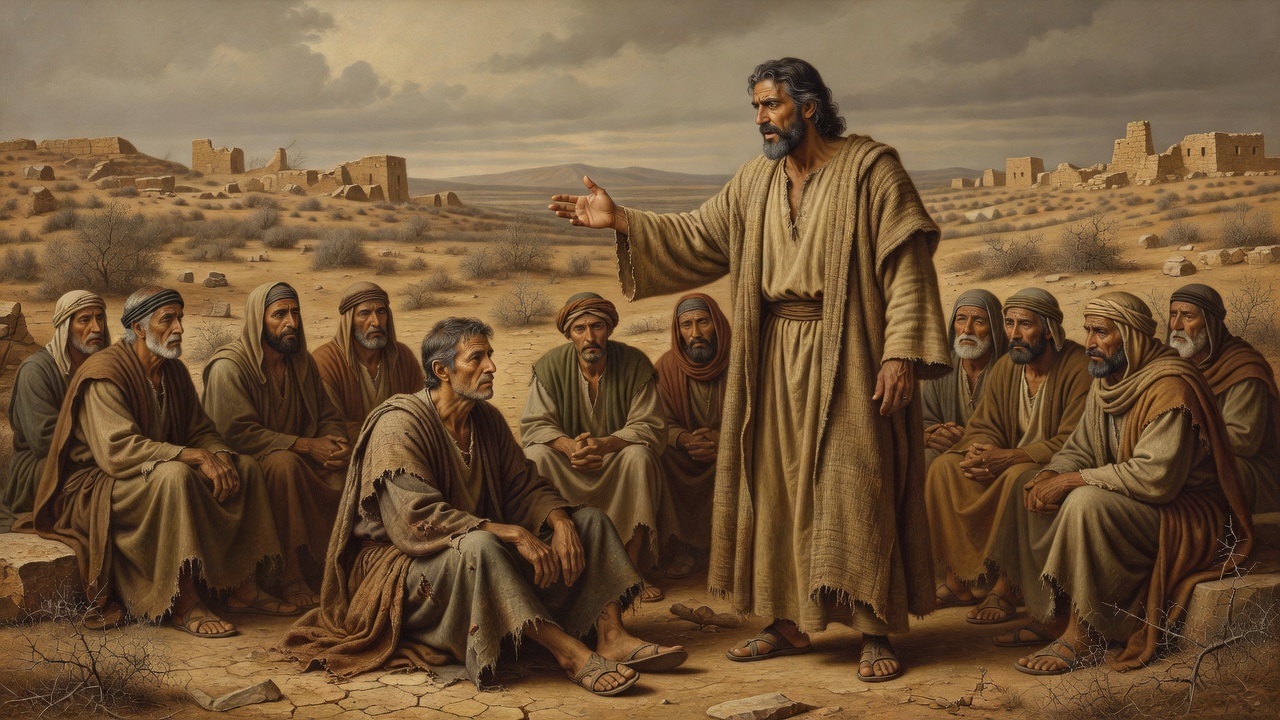
Zophar: Destruction Awaits the Wicked
1Then Sophar the Minaean answered and said, 2I did not suppose that you would answer thus: neither do you⌃ understand more than I. 3I will hear my shameful reproach; and the spirit of my understanding answers me. 4Have you not known these things of old, from the time that man was set upon the earth? 5But the mirth of the ungodly is a signal downfall, and the joy of transgressors is destruction: 6although his gifts should go up to heaven, and his sacrifice reach the clouds. 7For when he shall seem to be now established, then he shall utterly perish: and they that knew him shall say, Where is he? 8Like a dream that has fled away, he shall not be found; and he has fled like a vision of the night. 9The eye has looked upon him, but shall not see him again; and his place shall no longer perceive him. 10Let his inferiors destroy his children, and let his hands kindle the fire of sorrow. 11His bones have been filled with vigour of his youth, and it shall lie down with him in the dust. 12Though evil be sweet in his mouth, though he will hide it under his tongue; 13though he will not spare it, and will not leave it, but will keep it in the midst of his throat: 14yet he shall not at all be able to help himself; the gall of an asp is in his belly. 15His wealth unjustly collected shall be vomited up; a messenger of wrath shall drag him out of his house. 16And let him suck the poison of serpents, and let the serpent's tongue kill him. 17Let him not see the milk of the pastures, nor the supplies of honey and butter. 18He has laboured unprofitably and in vain, for wealth of which he shall not taste: it is as a lean thing, unfit for food, which he can’t swallow. 19For he has broken down the houses of many mighty men: and he has plundered an habitation, though he built it not. 20There is no security to his possessions; he shall not be saved by his desire. 21There is nothing remaining of his provisions; therefore his goods shall not flourish. 22But when he shall seem to be just satisfied, he shall be straitened; and all distress shall come upon him. 23If by any means he would fill his belly, let God send upon him the fury of wrath; let him bring a torrent of pains upon him. 24And he shall by no means escape from the power of the sword; let the brazen bow wound him. 25And let the arrow pierce through his body; and let the stars be against his dwelling-place: let terrors come upon him. 26And let all darkness wait for him: a fire that burns not out shall consume him; and let a stranger plague his house. 27And let the heaven reveal his iniquities, and the earth rise up against him. 28Let destruction bring his house to an end; let a day of wrath come upon him. 29This is the portion of an ungodly man from the Lord, and the possession of his goods appointed him by the all-seeing God.
¿Sabías que…?
Zofar y el Destino de los Malvados
- Zofar es identificado como naamatita, lo que alude a un lugar desconocido llamado Naama. En la antigua traducción griega de la Septuaginta, se le describe como rey de los mineos o maonitas del sur de Arabia.Fuentes: Zophar · el propio texto bíblico
- En su discurso, Zofar utiliza metáforas de digestión y veneno, afirmando que las riquezas mal habidas se transforman en veneno de víboras y cobras dentro del estómago del malvado.Fuentes: el propio texto bíblico
- Zofar también incluye imágenes militares de la antigüedad, describiendo a un transgresor que huye de un arma de hierro solo para ser atravesado por una flecha con punta de bronce.Fuentes: el propio texto bíblico
Notas escritas con ayuda de IA a partir de fuentes abiertas (Theographic Bible Metadata, CC BY-SA 4.0; Easton’s Bible Dictionary, dominio público) y revisadas antes de publicarse.
Créditos y licencia de esta traducción
LXX2012: Septuagint in British/International English 2012
The Septuagint with Apocrypha, translated from Greek to English by Sir Lancelot C. L. Brenton and published in 1885, with some language updates (British/International English)
Public Domain
Language: English
Dialect (if applicable): British
Language in English: English
Translation by: Sir Lancelot Charles Lee Breton
LXX2012: Septuagint in English 2012, British/International English Edition
This is a translation of the Old Testament and Apocrypha/Deuterocanon from Hebrew to Greek to 19th Century British English, with some updates of spelling and word usage to contemporary British/International English. The original English translation was done by Sir Lancelot Charles Lee Brenton and published by Samuel Bagster & Sons, Ltd., in London in 1851. It has entered the Public Domain due to the passage of sufficient time. In the process of scanning and typing the text, the original poetry and prose formatting, as well as peripheral material like introductions and notes, have been omitted.
This edition of the Septuagint has some language updates. Brenton's word order and punctuation has been mostly retained, meaning that quotation marks are not used, and sentences within quotes may not start with capital letters, as was standard usage in 1851. Names transliterated from Greek to those transliterated from Hebrew in the common English Bibles often differ. These language updates are dedicated to the Public Domain by the author of those edits, Michael Paul Johnson. Therefore this edition may be freely copied, published, etc.
Before considering making changes to the text of this work, I recommend that you consult with God, because this is really His Book.
If you find errors in the text, please report them so that we can correct them.
Donations to help with the expenses of operating this web site and thus help others have free access to the Word of God may be made to us, but are not required. Please see http://MLJohnson.org/partner/ for more about that.
Títulos de sección adaptados de la Berean Standard Bible (dominio público); no forman parte del texto bíblico de esta traducción.
Fuente: http://ebible.org/eng-uk-lxx2012/ · eBible.org