Job 18
LXX2012: Septuagint in British/International English 2012 · Toca un versículo para ver sus referencias cruzadas.
Bildad: God Punishes the Wicked
1Then Baldad the Sauchite answered and said, 2How long will you continue? forbear, that we also may speak. 3For therefore have we been silent before you like brutes? 4Anger has possessed you: for what if you should die; would the earth under heaven be desolate? or shall the mountains be overthrown from their foundations? 5But the light of the ungodly shall be quenched, and their flame shall not go up. 6His light shall be darkness in his habitation, and his lamp shall be put out with him. 7Let the meanest of men spoil his goods, and let his counsel deceive him. 8His foot also has been caught in a snare, and let it be entangled in a net. 9And let snares come upon him: he shall strengthen those that thirst for his destruction. 10His snare is hid in the earth, and that which shall take him is by the path. 11Let pains destroy him round about, and let many enemies come about him, 12vex him with distressing hunger: and a signal destruction has been prepared for him. 13Let the soles of his feet be devoured: and death shall consume his beauty. 14And let health be utterly banished from his tabernacle, and let distress seize upon him with a charge from the king. 15It shall dwell in his tabernacle in his night: his excellency shall be sown with brimstone. 16His roots shall be dried up from beneath, and his crop shall fall away from above. 17Let his memorial perish out of the earth, and his name shall be publicly cast out. 18Let one drive him from light into darkness. 19He shall not be known amongst his people, nor his house preserved on the earth. 20But strangers shall dwell in his possessions: the last groaned for him, and wonder seized the first. 21These are the houses of the unrighteous, and this is the place of them that know not the Lord.
¿Sabías que…?
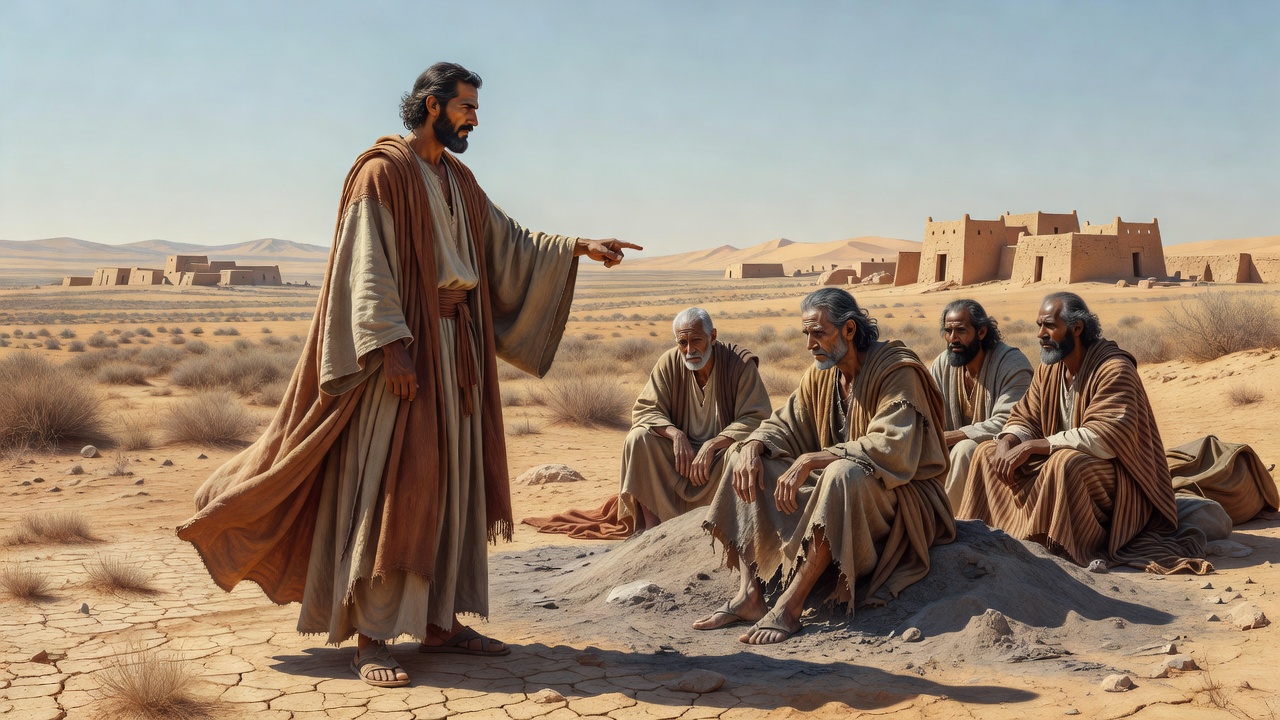
El segundo discurso de Bildad sobre el destino de los impíos
- A Bildad se le llama suhita, una designación tradicionalmente vinculada a Súa, una región de Arabia asociada con los descendientes de Abraham y Cetura. En este segundo discurso a Job, Bildad mantiene un tono severo al reprenderlo y sostener la segura perdición de los malvados.Fuentes: Bildad · el propio texto bíblico
- Para ilustrar la destrucción que aguarda al impío, Bildad recurre a metáforas de caza antiguas. Describe su ruina mediante imágenes de lazos ocultos, trampas escondidas en la tierra y redes que apresan al caminante.Fuentes: el propio texto bíblico
Notas escritas con ayuda de IA a partir de fuentes abiertas (Theographic Bible Metadata, CC BY-SA 4.0; Easton’s Bible Dictionary, dominio público) y revisadas antes de publicarse.
Créditos y licencia de esta traducción
LXX2012: Septuagint in British/International English 2012
The Septuagint with Apocrypha, translated from Greek to English by Sir Lancelot C. L. Brenton and published in 1885, with some language updates (British/International English)
Public Domain
Language: English
Dialect (if applicable): British
Language in English: English
Translation by: Sir Lancelot Charles Lee Breton
LXX2012: Septuagint in English 2012, British/International English Edition
This is a translation of the Old Testament and Apocrypha/Deuterocanon from Hebrew to Greek to 19th Century British English, with some updates of spelling and word usage to contemporary British/International English. The original English translation was done by Sir Lancelot Charles Lee Brenton and published by Samuel Bagster & Sons, Ltd., in London in 1851. It has entered the Public Domain due to the passage of sufficient time. In the process of scanning and typing the text, the original poetry and prose formatting, as well as peripheral material like introductions and notes, have been omitted.
This edition of the Septuagint has some language updates. Brenton's word order and punctuation has been mostly retained, meaning that quotation marks are not used, and sentences within quotes may not start with capital letters, as was standard usage in 1851. Names transliterated from Greek to those transliterated from Hebrew in the common English Bibles often differ. These language updates are dedicated to the Public Domain by the author of those edits, Michael Paul Johnson. Therefore this edition may be freely copied, published, etc.
Before considering making changes to the text of this work, I recommend that you consult with God, because this is really His Book.
If you find errors in the text, please report them so that we can correct them.
Donations to help with the expenses of operating this web site and thus help others have free access to the Word of God may be made to us, but are not required. Please see http://MLJohnson.org/partner/ for more about that.
Títulos de sección adaptados de la Berean Standard Bible (dominio público); no forman parte del texto bíblico de esta traducción.
Fuente: http://ebible.org/eng-uk-lxx2012/ · eBible.org