Jeremías 14
LXX2012: Septuagint in British/International English 2012 · Toca un versículo para ver sus referencias cruzadas.
Drought, Famine, Sword, and Plague
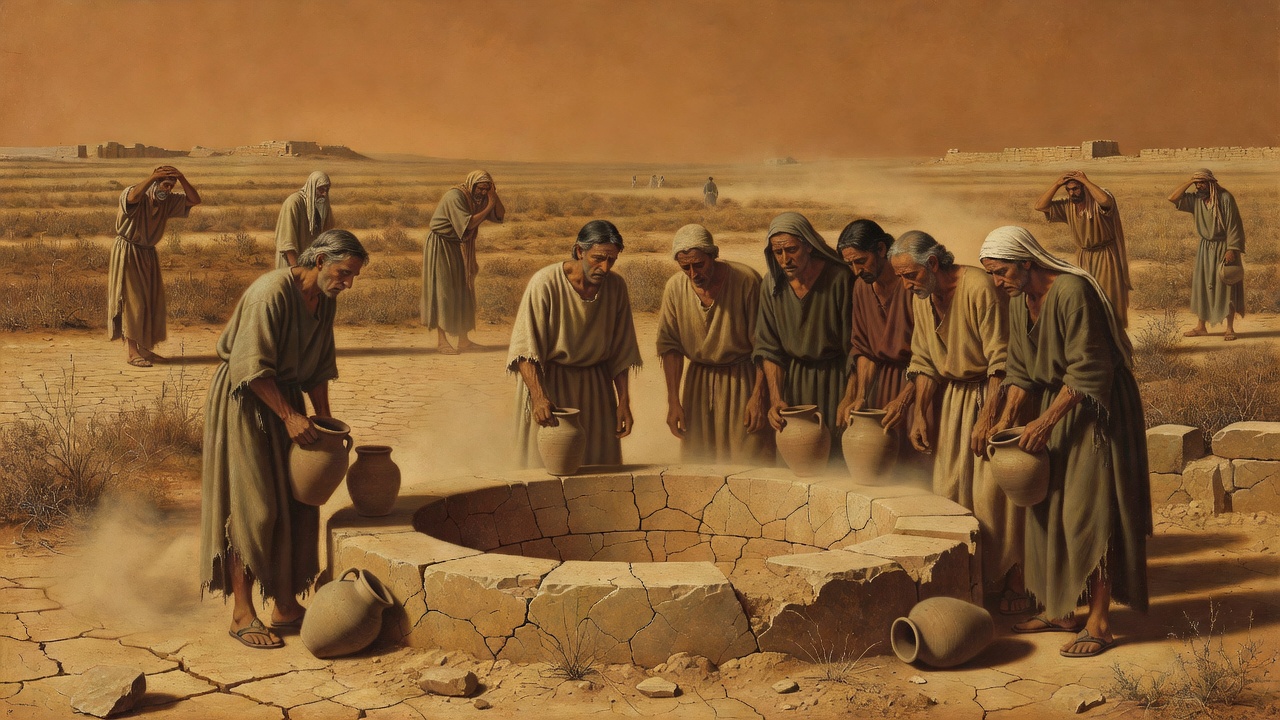
1AND THE WORD OF THE LORD CAME TO JEREMIAS CONCERNING THE DROUGHT. 2Judea has mourned, and her gates are emptied, and are darkened upon the earth; and the cry of Jerusalem is gone up. 3And her nobles have sent their little ones to the water: they came to the wells, and found no water: and brought back their vessels empty. 4And the labours of the land failed, because there was no rain: the husbandmen were ashamed, they covered their heads. 5And hinds calved in the field, and forsook it, because there was no grass. 6The wild asses stood by the forests, and snuffed up the wind; their eyes failed, because there was no grass. 7Our sins have risen up against us: O Lord, do you for us for your own sake; for our sins are many before you; for we have sinned against you. 8O Lord, you are the hope of Israel, and deliver us in time of troubles; why are you become as a sojourner upon the land, or as one born in the land, yet turning aside for a resting-place? 9Will you be as a man asleep, or as a strong man that can’t save? yet you are amongst us, O Lord, and your name is called upon us; forget us not. 10Thus says the Lord to this people, They have loved to wander, and they have not spared, therefore God has not prospered them; now will he remember their iniquity. 11And the Lord said to me, Pray not for this people for their good: 12for though they fast, I will not hear their supplication; and though they offer whole burnt offerings and sacrifices, I will take no pleasure in them: for I will consume them with sword, and with famine, and with pestilence. 13And I said, O ever living Lord! behold, their prophets prophesy, and say, You⌃ shall not see a sword, nor shall famine be amongst you; for I will give truth and peace on the land, and in this place. 14Then the Lord said to me, The prophets prophesy lies in my name: I sent them not, and I commanded them not, and I spoke not to them: for they prophesy to you false visions, and divinations, and auguries, and devices of their own heart. 15Therefore thus says the Lord concerning the prophets that prophesy lies in my name, and I sent them not, who say, Sword and famine shall not be upon this land; they shall die by a grievous death, and the prophets shall be consumed by famine. 16And the people to whom they prophesy, they also shall be cast out in the streets of Jerusalem, because of the sword and famine; and there shall be none to bury them: their wives also, and their sons, and their daughters shall die thus; and I will pour out their wickedness upon them. 17And you shall speak this word to them; Let your eyes shed tears day and night, and let them not cease: for the daughter of my people has been sorely bruised, and her plague is very grievous. 18If I go forth into the plain, then behold the slain by the sword! and if I enter into the city, then behold the distress of famine! for priest and prophet have gone to a land which they knew not.
A Prayer for Mercy
19Have you utterly rejected Juda? and has your soul departed from Sion? therefore has you struck us, and there is no healing for us? we waited for peace, but there was no prosperity; for a time of healing, and behold trouble! 20We know, O Lord, our sins, and the iniquities of our fathers: for we have sinned before you. 21Refrain for your name's sake, destroy not the throne of your glory: remember, break not your covenant with us. 22Is there any one amongst the idols of the Gentiles that can give rain? and will the sky yield his fulness at their bidding? Are not you he? we will even wait on you, O Lord: for you have made all these things.
¿Sabías que…?
La Gran Sequía y los Falsos Profetas
- El capítulo comienza con la descripción de una severa sequía en Judá, mostrando a siervos enviados por los nobles en busca de agua que regresan con vasijas vacías, mientras los campesinos se cubren la cabeza desesperados ante la tierra agrietada.Fuentes: el propio texto bíblico
- Jeremías lamenta la influencia de los falsos profetas en Jerusalén que aseguraban paz e inmunidad frente al desastre, aunque Dios afirma que no los envió y que la espada y el hambre acabarían con ellos.Fuentes: el propio texto bíblico · Jeremiah · Jerusalem
- En su ruego por la tierra afligida, Jeremías resalta que los ídolos extranjeros no pueden producir lluvia, afirmando que solo el Dios de Israel tiene el poder de enviar lluvias y guardar Su pacto.Fuentes: el propio texto bíblico
Notas escritas con ayuda de IA a partir de fuentes abiertas (Theographic Bible Metadata, CC BY-SA 4.0; Easton’s Bible Dictionary, dominio público) y revisadas antes de publicarse.
Lugares de este capítulo
- Jerusalem · 31.777, 35.234 · versículos 2, 16, 21
- Zion · Hoy: Jerusalem · 31.777, 35.234 · versículo 19
Solo aparecen lugares identificados con alta confianza (90 % o más según las fuentes académicas reunidas por OpenBible). Mapa de la época: DARE (Digital Atlas of the Roman Empire), CC BY 4.0; mapa actual: © colaboradores de OpenStreetMap; lugares: OpenBible.info (CC BY 4.0).
Créditos y licencia de esta traducción
LXX2012: Septuagint in British/International English 2012
The Septuagint with Apocrypha, translated from Greek to English by Sir Lancelot C. L. Brenton and published in 1885, with some language updates (British/International English)
Public Domain
Language: English
Dialect (if applicable): British
Language in English: English
Translation by: Sir Lancelot Charles Lee Breton
LXX2012: Septuagint in English 2012, British/International English Edition
This is a translation of the Old Testament and Apocrypha/Deuterocanon from Hebrew to Greek to 19th Century British English, with some updates of spelling and word usage to contemporary British/International English. The original English translation was done by Sir Lancelot Charles Lee Brenton and published by Samuel Bagster & Sons, Ltd., in London in 1851. It has entered the Public Domain due to the passage of sufficient time. In the process of scanning and typing the text, the original poetry and prose formatting, as well as peripheral material like introductions and notes, have been omitted.
This edition of the Septuagint has some language updates. Brenton's word order and punctuation has been mostly retained, meaning that quotation marks are not used, and sentences within quotes may not start with capital letters, as was standard usage in 1851. Names transliterated from Greek to those transliterated from Hebrew in the common English Bibles often differ. These language updates are dedicated to the Public Domain by the author of those edits, Michael Paul Johnson. Therefore this edition may be freely copied, published, etc.
Before considering making changes to the text of this work, I recommend that you consult with God, because this is really His Book.
If you find errors in the text, please report them so that we can correct them.
Donations to help with the expenses of operating this web site and thus help others have free access to the Word of God may be made to us, but are not required. Please see http://MLJohnson.org/partner/ for more about that.
Títulos de sección adaptados de la Berean Standard Bible (dominio público); no forman parte del texto bíblico de esta traducción.
Fuente: http://ebible.org/eng-uk-lxx2012/ · eBible.org