Isaías 4
LXX2012: Septuagint in British/International English 2012 · Toca un versículo para ver sus referencias cruzadas.
A Remnant in Zion
1And seven women shall take hold of one man, saying, We will eat our own bread, and wear our own raiment: only let your name be called upon us, and take away our reproach. 2And in that day God shall shine gloriously in counsel on the earth, to exalt and glorify the remnant of Israel. 3And it shall be, that the remnant left in Sion, and the remnant left in Jerusalem, even all that are appointed to life in Jerusalem, shall be called holy. 4For the Lord shall wash away the filth of the sons and daughters of Sion, and shall purge out the blood from the midst of them, with the spirit of judgement, and the spirit of burning. 5And he shall come, and it shall be with regard to every place of mount Sion, yes, all the region round about it shall a cloud overshadow by day, and there shall be as it were the smoke and light of fire burning by night: and upon all the glory shall be a defence. 6And it shall be for a shadow from the heat, and as a shelter and a hiding place from inclemency of weather and from rain.
¿Sabías que…?
La purificación y restauración de Sion
- El monte Sion era una de las elevaciones naturales sobre las que se edificó Jerusalén. Conquistado a los jebuseos por David, pasó a conocerse como la Ciudad de David y en los textos proféticos representa a menudo el núcleo de la comunidad santa.Fuentes: Mount Zion · Jerusalem · el propio texto bíblico
- El capítulo comienza mostrando las secuelas de un conflicto devastador, donde siete mujeres suplican llevar el nombre de un solo hombre mientras costean su propia comida y ropa, con el fin de quitar su deshonra social.Fuentes: el propio texto bíblico
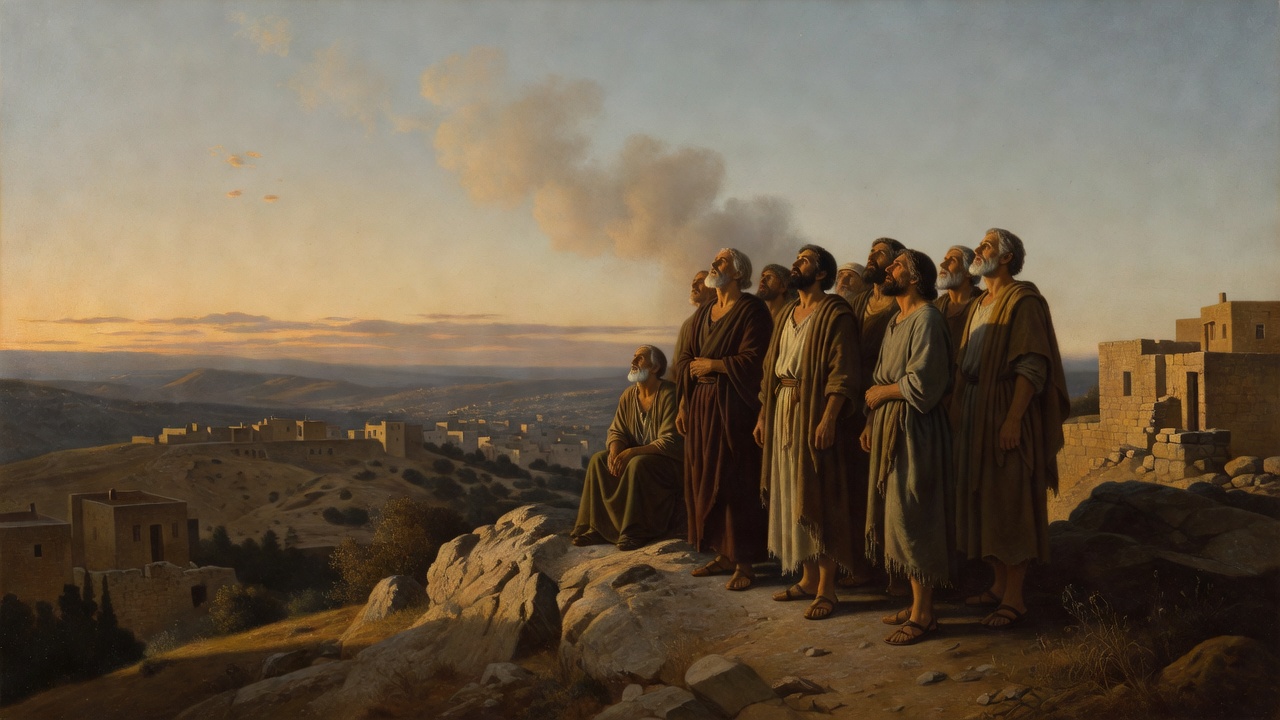
- Isaías describe la restauración divina mediante la imagen de un dosel protector sobre el monte Sion, que toma la forma de una nube de humo de día y un fuego resplandeciente de noche para dar sombra y refugio a los sobrevivientes contados entre los vivos.Fuentes: el propio texto bíblico
Notas escritas con ayuda de IA a partir de fuentes abiertas (Theographic Bible Metadata, CC BY-SA 4.0; Easton’s Bible Dictionary, dominio público) y revisadas antes de publicarse.
Lugares de este capítulo
- Jerusalem · 31.777, 35.234 · versículos 3, 4
- Zion · Hoy: Jerusalem · 31.777, 35.234 · versículos 3, 4
- Mount Zion · 31.772, 35.229 · versículo 5
Solo aparecen lugares identificados con alta confianza (90 % o más según las fuentes académicas reunidas por OpenBible). Mapa de la época: DARE (Digital Atlas of the Roman Empire), CC BY 4.0; mapa actual: © colaboradores de OpenStreetMap; lugares: OpenBible.info (CC BY 4.0).
Créditos y licencia de esta traducción
LXX2012: Septuagint in British/International English 2012
The Septuagint with Apocrypha, translated from Greek to English by Sir Lancelot C. L. Brenton and published in 1885, with some language updates (British/International English)
Public Domain
Language: English
Dialect (if applicable): British
Language in English: English
Translation by: Sir Lancelot Charles Lee Breton
LXX2012: Septuagint in English 2012, British/International English Edition
This is a translation of the Old Testament and Apocrypha/Deuterocanon from Hebrew to Greek to 19th Century British English, with some updates of spelling and word usage to contemporary British/International English. The original English translation was done by Sir Lancelot Charles Lee Brenton and published by Samuel Bagster & Sons, Ltd., in London in 1851. It has entered the Public Domain due to the passage of sufficient time. In the process of scanning and typing the text, the original poetry and prose formatting, as well as peripheral material like introductions and notes, have been omitted.
This edition of the Septuagint has some language updates. Brenton's word order and punctuation has been mostly retained, meaning that quotation marks are not used, and sentences within quotes may not start with capital letters, as was standard usage in 1851. Names transliterated from Greek to those transliterated from Hebrew in the common English Bibles often differ. These language updates are dedicated to the Public Domain by the author of those edits, Michael Paul Johnson. Therefore this edition may be freely copied, published, etc.
Before considering making changes to the text of this work, I recommend that you consult with God, because this is really His Book.
If you find errors in the text, please report them so that we can correct them.
Donations to help with the expenses of operating this web site and thus help others have free access to the Word of God may be made to us, but are not required. Please see http://MLJohnson.org/partner/ for more about that.
Títulos de sección adaptados de la Berean Standard Bible (dominio público); no forman parte del texto bíblico de esta traducción.
Fuente: http://ebible.org/eng-uk-lxx2012/ · eBible.org