Job 5
Translation for Translators · Toca un versículo para ver sus referencias cruzadas.
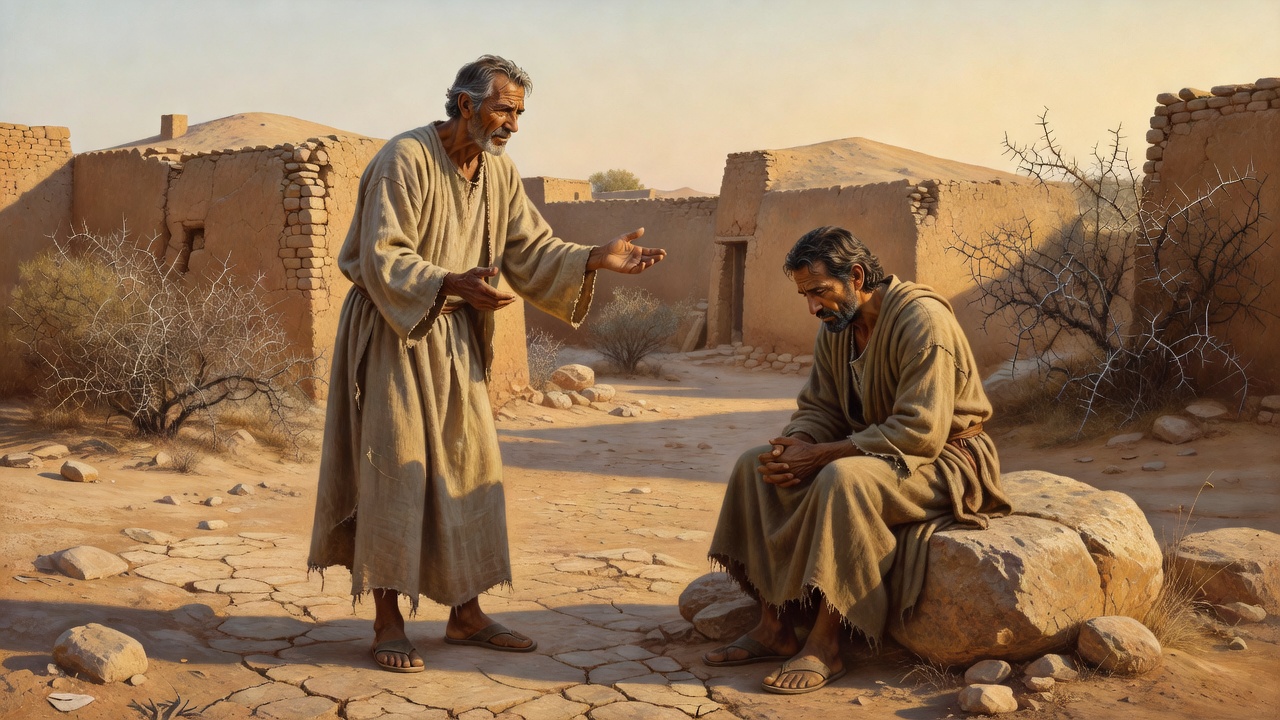
Eliphaz continued replying to Job
1“Job, it is okay that you continue to cry out for someone to help you,
but I am certain that [RHQ] no angel will come to help you!
2Foolish people die because of being ◄resentful/very angry at someone►;
people who are easily deceived are destroyed by their being jealous of others.
3I have seen foolish people who seemed to be successful/prosperous,
but suddenly they experienced disaster/trouble because someone cursed their home.
4Their sons are never safe;
they ◄lose their case/are condemned► when someone ◄takes them to court/sues them►,
because there is no one to defend them.
5Hungry people steal the crops that foolish people harvest, and eat those crops;
they even steal the crops that grow among thorns,
and greedy people take away the wealth of foolish people.
6But evil circumstances/sufferings are not produced by the soil;
troubles do not grow up from the ground.
7People have troubles from the time that they are born
just as surely as sparks shoot up from a fire.
8“If I were suffering like you are, I would ask God for help
and tell him ◄what I am complaining about/about my suffering►.
9He does great things, things that we cannot understand;
we cannot even count the marvelous things that he does.
10He sends rain on the ground;
he sends water on our fields.
11He exalts those who are humble,
and causes those who mourn to be joyful (OR, safe, prosperous).
12He causes crafty/cunning people to not be able to do what they plan to do,
with the result that they achieve nothing.
13He causes people who think that they [IRO] are wise to be trapped by the cunning things they try to do,
with the result that they do not succeed.
14It is as though even in the daytime they are covered by darkness,
and grope around trying to find the road at noontime like people do at night.
15But God saves helpless people from being harmed by what wicked people say [MTY],
he saves needy people from being injured by [MTY] powerful people.
16So, poor people confidently expect that good things will happen to them
but God causes wicked people to stop talking.
17“But those whom God corrects/rebukes are happy;
so do not despise/dislike it when God who is all-powerful disciplines you.
18He wounds people, but then he puts bandages on those wounds;
he hurts people, but he [SYN] also heals them.
19He will rescue you many times from your troubles,
with the result that nothing evil will happen to you.
20When there is a famine, he will not allow you to die,
and when there is a war, you will not be killed [MTY].
21God will protect you when people slander [MTY] you;
you will not be afraid when many things around you are destroyed.
22You will be able to laugh/scoff when things are destroyed and when there is famine,
and you will not be afraid of wild animals.
23You will not worry about having big rocks in your fields that will make plowing difficult,
and you will not worry about being attacked by wild animals there.
24In your tent, you will know that things will go well for you,
and when you look at your livestock, you will see that ◄they are all there/none of them is missing►.
25You will be sure that you will have many descendants,
who will be as numerous as blades of grass.
26You will become very old before you die,
like sheaves of grain continue to grow until it is time to harvest them.
27“My friends and I have thought carefully about these things, and we know that they are true,
so pay attention to what I have said!”
¿Sabías que…?
El Consejo de Elifaz sobre el Sufrimiento y la Corrección Divina
- Elifaz presenta el sufrimiento como una disciplina divina con propósito y no como una calamidad arbitraria, afirmando que la aflicción no brota del suelo sin causa. Por ello, exhorta a Job a no despreciar la corrección del Todopoderoso, quien hiere solo para vendar y sanar.Fuentes: el propio texto bíblico
- Al prometer rescate de seis calamidades e incluso de siete, Elifaz recurre a una fórmula poética tradicional de paralelismo numérico gradual. Este recurso, habitual en la literatura sapiencial del Antiguo Oriente Próximo, añade énfasis para expresar una protección cabal y absoluta.Fuentes: el propio texto bíblico
- Elifaz describe la restauración plena mediante imágenes agrícolas y pastoriles, imaginando una existencia en la que los animales del campo y las piedras del suelo dejan de ser hostiles. Anticipa una muerte en la vejez con vigor, semejante a una gavilla de grano recogida a su debido tiempo.Fuentes: el propio texto bíblico
Notas escritas con ayuda de IA a partir de fuentes abiertas (Theographic Bible Metadata, CC BY-SA 4.0; Easton’s Bible Dictionary, dominio público) y revisadas antes de publicarse.
Créditos y licencia de esta traducción
Translation for Translators
A Bible Translation for Bible Translators which makes implied information explicit in the text as an aid to the translator who may need that information to correctly translate into a particular language.
Copyright © 2008-2017 Ellis W. Deibler, Jr.
Language: English
Dialect: American
This translation is made available to you under the terms of the
Creative Commons Attribution Share-Alike license 4.0.
You have permission to share and redistribute this Bible translation in any format and to make reasonable revisions and adaptations of this translation, provided that:
You include the above copyright and source information.
If you make any changes to the text, you must indicate that you did so in a way that makes it clear that the original licensor is not necessarily endorsing your changes.
If you redistribute this text, you must distribute your contributions under the same license as the original.
Pictures included with Scriptures and other documents on this site are licensed just for use with those Scriptures and documents.
For other uses, please contact the respective copyright owners.
Note that in addition to the rules above, revising and adapting God's Word involves a great responsibility to be true to God's Word. See Revelation 22:18-19.
2026-10-02
Fuente: http://ebible.org/eng-t4t/ · eBible.org