Isaías 37
Translation for Translators · Toca un versículo para ver sus referencias cruzadas.
Hezekiah asked Isaiah for advice
1When King Hezekiah heard what they reported, he tore his clothes and put on clothes made of rough sackcloth because he was very distressed. Then he went into the temple of Yahweh and prayed. 2Then he sent Eliakim, Shebna, and the ◄older/most important► priests, who were also wearing clothes made of rough sackcloth, to talk to me. 3He said to them, “Tell this to Isaiah: ‘King Hezekiah says that this is a day when we are greatly distressed. Other nations are causing us to be insulted and disgraced. We are like [SIM] a woman who is about to give birth to a baby, but she does not have the strength that she needs to do it. 4But perhaps Yahweh our God has heard what the official from Assyria said. Perhaps he knows that his boss, the King of Assyria, sent him to insult the all-powerful God, and that Yahweh will punish the King of Assyria for what he said. And the king requests that you pray for the few of us who are still alive here in Jerusalem.’”
5After those men gave me that message, 6I replied, “Tell the King, ‘This is what Yahweh says: “Those messengers from the King of Assyria have said evil things about me. But do not be disturbed by what they said. 7Listen to this: I will cause Sennacherib to hear a rumor that the armies of Babylon are about to attack his country, and that will worry him. So he will return to his own country, and there I will cause him to be assassinated by men using swords.” ’ ”
8The official from Assyria found out that the King of Assyria and his army had captured Lachish city and that they were attacking Libnah, which is a nearby city. So the official left Jerusalem and went to Libnah to report to the king what had happened in Jerusalem.
9Soon after that, King Sennacherib received a report that King Tirhakah of Ethiopia was leading his army to attack them. So before King Sennacherib left Libnah with his army to fight against the army from Ethiopia, he sent other messengers to Hezekiah in Jerusalem with a letter. In the letter he wrote this to Hezekiah:
10“Do not allow your god, on whom you are relying, to deceive you by promising you that Jerusalem will not be captured by my army. 11You have certainly heard what the armies of the kings of Assyria have done to all the other countries; our armies have destroyed them completely. So, ◄do you think that you will escape?/do not think that your god will save you!► [RHQ] 12Did the gods of the nations that were about to be destroyed by the armies of the previous kings of Assyria rescue them? Did those gods rescue Gozan region, and Haran and Rezeph cities in northern Syria, and the people of Eden region who were forced to go to Tel-Assar city? 13What happened to the King of Hamath and the King of Arpad? What happened to the kings of Sepharvaim, Hena, and Ivvah cities? Did their gods rescue them [RHQ]?”
Hezekiah’s prayer
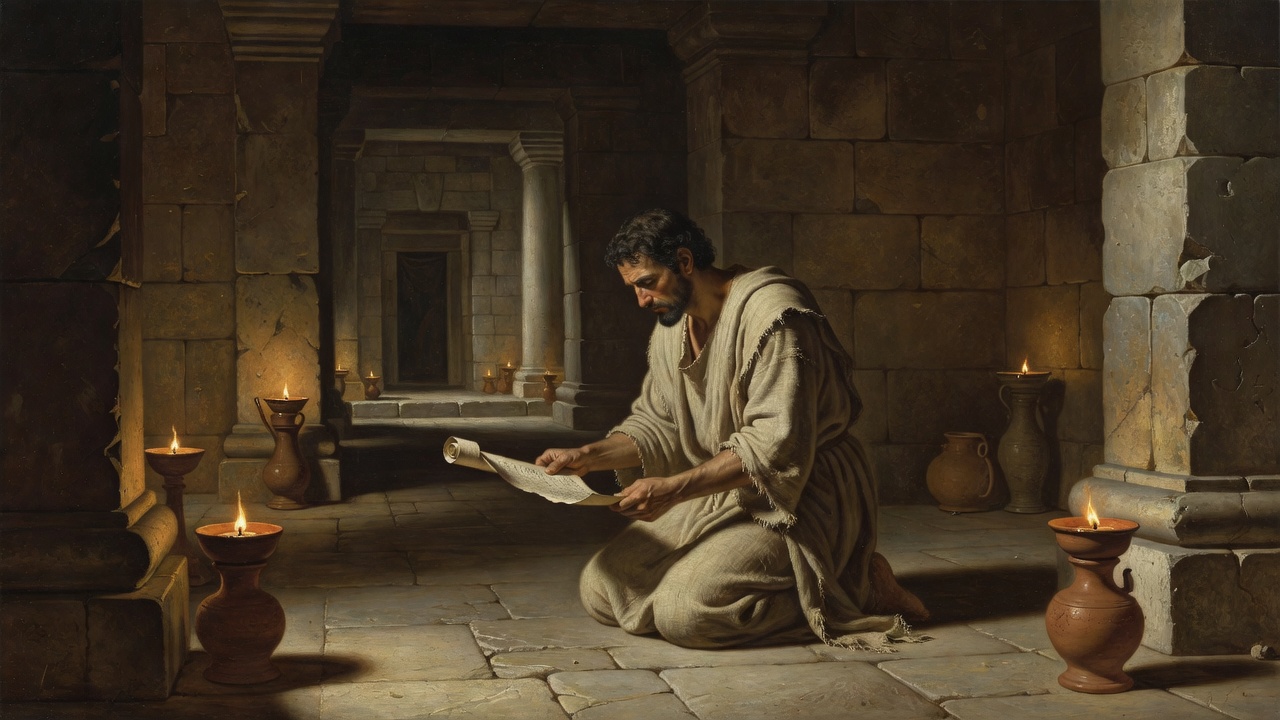
14Hezekiah received the letter that the messengers gave him, and he read it. Then he went up to the temple and spread out the letter in front of Yahweh. 15And then Hezekiah prayed this: 16“O Yahweh, Commander of the armies of angels, the God to whom we Israelis belong, you are seated on your throne above the statues of the creatures with wings, above the Sacred Chest. Only you are truly God. You rule all the kingdoms on this earth. You are the one who created everything on the earth and in the sky. 17So, Yahweh, please listen to what I am saying, and look at what is happening! And listen to what Sennacherib has said to insult you, the all-powerful God!
18Yahweh, it is true that the armies of the kings of Assyria have completely destroyed many nations and ruined their land. 19And they have thrown all the idols of those nations into fires and burned them. But they were not really gods. They were only idols made of wood and stone, and that is why they were destroyed easily. 20So now, Yahweh our God, please rescue us from the power [MTY] of the King of Assyria, in order that the people in all the kingdoms of the world will know that you, Yahweh, are the only one who is truly God.”
Isaiah predicted that the Assyrians would not conquer Jerusalem
21Then I sent this message to Hezekiah: “This is what Yahweh, the God to whom we Israelis belong, says: Because you prayed about what King Sennacherib of Assyria said, 22this is what I say to him:
‘The people of Jerusalem despise you and make fun of you.
They will wag/shake their heads to mock you while you flee from here.
23Whom do you think you have been despising and ridiculing?
Whom do you think you were shouting at?
Whom do you think you were looking at very proudly/arrogantly?
It was I, the Holy One whom the Israelis worship!
24The messengers whom you sent made fun of me.
You said, “With my many chariots I have gone to the highest mountains,
even to the highest mountains in Lebanon.
We have cut down its tallest cedar trees
and its nicest pine/cypress trees.
We have been to the most distant/remote peaks
and to its densest forests.
25We have dug wells in many countries and drunk water from them.
And by marching through [MTY] the streams of Egypt,
we dried them all up [HYP]!”
26But I, Yahweh, reply, “Have you never heard that long ago I determined those things;
I planned them long ago,
and now I have been causing those things to occur.
I planned that your army would destroy cities
and cause them to become piles of rubble.
27The people in those cities have no power,
and as a result they are dismayed and discouraged.
They are as frail as [MET] grass and plants in the fields,
as frail as grass that grows on the roofs of houses
and is scorched by the hot east wind.
28But I know everything about you;
I know when you are in your house and when you go outside;
I also know that you are ◄raging/speaking very angrily► against me.
29So, because you have raged against me
and because I have heard you speak very proudly/arrogantly,
it will be as though I will put a hook in your nose
and I will put an iron ◄bit/metal bar► in your mouth in order that I can lead you where I want you to go,
and I will force you to return to your own country,
on the same road on which you came here, without conquering Jerusalem.”’
30Then I said to Hezekiah, ‘This will prove to you that what I said will happen:
“This year, you(pl) will eat only the crops that grow by themselves,
and next year the same thing will happen.
But in the third year you will plant crops and harvest them;
you will take care of your vineyards and eat the grapes.
31And you people who are still here in Judah,
will be strong and prosper again [MET].
32A small number of my people will survive,
and they will spread out from Jerusalem [DOU].”
That will happen because I, the Commander of the armies of angels, am desiring very much to accomplish it.’
33And this is what I, Yahweh, say about the King of Assyria:
‘His armies will not enter Jerusalem;
they will not even shoot arrows into it.
His soldiers will not march outside the city gates holding their shields,
and they will not build high mounds of dirt against the walls of the city
to enable them to attack the city.
34And their king will return to his own country
on the same road on which he came here.
He will not enter this city!’
That will happen because I, Yahweh, have said it!
35For the sake of my own reputation and because of what I promised King David, who served me well,
I will defend this city and prevent it from being destroyed.”
36That night, an angel from Yahweh went out to where the army of Assyria had set up their tents and killed 185,000 of their soldiers. When the rest of the soldiers woke up the next morning, they saw that there were corpses everywhere. 37Then King Sennacherib left and returned home to Nineveh in Assyria, and stayed there.
38One day, when he was worshiping in the temple of his god Nisroch, his two sons, Adrammelech and Sharezer, killed him with their swords. Then they escaped and went to the Ararat region northwest of Nineveh. And another of Sennacherib’s sons, Esarhaddon, became the King of Assyria.
¿Sabías que…?
La oración de Ezequías y la liberación de Jerusalén
- Cuando el rey Ezequías recibió la carta amenazante del rey asirio Senaquerib, subió al templo en Jerusalén y extendió el documento ante Dios en oración. En su plegaria señaló que los dioses de las naciones conquistadas habían caído por ser solo obras humanas de madera y piedra, a diferencia del Dios vivo.Fuentes: el propio texto bíblico · Hezekiah
- El relato menciona a Tirhaca, rey de Cus, quien marchó para combatir a Senaquerib. En aquel periodo, Cus y Egipto se encontraban unificados bajo gobernantes etíopes, lo que constituía una fuerza militar en el sur que se oponía a la expansión asiria.Fuentes: Tirhakah · Cush · el propio texto bíblico
- Tras el desastre que diezmó a su ejército frente a Jerusalén, Senaquerib se retiró a su capital en Nínive. Mientras adoraba en el templo de su dios Nisroc, sus propios hijos, Adramelec y Sarezer, lo asesinaron.Fuentes: el propio texto bíblico · Sennacherib · Adrammelech
Notas escritas con ayuda de IA a partir de fuentes abiertas (Theographic Bible Metadata, CC BY-SA 4.0; Easton’s Bible Dictionary, dominio público) y revisadas antes de publicarse.
Lugares de este capítulo
- Assyria · 36.359, 43.153 · versículos 4, 6, 8, 10, 11, 18, 21, 33, 37, 38
- Jerusalem · 31.777, 35.234 · versículos 8, 9, 10, 22, 32, 33
- Lachish · Hoy: Tell ed Duweir · 31.565, 34.849 · versículo 8
- Cush · Hoy: Cush 1 · 16.935, 33.751 · versículo 9
- Eden · Hoy: Beth-eden · 36.701, 38.087 · versículo 12
- Haran · Hoy: Harran · 36.864, 39.033 · versículo 12
- Hamath · Hoy: Hama · 35.136, 36.750 · versículo 13
- Zion · Hoy: Jerusalem · 31.777, 35.234 · versículo 22
- Lebanon · 33.540, 35.584 · versículo 24
- Mount Carmel · 32.672, 35.023 · versículo 24
- Egypt · 30.129, 31.308 · versículo 25
- Mount Zion · 31.772, 35.229 · versículo 32
- Nineveh · 36.359, 43.153 · versículo 37
- Ararat · Hoy: Urartu · 39.703, 44.300 · versículo 38
Solo aparecen lugares identificados con alta confianza (90 % o más según las fuentes académicas reunidas por OpenBible). Mapa de la época: DARE (Digital Atlas of the Roman Empire), CC BY 4.0; mapa actual: © colaboradores de OpenStreetMap; lugares: OpenBible.info (CC BY 4.0).
Créditos y licencia de esta traducción
Translation for Translators
A Bible Translation for Bible Translators which makes implied information explicit in the text as an aid to the translator who may need that information to correctly translate into a particular language.
Copyright © 2008-2017 Ellis W. Deibler, Jr.
Language: English
Dialect: American
This translation is made available to you under the terms of the
Creative Commons Attribution Share-Alike license 4.0.
You have permission to share and redistribute this Bible translation in any format and to make reasonable revisions and adaptations of this translation, provided that:
You include the above copyright and source information.
If you make any changes to the text, you must indicate that you did so in a way that makes it clear that the original licensor is not necessarily endorsing your changes.
If you redistribute this text, you must distribute your contributions under the same license as the original.
Pictures included with Scriptures and other documents on this site are licensed just for use with those Scriptures and documents.
For other uses, please contact the respective copyright owners.
Note that in addition to the rules above, revising and adapting God's Word involves a great responsibility to be true to God's Word. See Revelation 22:18-19.
2026-10-02
Fuente: http://ebible.org/eng-t4t/ · eBible.org